Writing about music is like dancing about architecture

Thursday, 8 March 2012

MONTEGO JOE - ARRIBA! AND WILD AND WARM

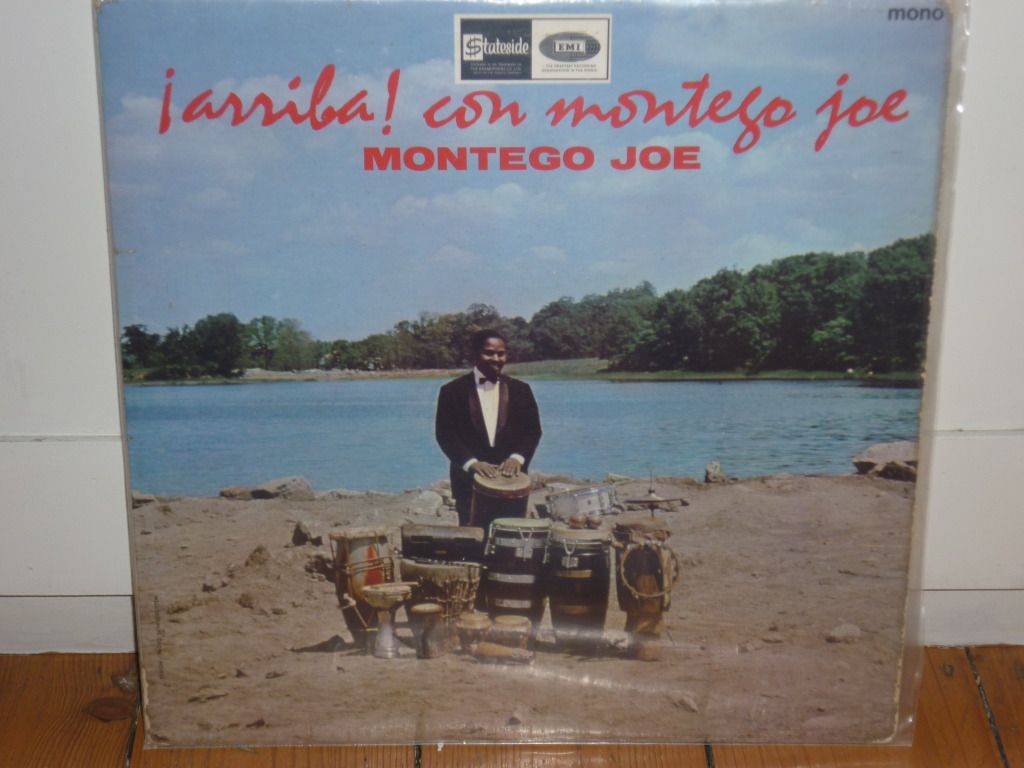
Look - its another budget-busting record cover!
Its a record by Montego Joe, a percussionist from Jamaica - hence his name. So where better for him to pose for the cover of his first album than on a beach? But perhaps it was difficult to find a proper beach as he's standing on what looks like a quarry with a lake behind him. It certainly doesn't make me think of a West Indian paradise! Just in case you don't know what to expect Joe (or Roger Sanders as he was christened) is standing behind an array of percussion instruments including a high hat!
Cover art aside, this is a lovely record. By the time it was released in 1964 on Prestige (my copy is a later Stateside UK pressing), Montego Joe had already played on records by Willis Gator Jackson, Art Blakey (read about it here) Roland Kirk and Solomon Ilori and was clearly 'in' with the New York drumming crowd.
He obviously learnt from his experiences as Arriba has elements of hard bop, funky danceability, afro-percussion as well as adding dashes of almost everything else to the mix - Latin, Brazilian folk music and apparently the last track is based on a Voodoo incantation.
There are two ways of looking at this eclectic choice of sources. The first is that Joe was widely influenced by musics from around the globe, that he could hear the essential links between the music of Africa and musics made by the descendants of African-slaves in the Caribbean and Latin and North American and was trying to bring them together in a kind of world-jazz fusion. The other, less charitable, is that anything 'foreign' or 'exotic' went into the mix to produce new sounds and sensations for the US record buying public.


The Latin feel is helped in no small way by the inclusion of Chick Corea (only 24 at the time) and Eddie Gomez (read about when Eddie met Phil here) in the studio band. The band is completed by Leonard Goines on trumpet, Al Gibbons on tenor, Milford Graves taking time off from his more advanced and avant-garde music to play drums here and Robert Crowder on 'miscellaneous percussion' (perhaps the high hat on the cover!).
I like this album very much. When it grooves it really hits the spot. Everyone swings nicely and the accent is clearly on the more dance-friendly jazz-listener. Its not quite boogaloo, not quite hard-bop, and not quite latin-jazz although the influences are clearly there. They even cover Horace Silver's Too Much Saki.


However, if I have one slight criticism of Arriba its not that it veers into 'exotica' territory - although it does slightly - its that there is not enough conga action from Montego Joe. Goines' trumpet, particularly in Too Much Saki, is great and Gomez' bass is masterful throughout. Chick Corea shows his latin chops and at times threatens to take over proceeding. It would, however, be great to have more unbridled Ray Barretto-esque 'Hard Hands'.
Things do improve somewhat on the second side but Joe's attempt to "make it as commercial as possible" just makes Maracatu a little dull.


Listen out for Eddie Gomez' bass solo on Dakar together with Graves' drumming - rhythm section heaven. Again its just a shame that there isn't more of Joe's congas.


________________________________________________________________________________________


Later in the same year Prestige released another Montego Joe record, Wild & Warm (as you can see my copy is the UK Transatlantic issue).
I'd guess that the first LP was successful enough to persuade Bob Weinstock to have another crack at it.
This time around, however, Corea and Gomez were not involved and were replaced by Arthur Jenkins and Ed Thompson respectively. Otherwise its the same team of Gibbons, Goines and Graves behind our man Joe.
As the sleeve notes explicitly say, this is a record for dancing. I'd guess that's why the tracks are so short. Each one could easily fit onto a 45 and so be played on a juke box.
The linears go on to say: "The music presented here is rhythmically akin to the rock and roll and rhythm 'n blues of the discotheques and teen hops - but with a difference. The 'big beat' with which almost everyone is familiar, has been seasoned generously with a variety of rhythmic twists and turns from African tribal musical traditions and from Afro-American music of Latin America and the Caribbean." Sounds very like a description of an exotica record to me! It could almost be a description of a Les Baxter record or a West Coast jazz/latin/rock cash in.
The music is, as with its predecessor rooted in Latin rhythms although it suffers somewhat without Corea and Gomez. And, similarly to Arriba there could be more up-front Conga action from Joe. He just seems too far back in the mix and isn't given enough time to solo. A, perhaps unfair, comparison, would be with Candido's earlier records which are conga-fests, or with Guy Warren or Olatunji who both brought some genuine African influences to their music. If I'm being really critical I would also say that I'd like to hear some more obvious West Indian influence - perhaps some calypso?
Having said all of that, its still a great record, and worth picking up if you come across it for cheap.

Here are some of my favourites - although I could just as easily have incuded the whole record!


Monday, 5 March 2012

DAVID MACK - NEW DIRECTIONS - ESSAYS FOR JAZZ BAND

One of the things I love about record collecting is the directions it takes you.
A few weeks ago I wrote about David Mack to say that I had never heard of him or of his record New Directions (in my review of Joe Harriott's Personal Portrait - read it here). Now I'm the proud owner of the very record and I was able to pick it up for less than the price of a couple of pints in the pub!
David Mack was a Scottish classically trained musician who played in the Scottish Symphony Orchestra. However, like many classically trained musicians around the world, he was also in love with jazz. And like many classically trained musicians around the world be tried to blend the two together.
New Directions, from 1965, is Mack's use of serial technique and jazz. You may not know what serial technique is.Indeed Mack acknowledges this in the sleeve notes: "An earnest searcher after the jazz truth might be pardoned, on seeing the schedule of this album for asking: Why serial jazz? And what is serial music anyway?"
He goes some way to answering the second question: "The method - not a system please note! - is founded on a twelve-note series, or 'tone-row'. It is not a scale, and any selected series functions rather int he manner of a Motive, being the source of the material for melodies, figurations, and so on, which the composer will use for that particular work."
For those with no musical training, the key aspect of Mack's work is that he took musical theory, originally developed by Schoenberg, and applied it to jazz. Mack was making use of classical avant-garde music and trying to weld it on to jazz.
Jazz is always being welded on to other types of music. You only need to think about soul-jazz, jazz-rock, jazz-funk, jazz-fusions of every kind and sort. And jazz and classical music have been bedfellows ever since Gershwin's Rhapsody in Blue.
In fact there are passages on this record that remind me a little of Gershwin, particularly the clarinet work.
Having read Coleridge Goode's description of the recording of this record I must say I was not expecting to like it at all. He says, "Whether it was an important record is hard to judge because the actual playing was not all that wonderful. Mack used some older musicians with a rather stilted style of playing which perhaps didn't do justice to the music."
However, it is surprisingly interesting and imaginative music and not at all the dissonant and difficult stuff I had expects. Perhaps my tolerance for this sort of stuff has become quite high!
The album does, however, have the feeling of being film music without a film. I'm not sure what it is about each track, perhaps its the careful composition or the slightly rigid format, or the formal playing, but I can see them being used in a spy or detective movie. 
The standout on every track is Shake Keane's playing. Having, together with Goode, recently finished playing in Harriott's Freeform group, Keane was well used to taking on difficult and demanding concepts.
Harriott would also become involved in a classical music/jazz hybrid with Laurie Johnson's Synthesis but Mack's effort has no strings and, to my ears, falls more on the jazz side than the classical side.
My copy is the US edition on Serenus Records, a small US label that tended to put out avant-garde classical recordings. In the UK it came out on as a Landsdowne Recording on EMI - that Denis Preston man again! This cover was designed by Uri Shulevitz and its worth reading his Wikipedia entry if you have a moment (click here)
Anyway, see what you think for yourselves. Here are four of, what I think are, the most successful tracks:

David Mack - Johnnie's Door

David Mack - Chaquita Moderne

David Mack - Clockwork Boogie

David Mack - Tonette 

Saturday, 3 March 2012

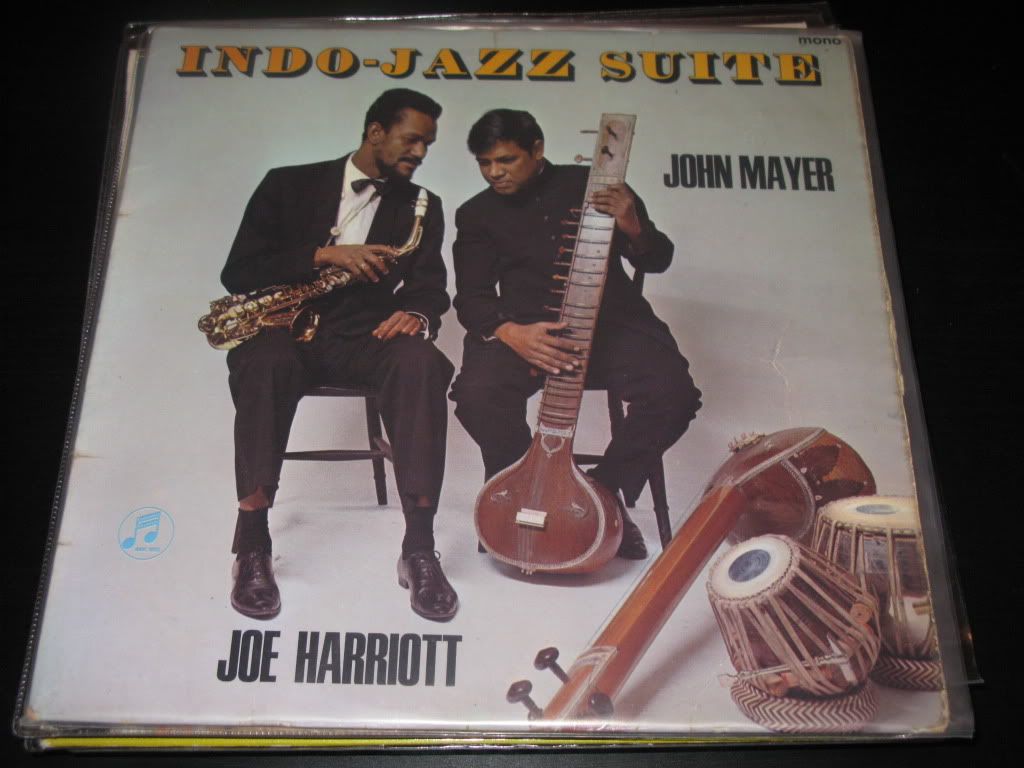
INDO-JAZZ: SITAR AND SAX


The funny thing about purity is that it can often lead to sterility. Mix things up a bit and all sorts of unique and unforeseen combinations can result.
Of course the act of 'mixing things up' can also be difficult or worse. People don't always like the challenge of the new. Stasis can be very comforting.
So it was for Joe Harriott. His music was a constant example of trying to 'mix things up'. Although his Free Form experiments were daring and original, his playing was not inherently Jamaican, or British for that matter. His musical building blocks were from the US and he used these to build roads in new and unforeseen directions which would ultimately separate his music from that of his hero Charlie Parker (here).
Musics from outside Europe, often from countries in the British Empire, or recently freed from it, had been increasingly common in Britain since the Second World War. Kwela (read about it here), calypso, ska, highlife, Latin American music as well as many others had been gradually making inroads into the consciousnesses of the British record buying public.
Not only that but the people who made that music had also been coming to Britain. People like Joe Harriott and John Mayer.
Pat Matshikiza, who wrote the South African jazz opera, King Kong (here), in his short and very moving autobiography recounts coming to London and being thrown together with others from across Africa and the West Indies, their differences momentarily put aside by their shared experiences under colonial rule as well as the inability of Londoners to think of any black person as anything but 'African'.
In many ways Harriott and Mayer's Indo-Jazz Double Quartet was a product of the collapse of the British Empire. How else to explain the 'rainbow nation' of musicians? Lead by an Indian and a Jamaican, including musicians from both countries, as well as from elsewhere in the West Indies, England and Scotland, the band was multi-racial and multi-national. But before we get carried away, here is John Mayer on the hostility that the band sometimes received: "Joe Harriott was a man who took all the stick, like myself. We took all the stick from everybody because I was Indian and he was a Jamaican." You only need to read Val Wilmer's marvellous book My Mother Told Me There Would Be Days Like These, to appreciate that most people in Britain had little understanding of cultures outside of their own, much less of people outside of their own country. Wilmer also wonderfully evokes the London of African exiles and immigrants trying to assert their independence and that of their homelands.
John Mayer was a classically trained violinist and composer from Calcutta. He had come to London to play in the London Philharmonic but his ambitions as a composer made this difficult for him. A chance meeting with producer Denis Preston lead to him composing a jazz piece (which he hurriedly wrote from scratch the night before the recording) and this in turn led to the concept of the double quintet. There is some dispute as to who originally had the idea, but I don't think that matters.
In my opinion Denis Preston was Britain's answer to Bob Thiele. In America he would have been running a label like Impulse. As it was, his Lansdowne Records and the Lansdowne Recordings he produced for EMI, embraced the best of British jazz but were also wildly experimental and adventurous. Preston made jazz records with Indian musicians, Ghanaian drummers (here) and (here), Goan guitarists, some Jamaican avant-garde free-form, classically inspired serial compositions, jazz and poetry, jazz inspired by poetry, he even produced Stan Tracey's tribute to Duke Ellington and, if he had been in America like Bob Thiele, he would have got Duke himself to play. Not all the musicians he worked with appreciated his style, indeed many allege he ripped them off, but like Thiele, he got the best from them and those who did fall for him remained loyal for life.

 The Indo-Jazz Suite is not the first jazz record which used sitar. This accolade must go to a Bud Shank record in 1961 which used Ravi Shankar for one track. What is completely different about the Indo-Jazz Suite, what elevates it, and all of the Harriott/Mayer collaborations, above mere exotica, is that it is not music that utilises Indian instruments for the sake of their 'foreigness'. Rather it is an amalgam of an Indian compositional tradition and a jazz tradition. For me, why they are superior to Bill Plummer's Cosmic Brotherhood and Emil Richards' Microtonal Blues Band (read about them here and here), is that Mayer was the driving force and not Harriott. In a way, this could only have happened in London. In America in the fifties and sixties, non-Americans, whether from Indian, Africa or South America, were only exotic sidemen. Perversely, the hangover from Empire, acknowledged in the sleeve notes to the Indo Jazz Suite by reference to Rudyard Kipling, the arch-defender of colonialism and the Empire, allowed Mayer, and to a lesser extent Harriott, to be given control of the music.
All the tracks on all three Harriott/Mayer Indo-Jazz records were composed by Mayer - although one track is an adaptation of Harriott's  Subjecty and one a co-composition with Pat Smythe. This really does mean that it is Indian music plus jazz and not jazz with some Indian sounds to spice it up - although this was an accusation levelled at the music at the time. It is Indo Jazz and not Jazz plus Indian music.
Nevertheless, without Harriott, I don't believe the music would have the force that it does. He is completely uncompromising. His playing is not above the Indian ragas, or even weaving between the pulse of the Indian players. He is harsh, abrasive, cutting this way and that through the music, carving out his own space that is completely Joe Harriott. Perhaps it shouldn't work but it does. He brings the hard edge of his free form playing and forces it to mix with Mayer's structures. It is quite brilliant.
Another factor in the music is that Harriott and Pat Smythe are the only constants in the jazz side of the double quintet. The Indian classical side (really a quartet plus classically trained flutist Chris Taylor) remain unchanged through all three records. I think that this provides a base for the Indian side of the music to remain dominant while the jazz side of the equation is constantly learning how to fit in.


Coleridge Goode, who played on both Indo Jazz Fusion records but not the Indo Jazz Suite recounts in his autobiography how complex the process of producing the music was. His take on it was that the jazz musicians would have to practise to be able to play in the different time signatures and different modes so that the Indian musicians could join them.
I can hear a definite development from the first record through to, in my view without doubt the best of the three, the last record. In the Indo-Jazz Suite there is a tentative feel to the playing and the music as though no one is quite sure where it will go and how to play. Harriott sounds crisp and sharp but he is not as completely in control as he would become.
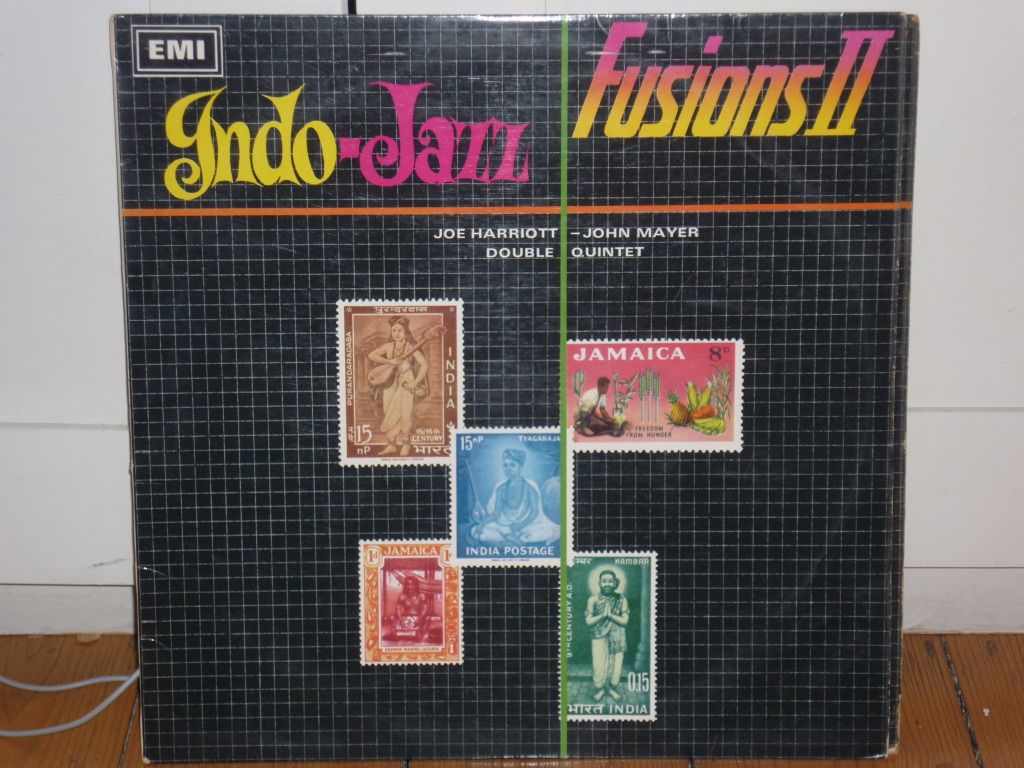
I guess, given the success of the Indo Jazz Suite, and the touring that followed it should not be a surprise that the band improved. For Indo-Jazz Fusions, Harriott is joined by Coleridge Goode (who replaced Eddie Blair who would go on to play with the Mahavishnu Orchestra with that other lover of Indian music John McLaughlin) and Shake Keane (read about Keane here). Goode found the experience interesting and exhilarating and his autobiography contains a quote from Harriott saying the same thing. However, you have to wonder whether there could ever be room for two leaders and I suspect that having been the leader and song writer for his own quintet it was difficult for Harriott to be a member of the double quintet.
Nevertheless, Indo-Jazz Fusions II is the masterpiece of the three records. Harriott is clearly now at home in the idiom, although ironically he seems to play less. Of the jazz musicians, Smythe and Taylor seem most at home, both of them putting in amazing performances. Meanwhile Diwan Motihar, the sitar player is simply incredible. As Ian Carr says in the sleeve notes "now problems and compromises are over: the fusion has taken place".
All of which makes it a shame that it is Harriott's last Indo-Jazz record.

Mayer would continue with the concept, producing a further album, Etudes. Don't what ever you do make the same mistake that I made. I saw the above record from France, which on the reverse is credited as including Harriott. It doesn't. It is Mayer's Etudes repackaged to fool idiots like me. Sax duties are taken up by Tony Coe, with Kenny Wheeler on trumpet and Goode still on bass. The Indian musicians are still the same as the other Indo-Jazz records.
It is a good record, although Harriott's presence is sorely missed. Coe, as good as he is, simply doesn't have the irascible character to take on the Indian aspect of the music with the result that he is too understanding and understated. Good but not great.
Clearly other people noticed the success of Indo-Jazz. The project was lucky in its timing with George Harrison's adoption of the sitar and a general turning towards Eastern mysticism amongst hippies. A number of sitarsploitation records would be released on both sides of the Atlantic to cash-in on this growing desire for non-Western sounds. In many ways this was simply an extension of the exotica craze that had taken off in the 1950s. Non-European instruments were pressed into service either covering the hits of today or to give a slightly 'foreign' sound to otherwise western musical forms. Indo-Jazz was different from that but nevertheless benefited from it.
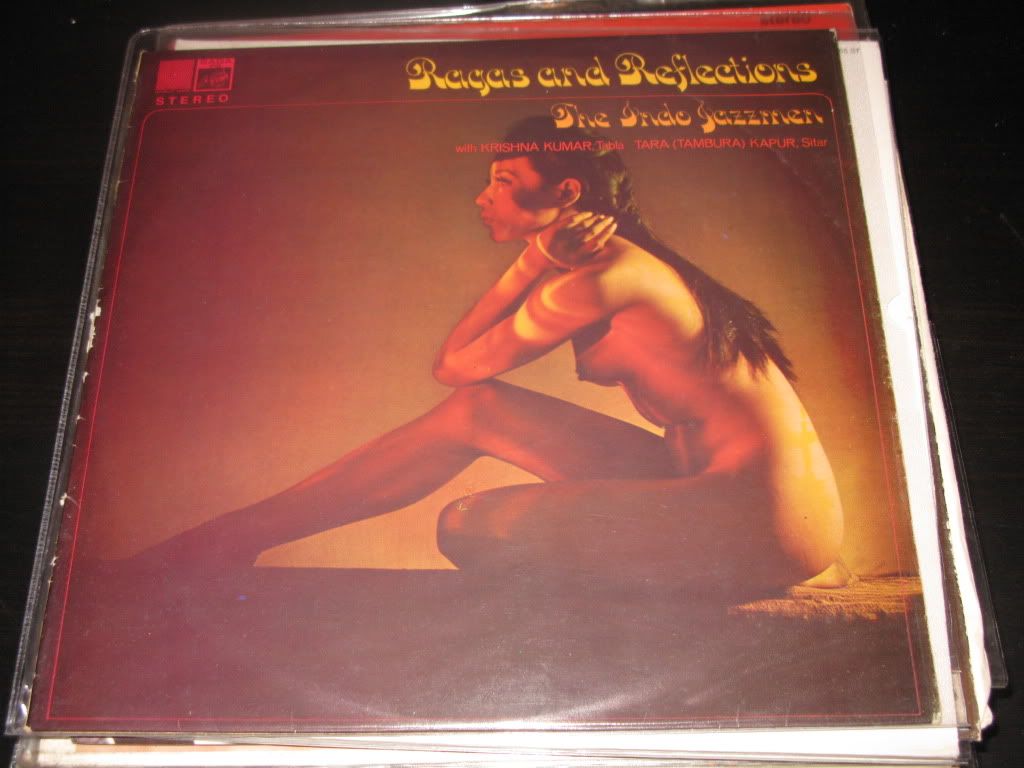
First of the Indo-Jazz cash-ins was Raga's and Reflections by the Indo Jazzmen. The sleeve credits Krishna Kumar on tabla and Tambura Kapur on sitar but does not mention the jazz musicians. The tracks are credited to Issacs who may be Ike Issacs. Anyway, its great stuff and even the inclusion of a Christmas Carol can't pull it down. While the Harriott/Mayer records are cerebral and inquisitive, Ragas and Reflections has more of a feel of a jam session - as befits a cash-in record. I'd like to think that this is some of the same musicians as from the double quintet, moonlighting to make some extra money. However, having listened to this back to back with the Indo-Jazz records, it just doesn't seem likely.
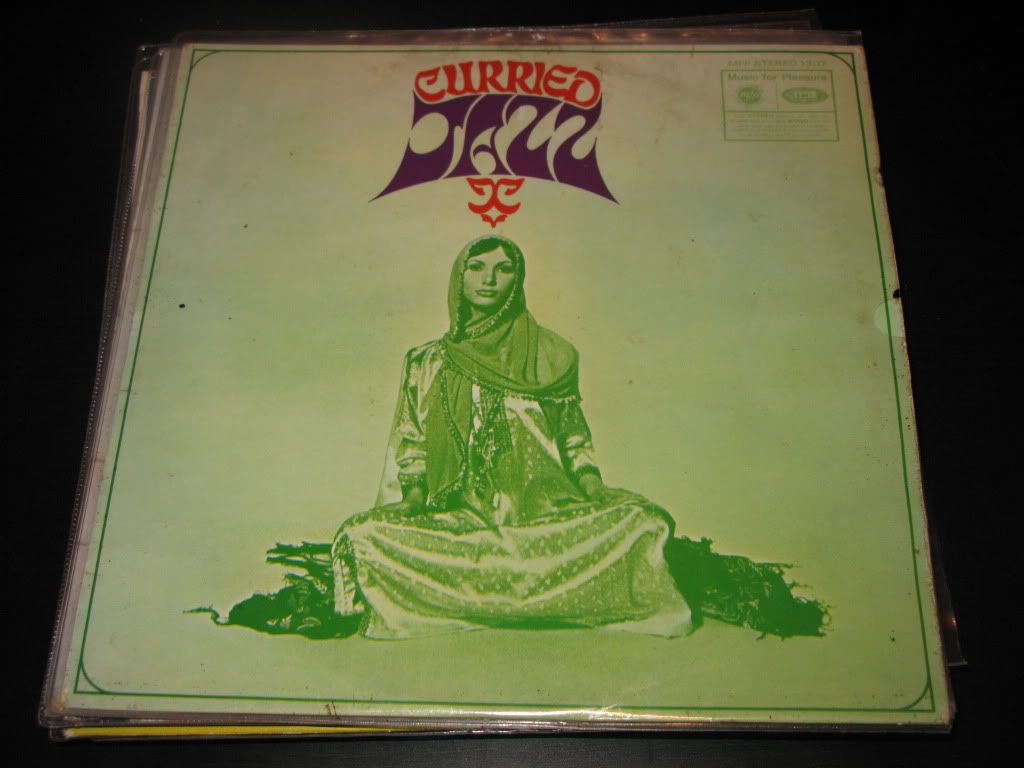
Finally, the last hurrah for Indo-Jazz, we get Curried Jazz by the Indo British Ensemble. The band includes Kenny Wheeler who had played with John Mayer as well as the Australian Chris Karan on tabla which I feel just adds to the Empire feel of the thing. The opening track Yaman (The Colonel's Lady) is one of my favourites. However, despite the inclusion of Dev Kumar on sitar and Sitara on tabla the whole thing is arranged and composed by a Brit Victor Graham. Jazz with an Indian flavour indeed.

Indian music would continue to influence jazz, and jazz musicians would continue to be interested in musics from around the world and use 'exotic' instruments to produce usual sounds. However, the collaboration between Harriott and Mayer would prove to be the high point of this hybrid music.
Wednesday, 15 February 2012

BLAXPLOITATION EXPLOITATION

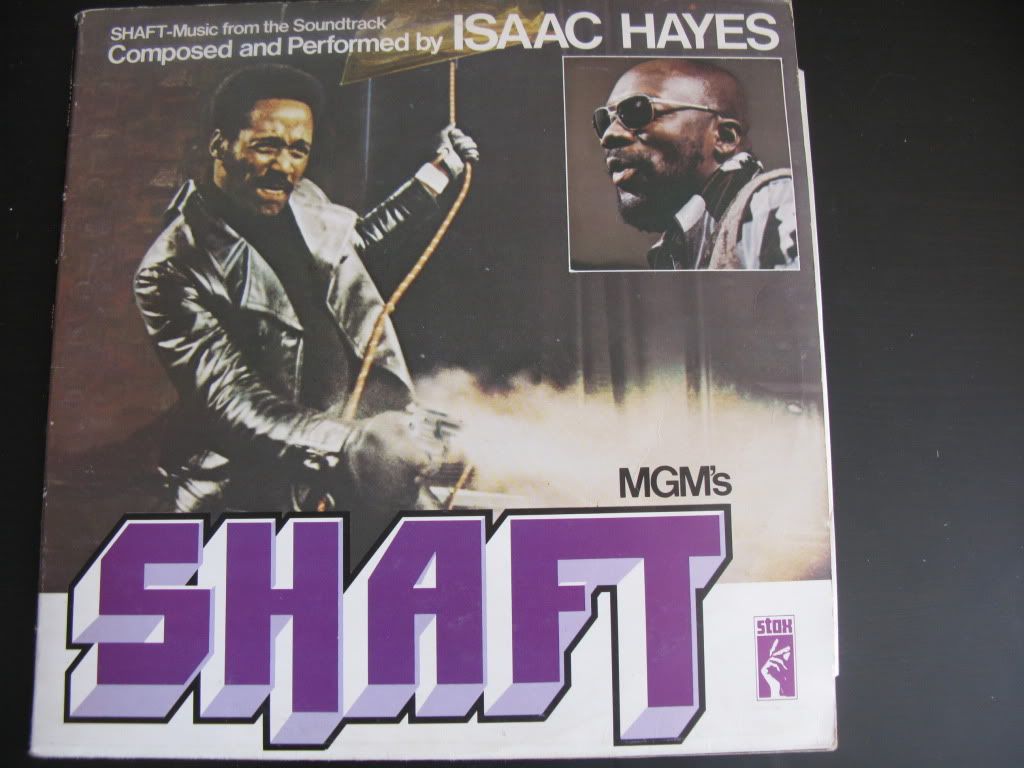
I have a confession to make. I don't really like Shaft very much. I know he's a tough black dude who doesn't take any shit from anyone - not even the white police. I know he's a love god who is about as much of an alpha male as its possible to be. In the world of Shaft there are only three kinds of people - friends (not many of those), enemies (who deserve to be thrown out of a window with out any remorse) and women (who all want to sleep with him). He's as unlikeable as James Bond, but crucially, he has much funkier music.
Issac Hayes' soundtrack to Shaft is a phenomenon and if nothing comes up to the brilliance of the Theme from Shaft then, to be fair, not much else does. Its a ground breaking song which seems to distill the essence of Shaft but also to embody the swagger and confidence of a new black American sensibility. Shaft may have been a caricature but he was one that struck a chord with a lot of black men in the US.
Although Shaft was not the first US movie that had a powerful black lead, was set in the contemporary world and was set in the criminal underworld (the honour goes to the amazing Sweet Sweetbacks Baadasssss Song) it was the  most popular.
Hayes' Theme to Shaft would go on to be covered by just about everyone in just about every style. From Horst Jankowiski, to the Ventures to Decimo's disco version and even Sammy Davis Jr's crack at it, everyone with a wah wah peddle had a crack at it.
The record was such a success that all the following Blaxploitation movies tried their hand at hit soundtracks - often without success.
However, in the US, soundtrack records to b-movies had been released since the 1950s. Nothing was going to change for this new genre.
What was slightly different was that, the popularity of the Bond movies, and Morricone's music to the Leone westerns, had shifted the focus from b-movies with b-grade soundtracks (albeit with some unintentional moments of genius) to the creation of a demand from the record buying public to own the themes to popular movies, but without the hassle of owning the whole soundtrack.
The UK in the late seventies saw a glut of movie and TV soundtrack records as big bands tried to stay relevant and hence stay alive. In the US there seems to have been more of a market for slightly different covers of movie music. Anyone for mariachi, or rockabilly, or jazz takes on famous themes?
So we come to Blaxploitation covers records -  Blaxploitation exploitation.
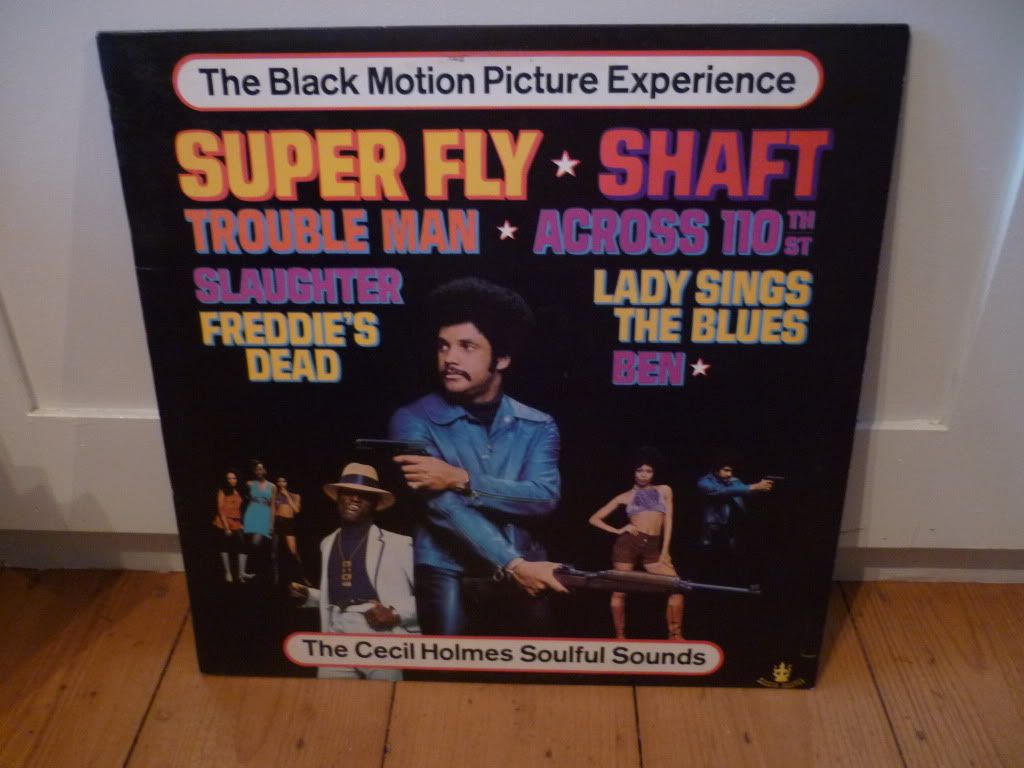
By far and away the best is Cecil Holmes Soulful Sounds - The Black Motion Picture Experience.


Cecil Holmes was a veteran of any number of movie themed, big band cover records.
Here he stays close to the originals, albeit in a big funky band format.
It has one of the few themes from the movie Slaughter committed to vinyl, which for that alone, makes it work picking up.
The Soulful Sounds don't linger long but they manage to get through Across 110th Street, Slaughter, Ben (bit of a stretch that one I can't help feeling), Freddie's Dead, Superfly, Trouble Man, Shaft and Love Theme from Lady Sings the Blues - which although not the funkiest track seems the most imaginative.
As good as this it, however, it exemplifies two of the problems with covering themes from Blaxploitation movies. Not only are the originals much better and funkier, but, most crucially, most people won't have heard the originals. So you all own a copy of the Shaft soundtrack. But what about Slaughter and Across 110th Street and Trouble Man, and Superfly?

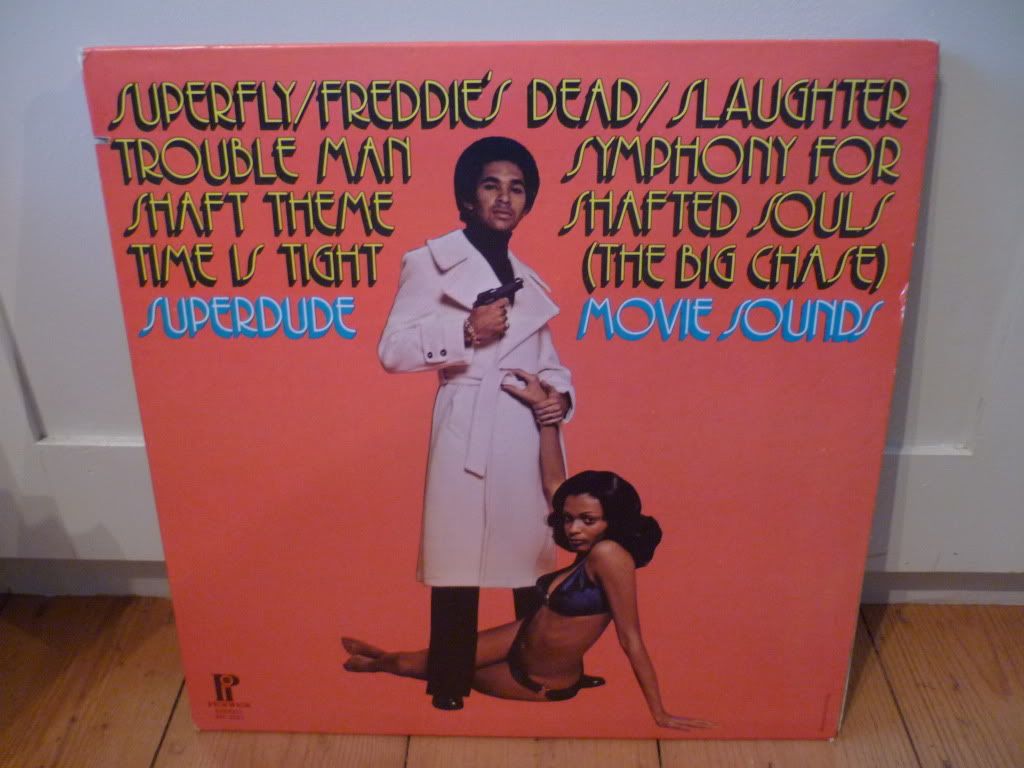
The unknown Superdudes have a crack at the same thing on their unimaginatively titled effort on Pickwick.
The music stays reasonably close to the originals, this time with vocals. Unfortunately the singer appears to have been recorded down a well and lets the band down somewhat. None more so that on their version of Slaughter (another 'rare' version). It sounds as though the singer is straining everything he has to be 'rough' and 'funky' and just about manages gruff.
They also go for some less obvious tracks, covering Booker T and the MGs' Time is Tight (competent), Symphony for Shafted Souls from Shaft's Big Score and Bumpy's Blues and Bumpy's Lament from Shaft. They just can't stay away from Superfly, Freddie's Dead and, of course, the Theme from Shaft!

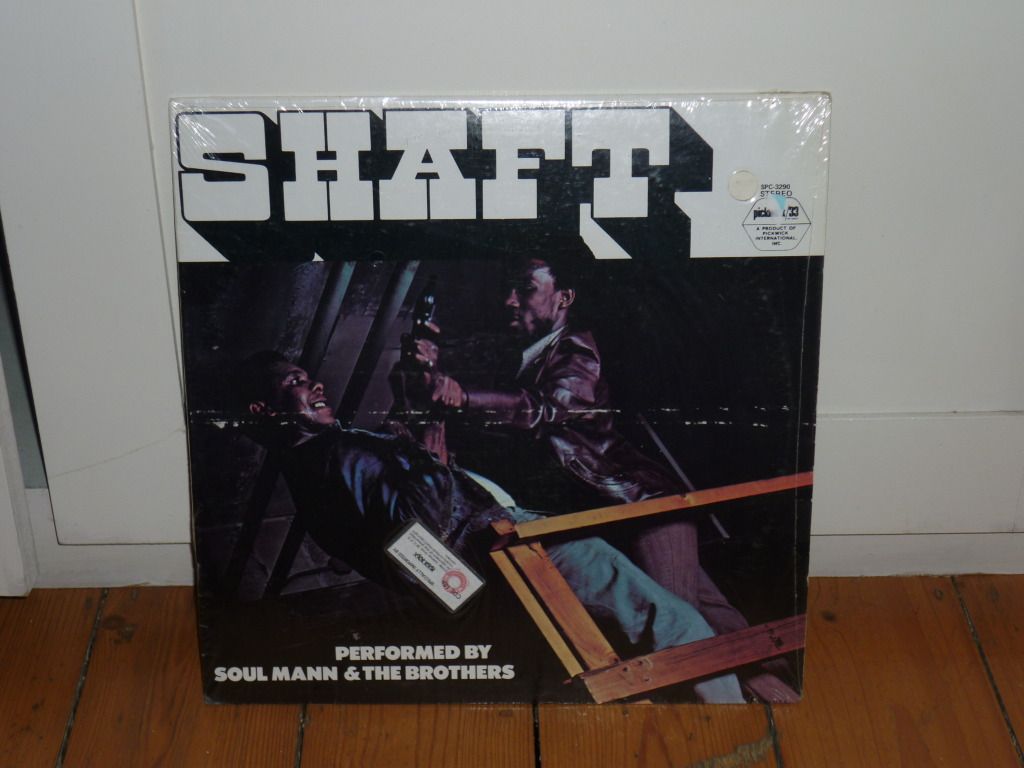
Pickwick also released Soul Mann and the Brothers' Shaft record. Leaving aside the truely awful name (is it just me that thinks it sounds like the brainchild of some white record executive?) and the bizarre cover photo which has nothing to do with the movie, the really odd thing about this record is that it is just as good as the original. The cover versions are so like the original versions that sometimes, if you were doing something else, and weren't really thinking about what was on the turntable you might think that it WAS the Hayes' record.
Its not a bad record. Its just a rather uncessary one. But if you thought that one record that sounded like a carbon copy of the Shaft soundtrack was one too many - you were wrong!

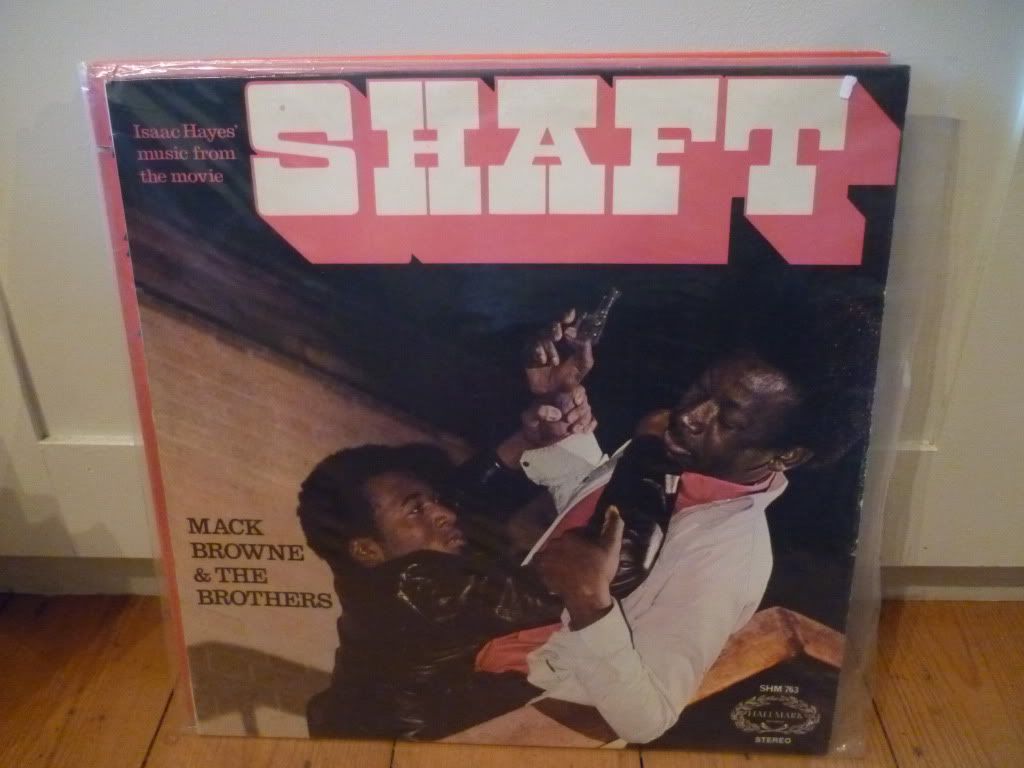
In case you weren't able to get your hands on the original Issac Hayes double album or any of the subsequent slimmed down versions, and the US Pickwick version was difficult to track down in the UK you could get this record on Hallmark - a subsidiary of Pickwick.
Don't be fooled by the cover. The fighting men on the front may look just like the guys on the cover of the Pickwick record - and that's because they are the same.
Someone must have thought that Soul Mann was a really stupid name, and that Mack Browne was somehow more sensible. Still accompanied by the Brothers though!
In the modern music world its hard to imagine a situation where anyone would think that a good way to make money was to make a record that sounded just like a record that was already one of the best selling soundtracks of all time. If you can get the orginal, why would you go for Soul Mann, or Mack Browne??

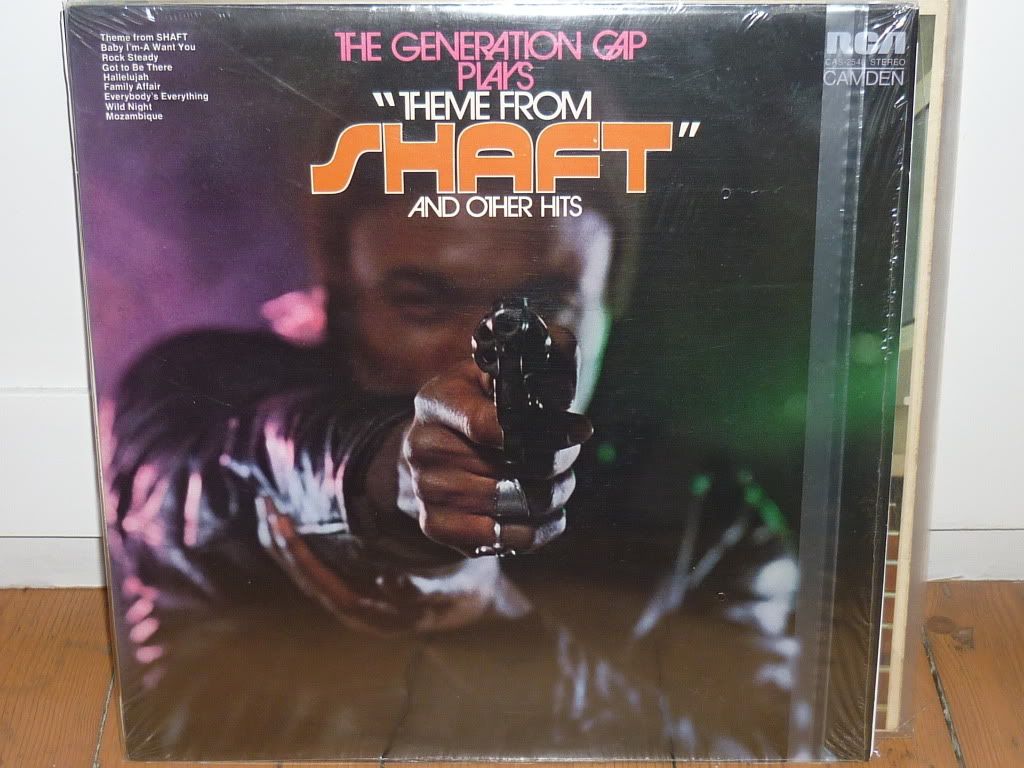
The Generation Gap plays Theme from Shaft and Other Hits isn't really a Blaxploitation Exploitation record. They only cover the Theme From Shaft - the rest of the record are covers of other funky tracks.
More big band stuff with tough drums you should pick this up if you find it cheap - just don't pay any real money for it!
Clearly there weren't enough people buying these records to tempt people to produce many more of them.
If there had been this post would have been much longer (aren't you pleased?).

Wednesday, 8 February 2012

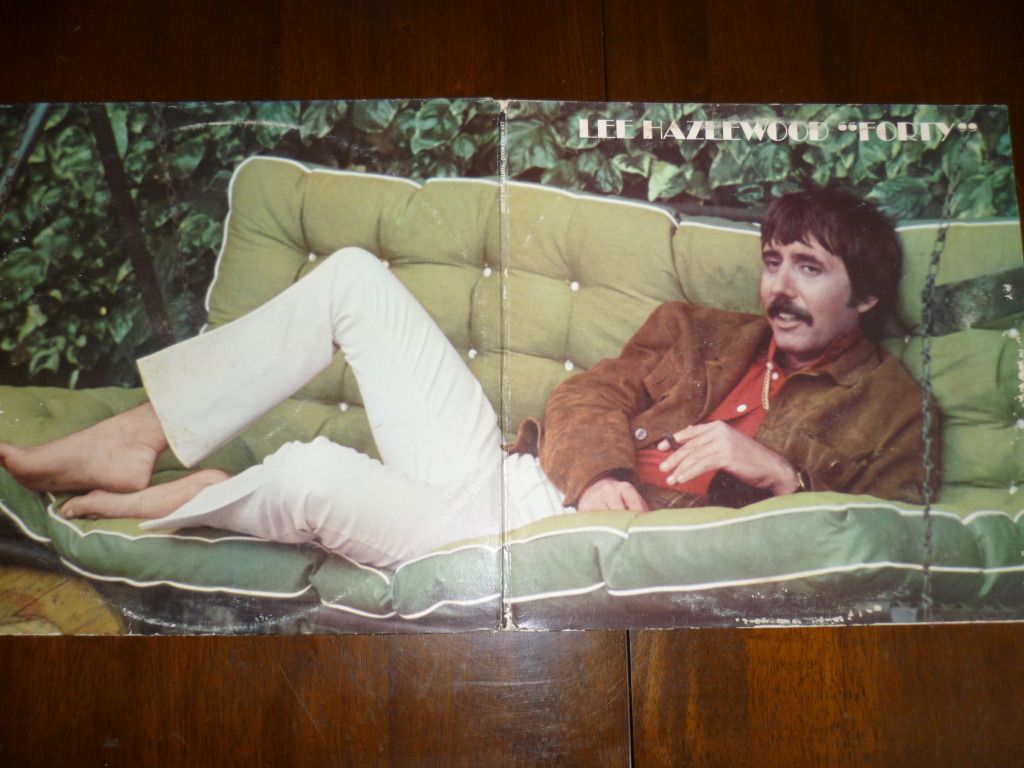
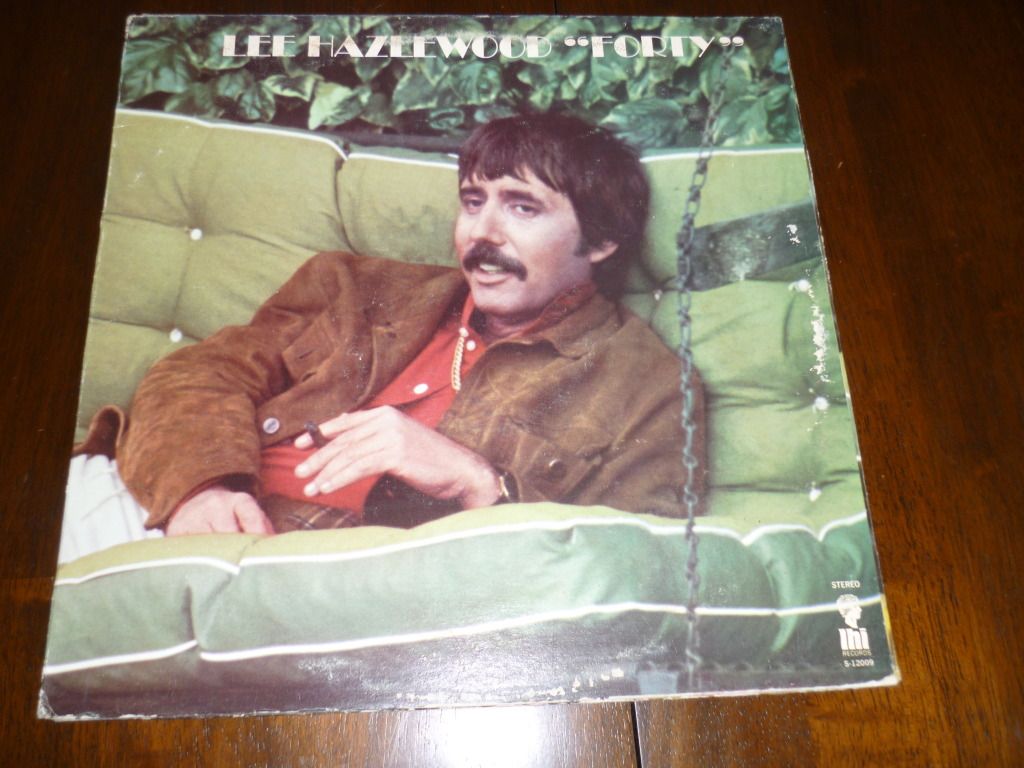
LEE HAZLEWOOD - FORTY


 One of the joys of Lee Hazlewood is his inconsistency. You can never be quite sure on any record how many gems there are going to be. It may be a stone cold classic of hard-lived, wry, country magic like Requiem for An Almost Lady (read about it here). Or it might only have one or two treasures such Poet Fool or Bum. Or sometimes, even within the same song, he might veer from the heart-wrenchingly beautiful to the easy listening schlock. He is never predictable, and never boring. Every one of his records is worthy of you attention and, if you give it enough time, even the songs you initially dismissed will become much loved favourites.
So it is with this record. Recorded when he was, you've guessed it, forty, this LP uses Hazlewood's full repertoire of tricks. Country, slide guitar; soft, wordless female vocals; muted mariachi brass; his deadpan, gruff, singing style; swooping strings; and an impeccable choice of songs - you can expect them all.
I would guess that in some way this is a personal, autobiographical record. What does it say about the great man? I'm not sure. It says that he has loved, lost, recovered from his broken heart and loved again. It says that he has overcome all the problems that life has thrown at him and come out the other side, if not triumphant, then at least stronger and unbowed.
There is always something dark about Lee. He looks into the heart of darkness, and finding only darkness, laughs and proceeds to enjoy himself before it is too late.
This is a record by an adult, for adults, that talks about some of the complex turmoil of grown up love, rather than the juvenile broken heart stories of most pop songs aimed at teenagers. But it also looks back at lost opportunities. Songs like It Was A Very Good Year (surely a nod to the father of his most famous partner!), Wait Till Next Year and even September Song, one of the least successful on the record, speak of past failures and past triumphs.
Lee, ever quotable, wrote some fine sleeve notes which deserve to be repeated here:
"Somewhere between the day I was born and yesterday when I turned FORTY, I made some plans ... but like most plans of Moose and Men, they were subject to change. In fact, they were subject to so much change, I've thought many times I was living someone else's life. Needless to say, I had to learn to compromise and make a few little compromises.
I wanted to be 6' tall ... I had to settle for 5'7".
I wanted to be handsome... I've had to learn to live with a commercial kind of ugliness.
I wanted to write a new national anthem (one with a lot less notes so my peanuts would digest easier at football games) ... I've had to be content with little children pointing accusing fingers at me and shouting ... 'the funny looking one with the moustache; he wrote Boots, Mama.'
I wanted to play such fantastic guitar as to make Chet Atkins and Jerry Reid feel insecure ... but I've just been awarded a gold statue from the California Piano Makers Association with this inscription ... 'This award is given to Mr Lee Hazlewood (for the 9th consecutive year) for we believe his guitar playing has been a most deciding factor toward increasing piano sales. 'Keep pickin', Lee!'
Yes I've learned to compromise; after FORTY years it's a way of life ... an art form ..
I've always wanted my tombstone to read:
Lee Hazlewood
ONE OF AMERICA'S "---------------"
but I suppose by the time I'm EIGHTY. I'll have to settle for:
Lee Hazlewood
WHO??????"

As usual with Lee, some of the tracks reappear elsewhere. In this case on Movin' On which also has some tracks from Requiem for an Almost Lady.

Finally, this record was recorded in London and is a Shel Talmy production. Did Shel produce as well? I haven't been able to find out. Big Jim Sullivan was also involved - always a good sign.
Here are some of the tracks, enjoy.


It Was A Very Good Year: One of Sinatra's classics. Poignant and sad, Lee doesn't seem quite so happy about the passage of time! Some interesting orchestration and piano work. I think the clip clop effect and the 'trad jazz' banjo, muted horn and clarinet also work well for the cowboy in exile.


What's More I Don't Need Her: I love the strings and flutes on this track - so haunting and aching. "We discovered what love means, and then watched it fall apart" - amazing!


The Night Before: A high point of the record. How can anyone not be moved by this? Sterling drum work underpins a song of love and loss and regret (and too much whiskey!) Its a night that he clearly doesn't want to remember!

The Bed: More love and loss. Arranged by Big Jim Sullivan. "What good is there in living, when the dreams of love are dead" - what a suicide note!

Paris Bells: One of the least successful tracks on the record. The arrangement is just too 'easy' for me.


Wait Till Next Year: One of two tracks by Randy Newman. There's something about it that reminds me of Toy Story. Nevertheless a fun rollicking song that Lee delvers with his Suzi Jane is Back in Town voice.

No clip for September Song - but that's ok as its not all that good.

Let's Burn Down the Cornfield: Is that Big Jim on guitar? The second Randy Newman track and a real corker. Sultry and funky and sexy. Yum! Some great organ playing too. Randy's version is on his second album but stick with this one.

Bye Baby: Written by Shel Talmy and J. Marks this has dark brooding lyrics set to some beautiful acoustic guitar and organ work.

No clip for the last track Mary.


Sunday, 5 February 2012

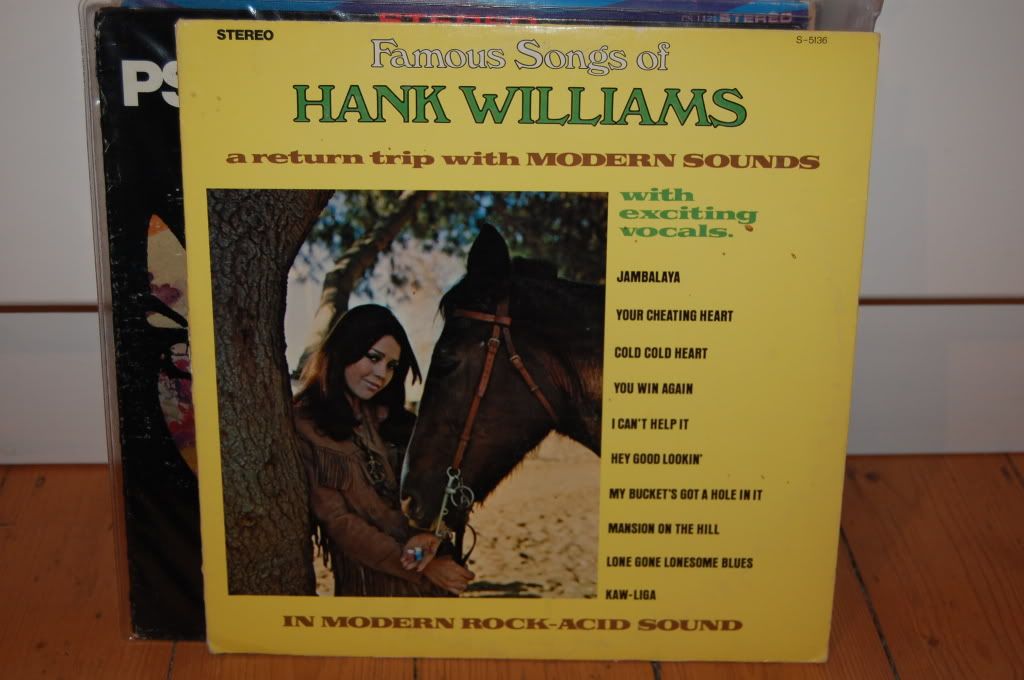
Exploito - Songs of Hank Williams - A Return Trip with Modern Sounds

Hank Williams, one of the most influential country musicians of all time. alcoholic and drug addict, was the creator of many of the myths and attitudes that would become common place in rock and roll. Self taught, unable to read or write music, unable to conform to the 'straight' world of post-war America, he died as a result of his drink and drug intake. He left behind a legacy of some of the most popular country song ever to have been written.

However, in many ways, the rebel Hank Williams became submerged by the country legend Hank Williams. Strangely, although he epitomised many of the outsider traits that became the norm in country, Williams, like Elvis, became so ubiquitous that his image lost its edge.

Which makes this record all the stranger. Imagine a record that purported to be hip hop covers of Bob Dylan or grime covers of Tom Jones! In the late 60's when Alshire put this record out folk-rock had taken off and cosmic country was just round the corner. Gram Parsons liked Hank Williams.

The country/acid link is explicitly laid out on the reverse of the sleeve: "Presented here is a program of ten of the most famous songs made famous by the immortal Hank Williams. A group of exceptionally talented musicians were assembled along with two top vocalists. These great songs were arranged in modern Rock-Acid style, without losing the melodic line of the lyrics, and are presented here for the modern music lover. The whole idea of this album is to bring Hank's great music to the modern young generation, for truly they are great 'heart and soul' songs as evidenced by the millions upon millions of records they have sold. ENJOY THIS PROGRAM OF MODERN ACID-ROCK HANK WILLIAMS SONGS PERFORMED AND SUNG BY A FINE YOUNG GENERATION GROUP."

I love the cover as well. A pretty girl in buckskins and wearing a CND pendant, is feeding a horse coloured sugar lumps. Is it legal to give LSD to horses!!!

Anyway here's the music. The fuzzy Your Bucket's Got a Hole in It is my favourite. What do you make of it?

Click here for Songs of Hank Williams - A Return Trip with Modern Sounds

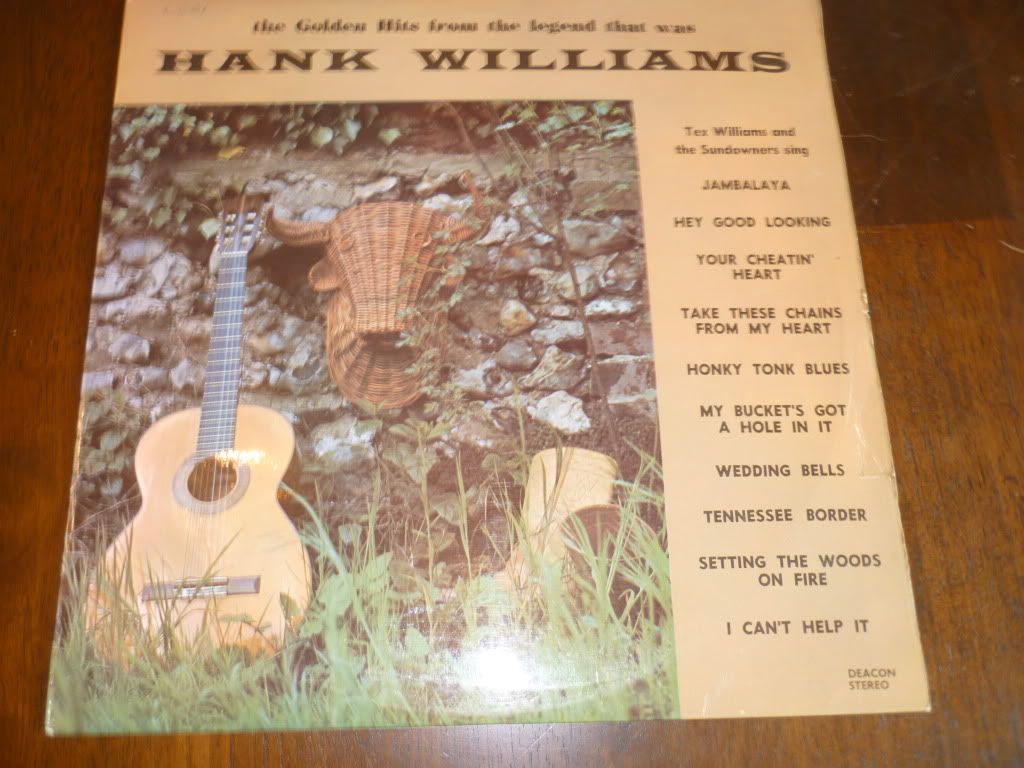
As a 'bonus' here's a more conventional Hank Williams covers record by Tex Williams and the Sundowners - I know which one I prefer!


Friday, 3 February 2012

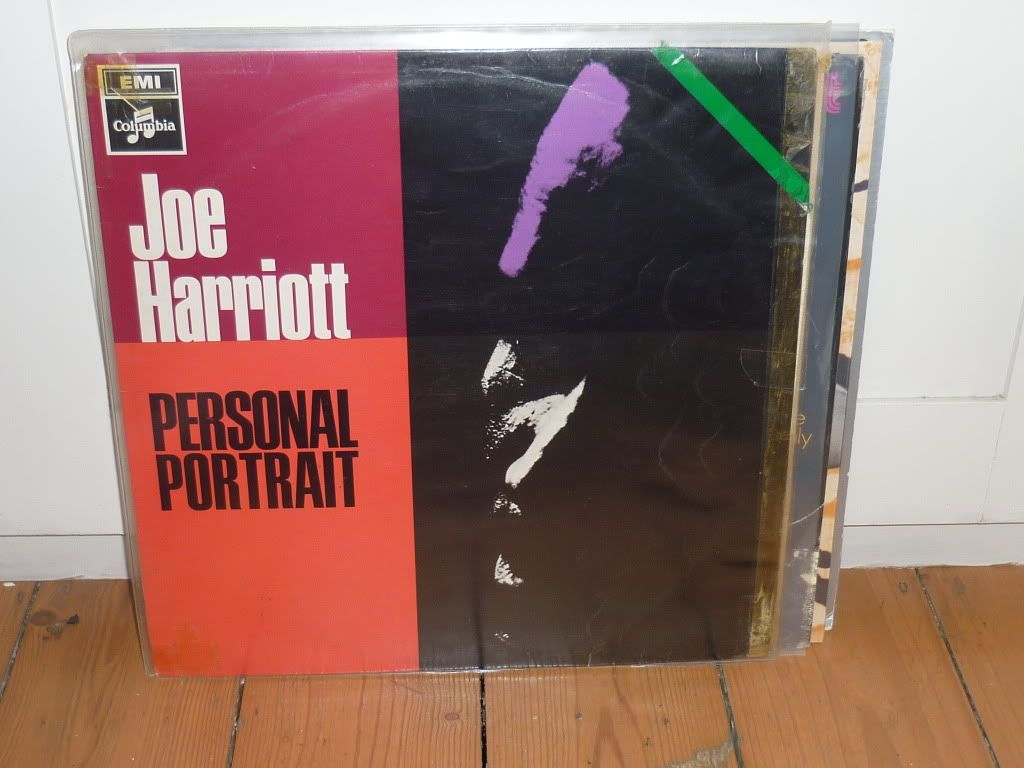
JOE HARRIOTT - PERSONAL PORTRAIT


That Charlie Parker has a lot to answer for. Not only did he popularise heroin in jazz he also legitimised the mix of jazz and 'strings'. His 1950 record, Charlie Parker With Strings, under the auspices of Norman Granz, was an attempt to give jazz some mainstream acceptance. The session paired Parker, a wild improviser, with a chamber orchestra of three violins, viola, cello, harp, oboe and English horn. They were joined by a jazz rhythm section. The results have been debated ever since. The decision to only record standards, understandable given the nature of the studio 'band', has been criticised. Moreover, it has been claimed that the very nature of Parker's playing and the nature of the classically trained orchestra meant that neither was comfortable nor able to play to their strengths. Finally, the charts by Jimmy Carroll have also been dismissed as being glib and facile. It should, however, be noted that Parker seems to have been very pleased with the results. Not only that, many saw this, and the subsequent 'with strings' sessions, as part of a process of legitimising jazz, of showing a wide public that jazz was not just the music of bordellos and bars (which is precisely why many people liked it!).
Harriott for his part was initially a devotee of Parker and at the start of his career acknowledged it. Indeed the inclusion of Parker's Now's The Time on this record shows that even at this stage of Harriott's career, Bird cast a long shadow.
By the time Harriot recorded this record in 1967, which would be his last under his own name, he had not only previously recorded a 'with strings' record, in 1955, but he had also recorded three records with John Mayer. While not pairing him with a string section, the nature of Indian classical music meant that unlike his earlier records with his own Quintet or with Michael Garrick, there was far less space for improvisation and stretching out.  Harriott was a veteran of many styles of jazz, many types of band, and many pairing of his music with unusual bedfellows - even poetry!
Denis Preston's effusive linear notes make reference to all of this. He even goes so far as to say that the content of the record is autobiographical and hence presumably the reason for the title. It is, of course, impossible to know if Harriott really did feel that this record reflected his true character. Given the portrait of him painted in Alan Robertson's Fire In His Soul, I doubt that he would ever have done anything as obvious as bare his soul completely.
Nevertheless, it is hard to imagine that the music on this record is a portrait of Harriott. Or if it is, its a portrait of two very different characters. One is the consummate professional, able to play beautifully in any context. The other is the fiery stylist, always probing and stretching what jazz could be - in fact the man behind Free Form.
The string tracks were orchestrated by David Mack. I'm afraid I can't find any information about David Mack, except for the tantalising snippet that he made a record called New Directions in 1964 with, amongst others, Shake Keane and Coleridge Goode. In his autobiography Goode describes it as a very adventurous record let down by the poor quality of the playing. He goes on to describe how constricted he felt by Mack's approach to music and he had no room to improvise - although Keane was expected to improvise over the top. I have never heard or seen this record - if anyone reading this has a copy do please let me know!!!
Goode's description of Mack's approach can, I think, be applied to Personal Portrait. There seems to be a disconnect between the work of the soloist and the rest of the musicians. The orchestra "from across the tracks in the classical world" as Preston says in the sleeve notes are perfectly decent but they are not playing 'with' Harriot. There is an unfortunate harpsichord that, while current in the sixties, adds nothing to the feel of the music. Indeed, at times the orchestration has an almost 'library' or 'filmic' feel to it in that Mack seems to be reaching for some kind of feeling but only reaching cliches and trite phrases.
All is not lost however. As with his college, Shake Keane's solo records, Harriott seems to be have been given a chance to record at least two tracks in which he breaks free. The opening track, Saga opens with some great bongo playing from Monty Babson and restrained drums from Bobby Orr before Harriott plays a jaunty mento. Unfortunately he is soon replaced by a larger horn section. Just as it looks as though the whole track is going to be lost, Stan Tracey leaps in with some characteristically wonderful playing. This seems to enliven Harriott who comes back in, completely in charge of the song and gives a wonderful solo. There's a return of the slightly stiff horn section, some more great bongos and Harriott returns one last time to be joined by bongos and piano and end the track in wonderful style. Perhaps not one of his absolute best but great none the less.
You can listen to it by clicking here
On Abstract Doodle, Harriott is accompanied solely by Scottish pianist and comrade in arms from his Free Form days, Pat Smythe. Where Tracey's playing is strident and forceful, Smythe is lyrical and subtle. He and Harriott create a beautiful duet that shows the depth of understanding the two players had developed through many years of playing. After the other orchestrated tracks, Abstract Doodle burst out of the speakers like a breath of fresh air. What a shame the other tracks aren't comparable. The following track, Mr Blueshead starts like a piece of library music and goes downhill from there. After the inventiveness of Abstract Doodle it is like a splash of cold water.
Enjoy this great piece of music by clicking here
I can't help feel that there is a simliarity in intent and resutl with Shake Keane's solo stuff, particularly That's the Noise, on which Bob Efford, Bobby Orr, Pat Smythe and Stan Tracey also played. You can read about it here
Harriott recorded again after Personal Portrait, most notably with Amancio D'Silva on Hum Domo. As as last solo effort though this record, intended to be Harriott's chance to shine, was not a success. Like his inspiration, Charlie Parker, Harriott would die too young, and having failed to fulfil the great potential that he still had in him.