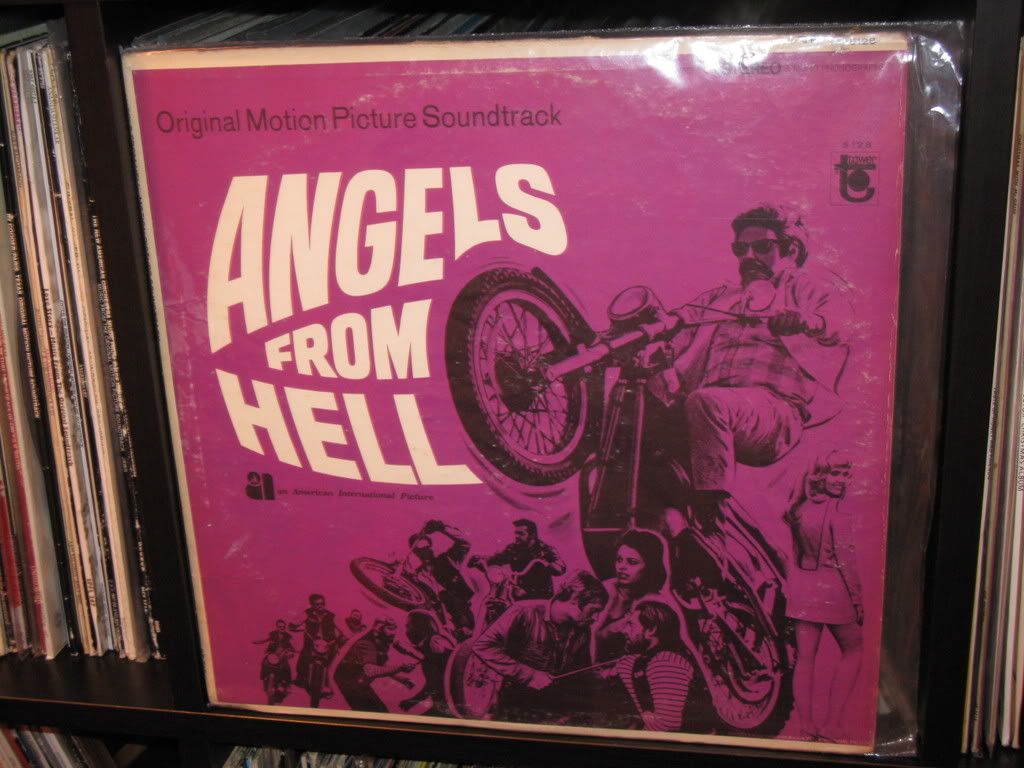
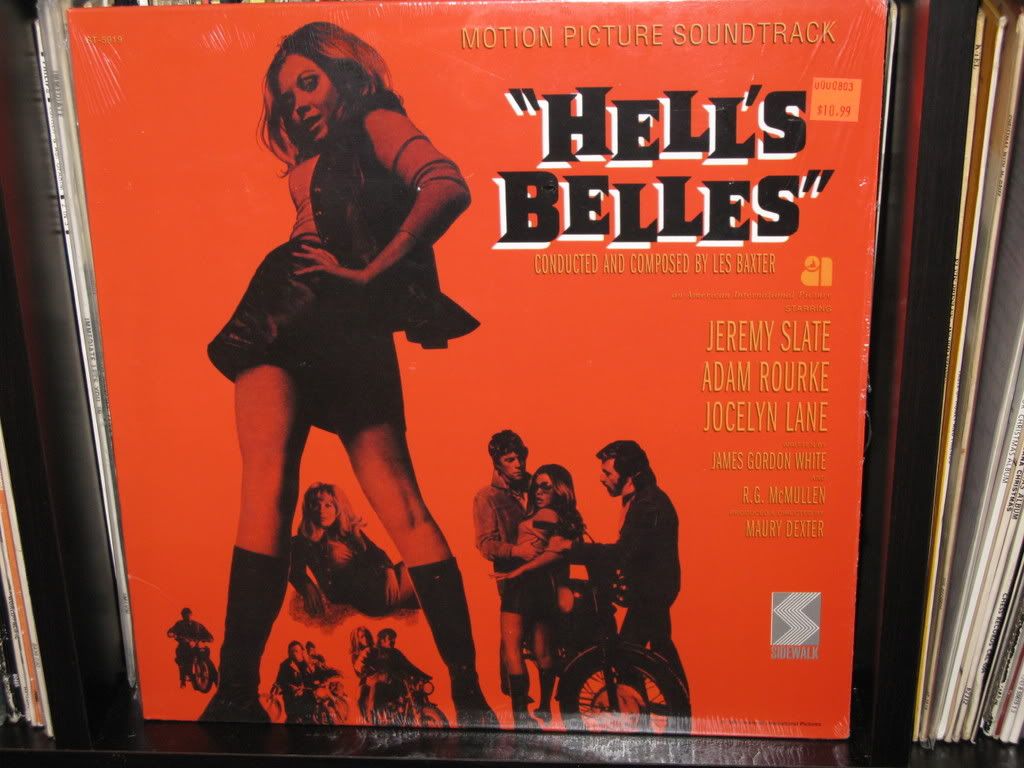
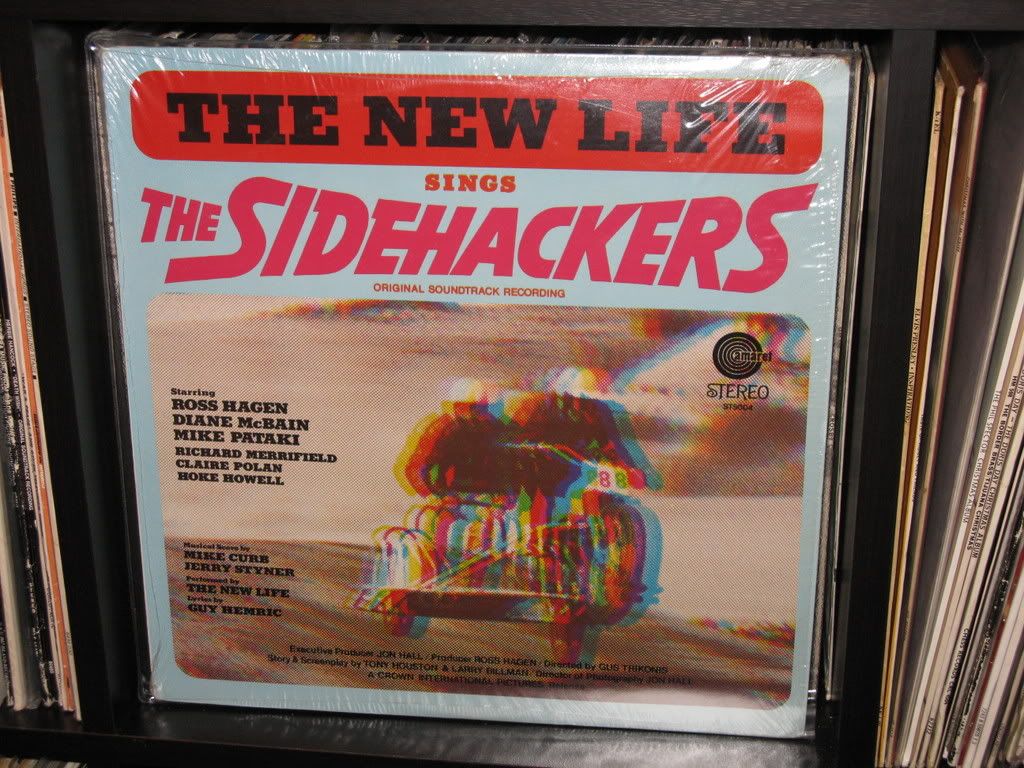
The surf scene in California started the careers of many musicians who would go on to be mainstays of rock, jazz and pop music. Lee Hazlewood, Jerry Cole, Emil Richards, Phil Spector, Jack Nietzsche, Glenn Campbell, Carol Kaye, Tommy Tedesco, Hal Blaine and many others came out of the surf music scene. One of the strangest collaborations was between aspiring producer and label owner, Mike Curb and a young adventurous guitar player called Davie Allan. Never really part of the mainstream, Davie Allan nonetheless produced some of the toughest wildest music ever to have come from surf - that is until Klaus Fluoride of the Dead Kennedys!
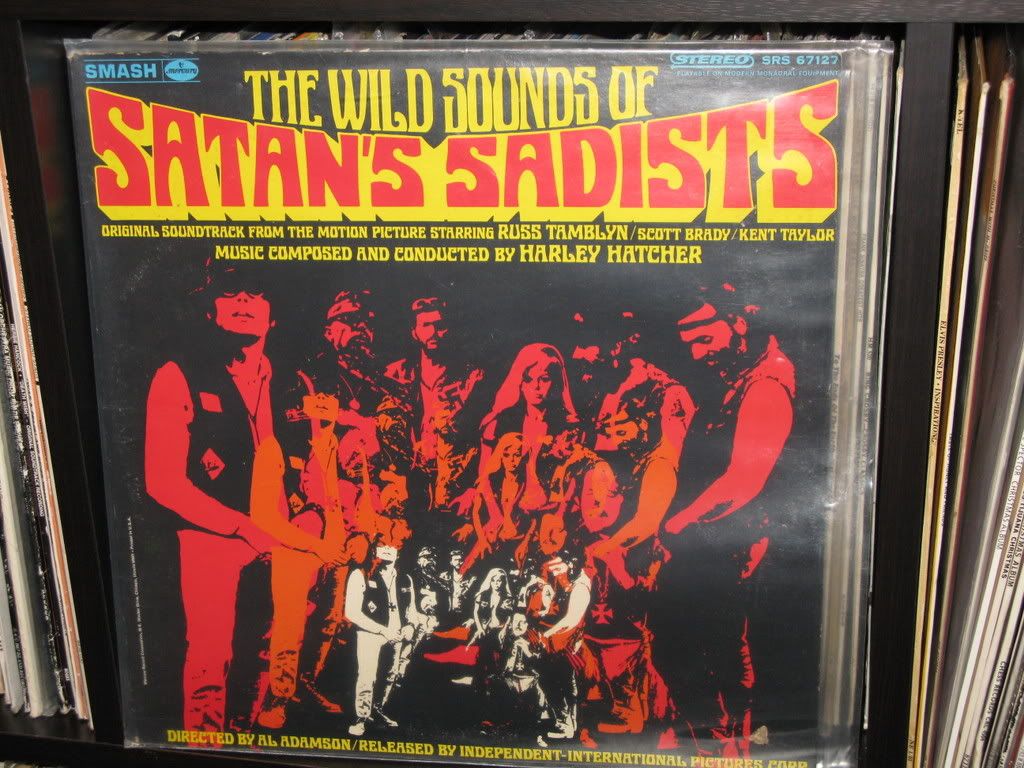
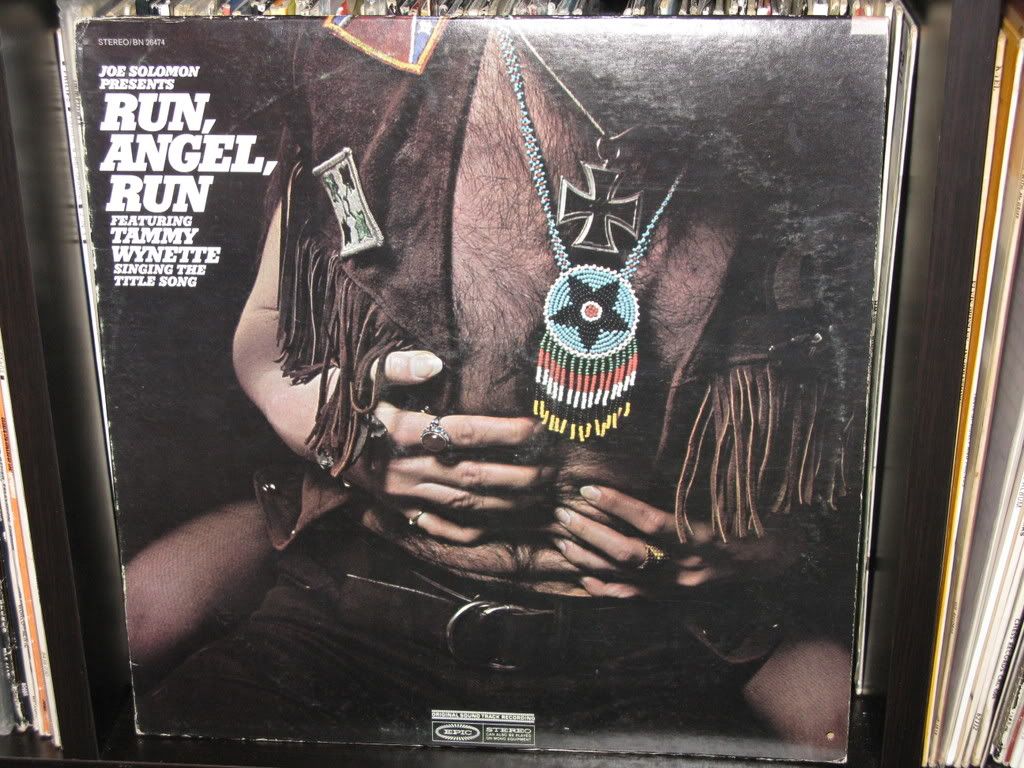
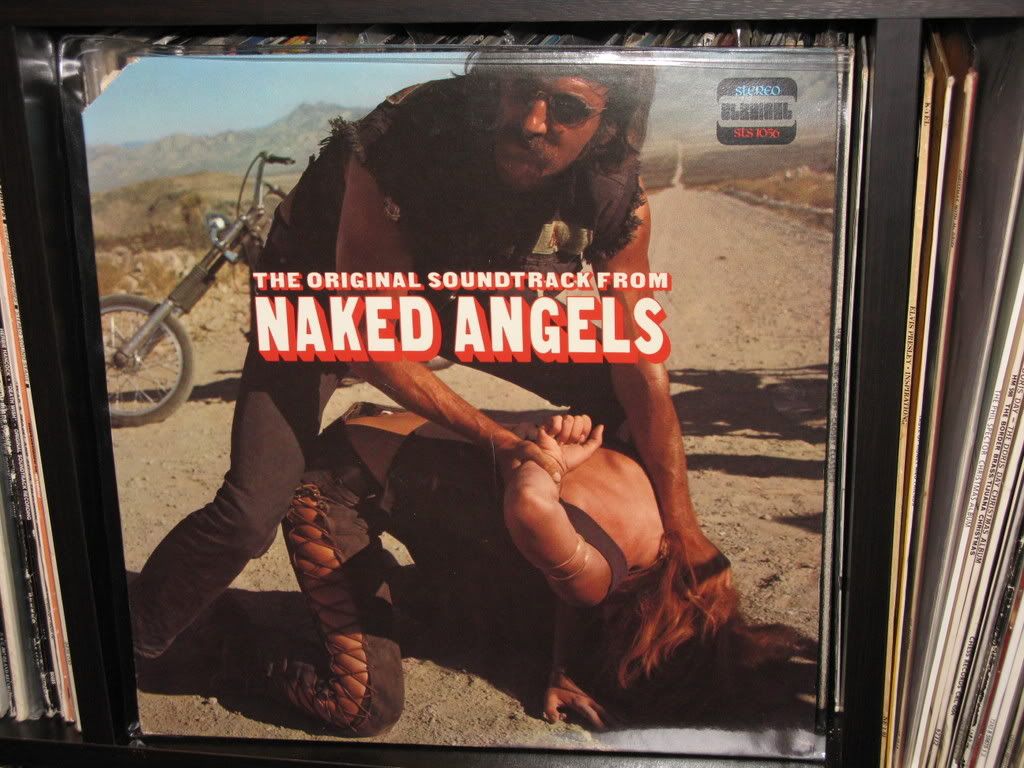
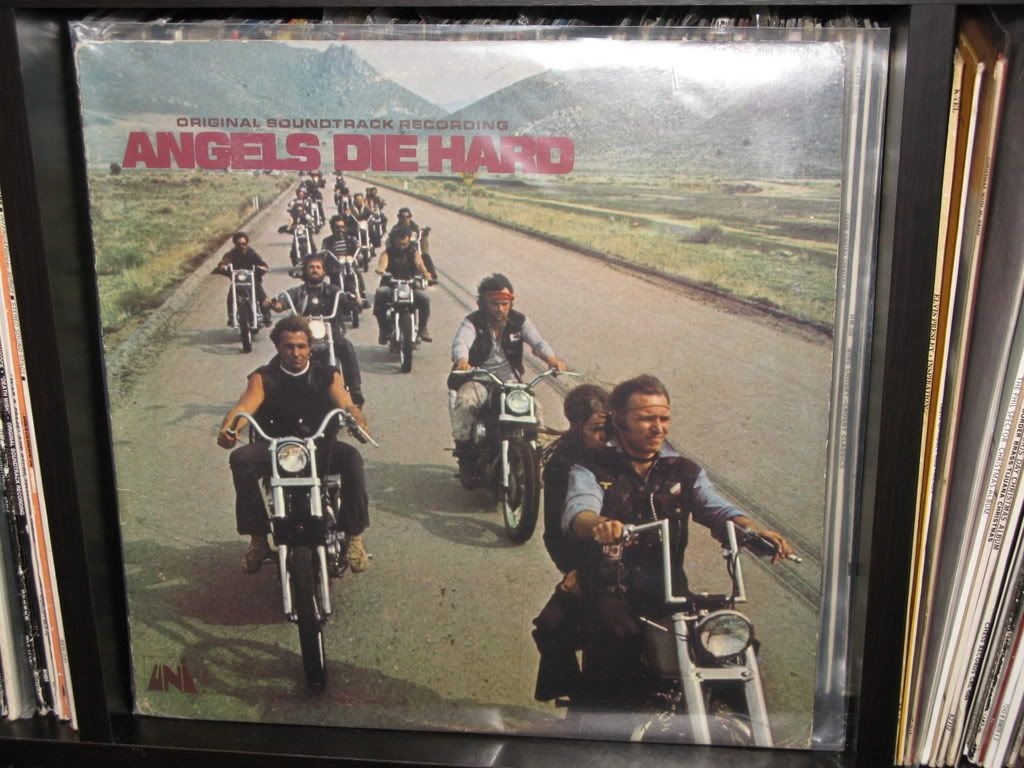
Allan is most famous for his work on a number of budget biker flicks. His unique fuzz guitar sound seemed to perfectly emulate the sound of an angry Harley and his wild, almost psych, approach to music seemed to encapsulate the growing counter culture in California. That he was a very straight guy with no personal experience of bikes or drugs doesn't seem to matter. As well as the biker films Allan also provided music to any number of drugs, teen, violent, mondo films
The story of Curb and Allan's work together is usually portrayed as one of typical record company exploitation. It's alleged that Curb took writing credit for many of the tracks that Allan played on, forced Allan to play on many of the releases on his Sidewalk and Tower labels and mismanaged Allan's solo career. It doesn't help that after Allan and Curb stopped working together, Curb went on put out ever poorer quality records usually by the eponymous Mike Curb Congregation, became an executive for a 'proper' record label, MGM, where, having got religion her persuaded them to drop any artists whose drug use he disapproved of and then finally he got into politics as a Republican.
However, although the relationship between Curb and Allan was not equal, I don't see it as being any more unequal than many other producer/artist relationships. Curb genuinely did write a lot of the material that Allan recorded and Allan has even said as much. As for the accusation that Allan was forced to work on too many sessions and record too many terrible song, Los Angeles was full of session musicians looking for work and who were prepared to play any gig as long as it paid. The list above shows how many brilliant musicians there were who also appear in some surprising and not always very good musical places.
Having said all that it is Allan's playing that stands out and long after Curb is forgotten it is Allan's signature fuzz guitar sound that will live on.
Follow me through the Davie Allan story on vinyl. As ever there are some omissions and I will aim to fill these in as soon as I come across the necessary records!
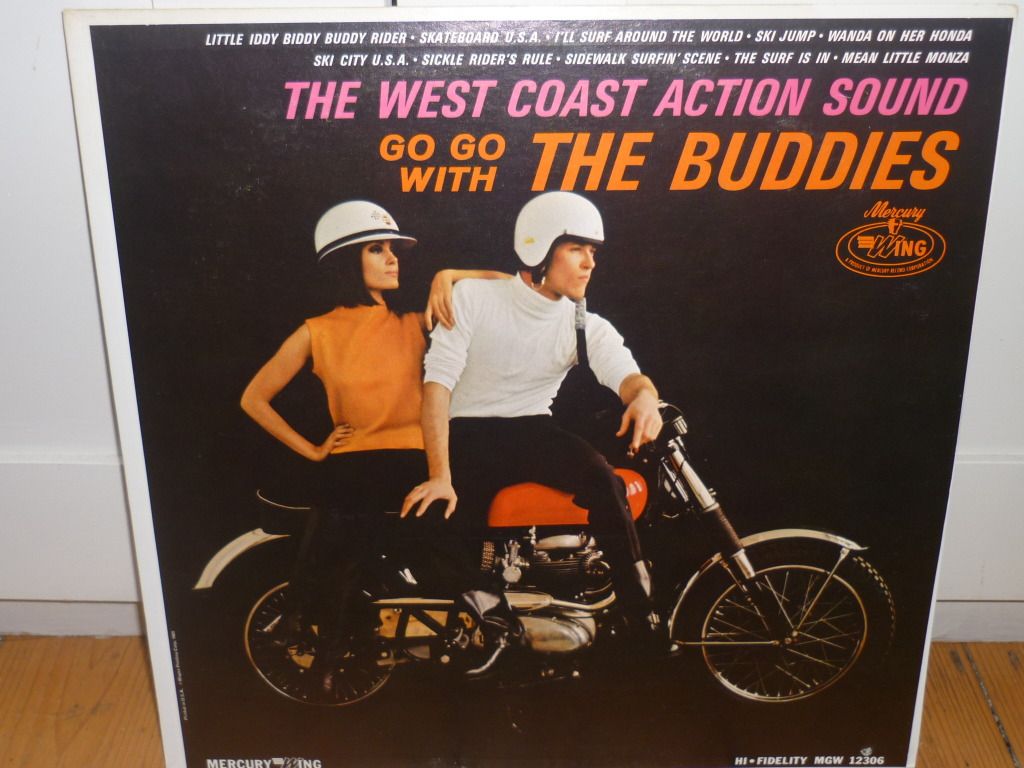
Curb and Allan were in the same choir and when Curb's ambitions led him to Mercury he took Allan with him. Finally he was taken on as a producer and worked alongside surf producer extraordinaire Gary Usher. He used many of Usher's techniques on his motorcycle records, including the recycling of tracks and the tendency to include one or two great songs and lots of filler. West Coast Action Sounds - Go Go With the Buddies is the second Mercury motorcycle record he produced and already it contains a number of tracks lifted of his earlier Buddies and Compacts record! Covering just about every Californian fad from bikes, to cars, to skate boards to skiing this is a nice but not exactly adventurous record. Allan had yet to fully explore the possibilities of fuzz and while there are some hints his playing is very much in the Dick Dale mould. Good, but don't loose any sleep if you haven't got a copy!
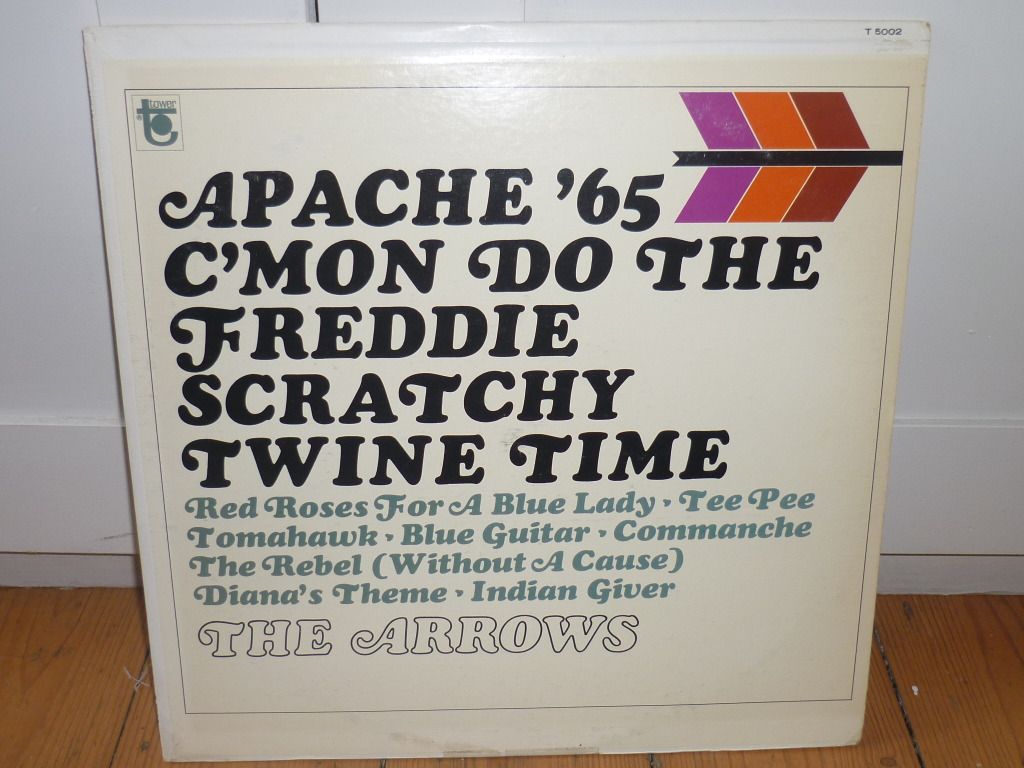
Allan and the Arrow's first album is a little cracker. Skip over their version of the Shadow's Apache and head straight to Tee Pee to get a full blast of their sound. Driving, fast paced, relentless surf with pounding drums and a catchy piano lick, its a great tune. A harmonica makes an appearance in Twine Time and to close the first side we get the great Rebel (Without a Cause). Side two is dominated by Scratchy. A great slab of Duane Eddy inspired guitar instrumental with a hint of the fuzz that would make Allan's name. The LP closes with Comanche (after Apache - geddit?) and a great end it is too.
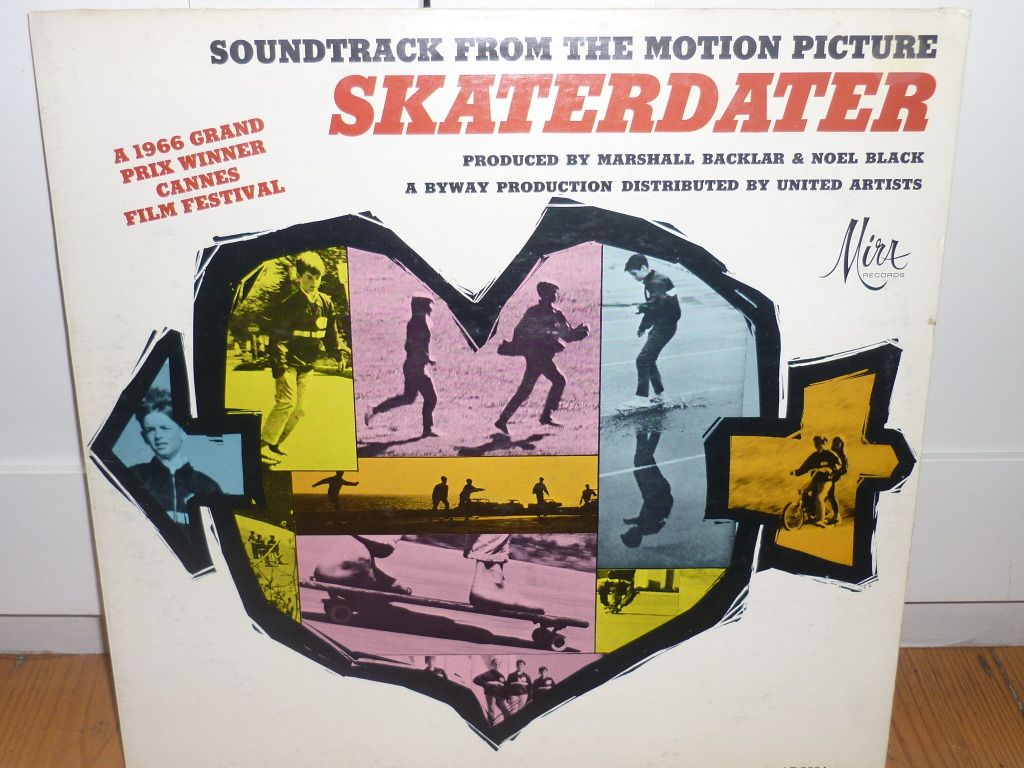 Allan would explore the fuzz further on his next record and first soundtrack, Skaterdater. Released on the Mira label and featuring Al Casey on guitar, Larry Brown on drums and Joe Osbourne on bass, this is the soundtrack to a short film about LA teenage skateboarders. The film was quite successful as you can see from the record cover!
However, in the main it's still basically coming from the world of surf music. Producers had been trying to find other pursuits to replace surfing that would continue the music and take it beyond the West Coast. So there were hot rod records, motorcycle records, power boat records, skiing records, and skateboarding records. However, perhaps unintentionally it lay the foundations for the rest Allan's career.
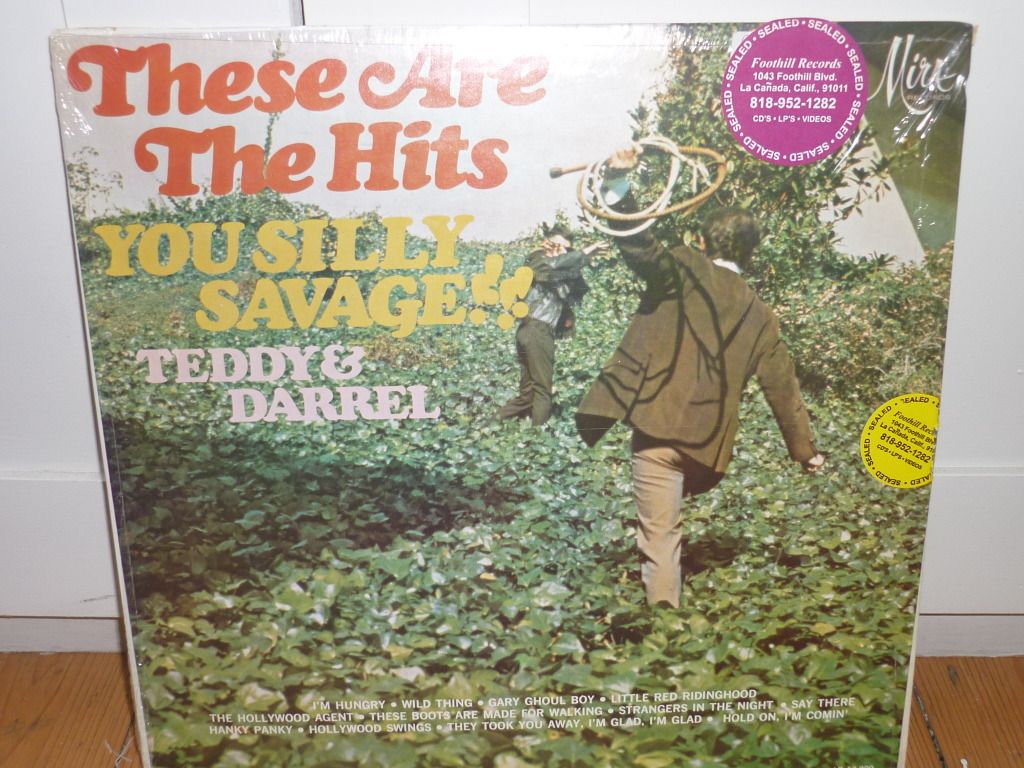 Before leaving Mira Allan was session guitarist on this frankly bewildering record.
Without doubt the campest record in my collection, Teddy and Darrel take out most of the double in double entendre and leave you in no doubt that they are singing (if you can call it that) about sex.
Lisping and simpering in a completely stereotypical way the duo fly very close to the bone for a record released in 1966. Someone must have thought that there was a market for these camp covers or else why would they record These Are The Hits You Silly Savage? You should listen to These Are The Hits as, for no other reason, it will make you completely reasse Hold On I'm Comin! As far as Allan in concerned there is nothing in the way of fuzz guitar and so don't get it if you want something tough!!
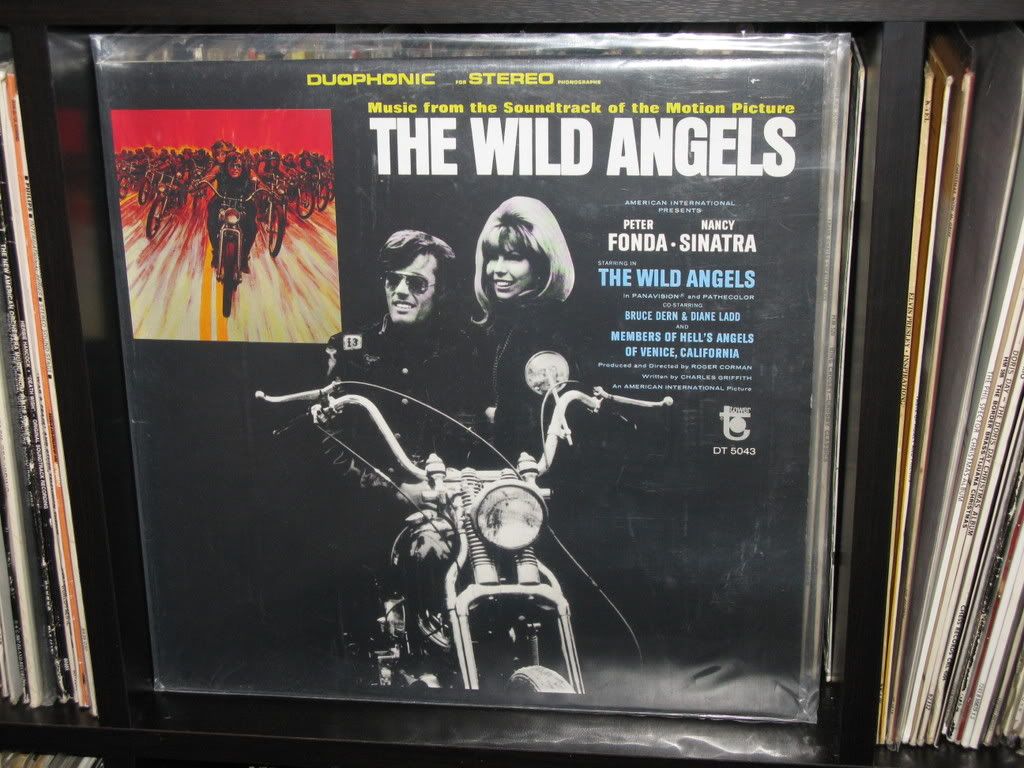 Luckily for history exploito film producer Roger Corman liked the fuzz he heard in Skaterdater and decided that it was what he needed for his forthcoming biker flick Wild Angels (what kind of movie might he have made if he'd heard Teddy and Darrel!).
The Wild Angels created a template that Allan would follow for much of his soundtrack work. There was a theme, The Theme From the Wild Angel, a freakout track, an absolute powerhouse of crazed fuzz, in this case the justly famous Blues Theme and some filler - no one needs to hear the Hands of Time's Lonely in the Chapel. Although some of the tracks are credited to Davie Allan and the Arrows, Allan and his Arrow cohorts played on every track and the bands credited were entirely fictional. Curb obviously liked to make it seem that he was in charge of a larger roster of acts when in fact other than Allan there were few others.
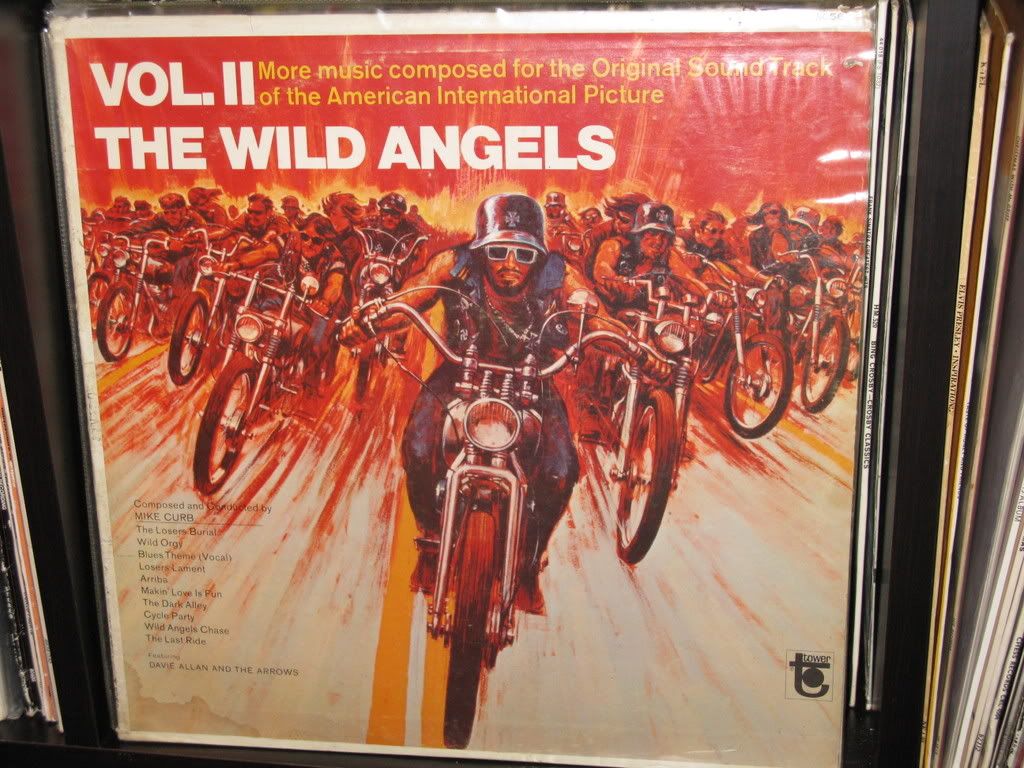 So successful was The Wild Angels and Blue Theme was such a runaway hit that Curb hurriedly got Allan and the Arrows back into the studio to knock out a follow up.
The Wild Angels Vol. II runs to just under twenty minutes and is nothing more than a retread of material on the original record.
However, Dark Alley and The Last Ride come to the rescue and save what might otherwise have been a pretty desperate record.
Allan's fuzz sound is now very much to the fore which is a good thing.
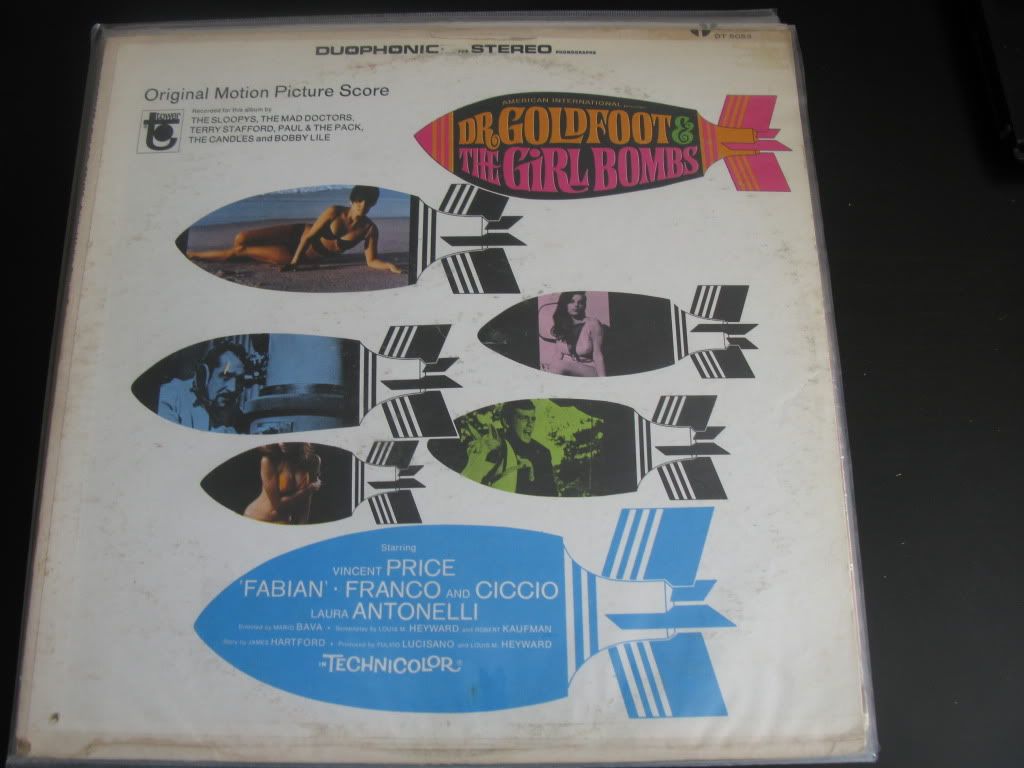 But Allan and Curb won't only working on biker soundtracks. Dr Goldfoot and the Girl Bombs was a kind of James Bond meets Gidget movie staring Vincent Price and Fabian. There is even a sequel of sorts Dr Goldfoot and the Bikini Machine.
The soundtrack includes Curb stalwarts, Terry Stafford, Guy Hemeric, Harley Hatcher and Davie Allan.
If you listen closely you can hear him playing on the Candles track This I Say.
Overall I like this record more that I should. Its stupid and lightweight and generally pointless. Or perhaps those are reasons that I should like it? I'm particularly partial to the Mad Doctors tracks for some reason!
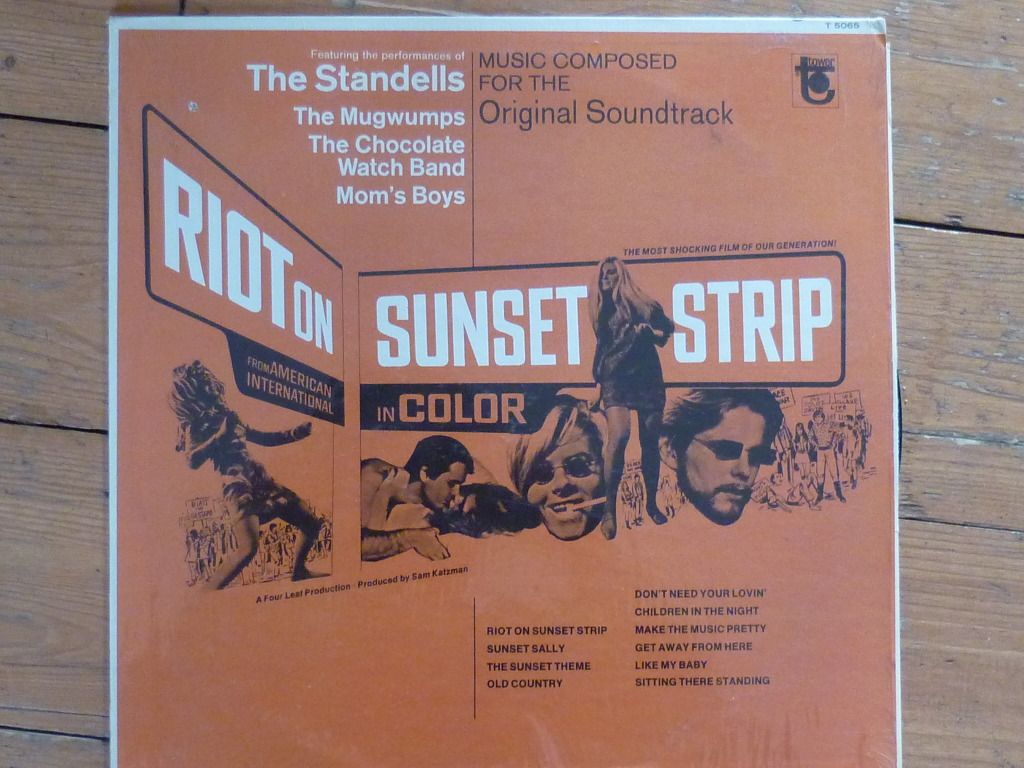
Riot on Sunset Strip is justly a classic soundtrack if not a classic movie. Using real band, The Standells and the Chocolate Watch Band there is a real garage punk feel to this record. It might really be music that kids listened to rather than music that record and film company executives thought they listened to! However, Curb, as he was the producer, couldn't help but add some of his own bands. So we get the forgettable Debra Travis, Drew, The Mugwumps and The Mom's Boys. There was also the Sidewalk Sounds, really Davie Allan and the Arrows. Allan also played on Mugwumps and Mom's Boys tracks. None of these stand up to the fuzz of the earlier biker soundtracks unfortunately.
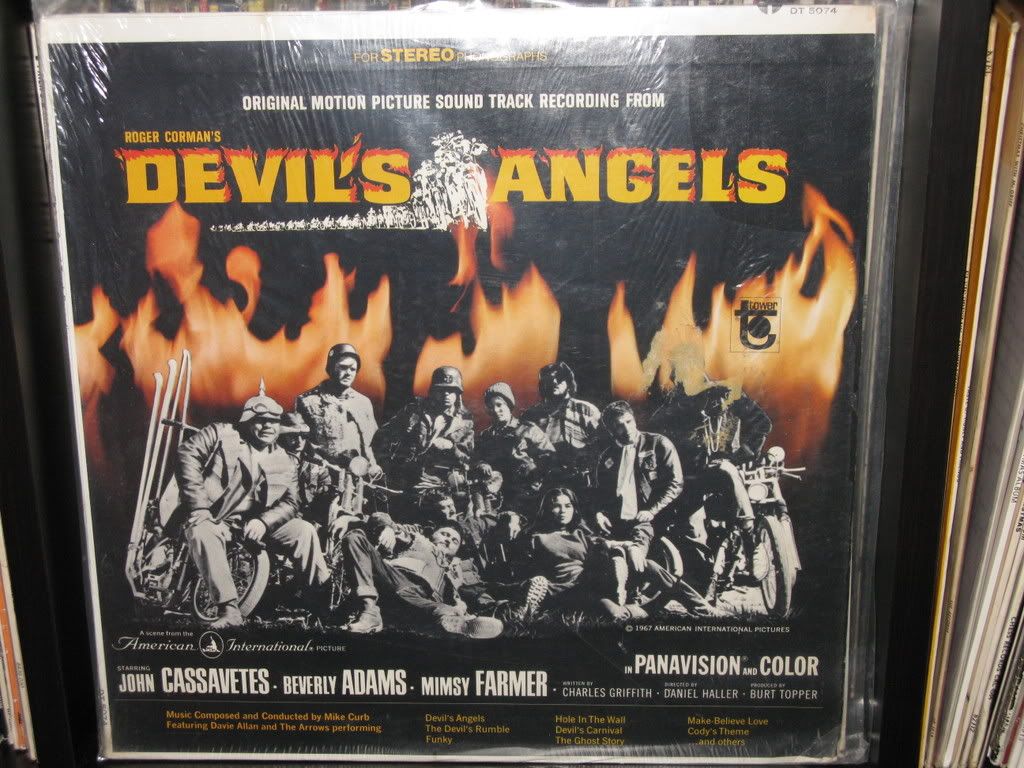 Meanwhile Curb agreed with Corman that Allan would provide the soundtrack for Corman's next biker film Devil's Angels.
Curb pulled out all the stops and teamed Allan with Wrecking Crew stalwarts Carol Kaye, Hal Blaine, Larry Knechtel and Jerry Styner.
My God but its a killer group! Fuzz monsters such as The Devils Rumble, The Ghost Story and Devil's Angels are just too mean and hard to keep within the grooves of a record. They demand to be let loose to go screaming down the road, raising hell, taking bad drugs, and sleeping with your wife. If you have to get one Allan biker soundtrack it must be this one. Sure there is the usual filler, a bongo theme and a strange carnival track but the good tracks are just too good to miss.
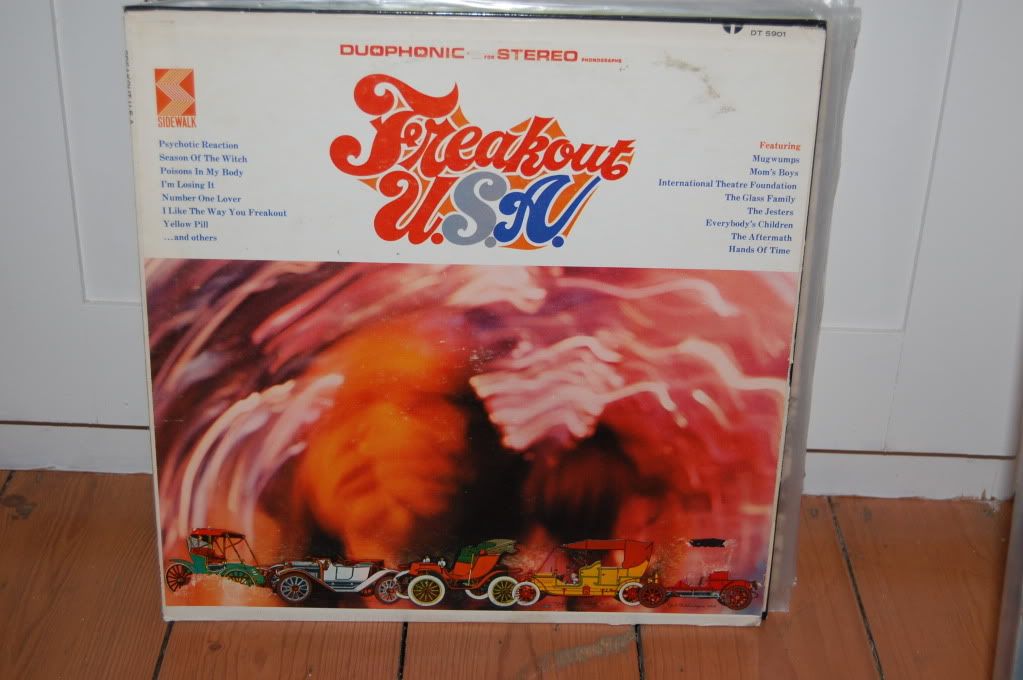 Taking a small break from relentless soundtracks, Allan and the Arrows next appeared on Sidewalk's Freakout USA LP.
Anyone familiar with exploito psych records will immediately see this for what it is - a plastic trip of the first order!
Curb 'bands' the Hands of Time, the Mom's Boys and The Mugwumps reappear for this cash-in. They are joined by other 'groups' The Aftermath, International Theatre Foundation, The Glass Family and Everybody's Children.
I'm pretty sure its Allan on the Hands of Time (I Like the Way You Freakout and Psychotic Reaction), the Mom's Boys (Yellow Pill and Up and Down) and the Mugwumps (Season of the Witch). Most likely its him on the other tracks too!
As it says on the back "..you can rest assured that you'll fall down and pass out screaming with the Psychotic Reaction sounds of today's frenzied Freakouts - USA". Of course! Pick it up for fun. If you look closely at the photo of my copy you'll see that someone has added transfers of old cars to the cover - in my mind that just makes it even more of a freakout!
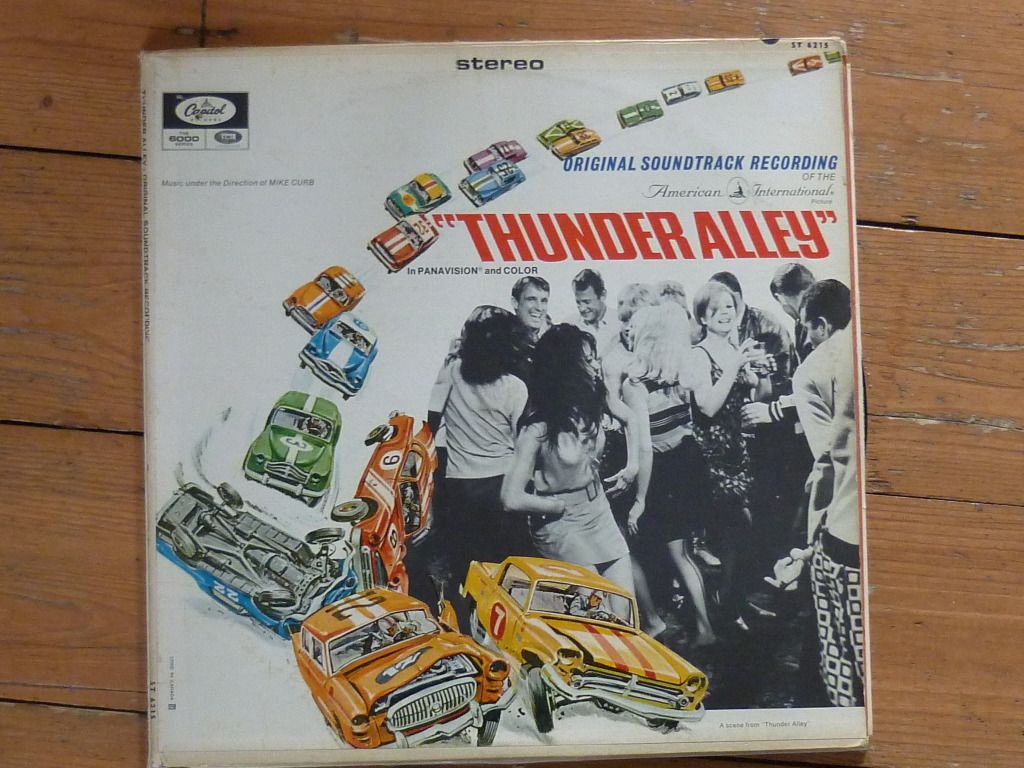 Thunder Alley was a vehicle (geddit?) for Fabian and Annette Funicello after the surf movie fad had run its course it was similar to Elvis's racing movies, Spinout and Speedway.
The soundtrack boldly announced that it was introducing the Band With No Name and includes on the reverse a picture of some likely looking lads in 'mod' attire. In fact not only did the band have no name it wasn't even a real band. It was really just Davie Allan and the Arrows in disguise. And so was the Sidewalk Sounds who we last saw on the Riot on Sunset Strip soundtrack and who we will see later.
As for the music, all the Band With No Name and the Sidewalk Sounds contributions have Allan's twangy fuzz guitar in full effect. My favourite is the Theme From Thunder Alley which closes the record but Calahan's Vision is also very fine. Pete's Orgy wins the prize for best title even through the song itself is only about 30 seconds long!
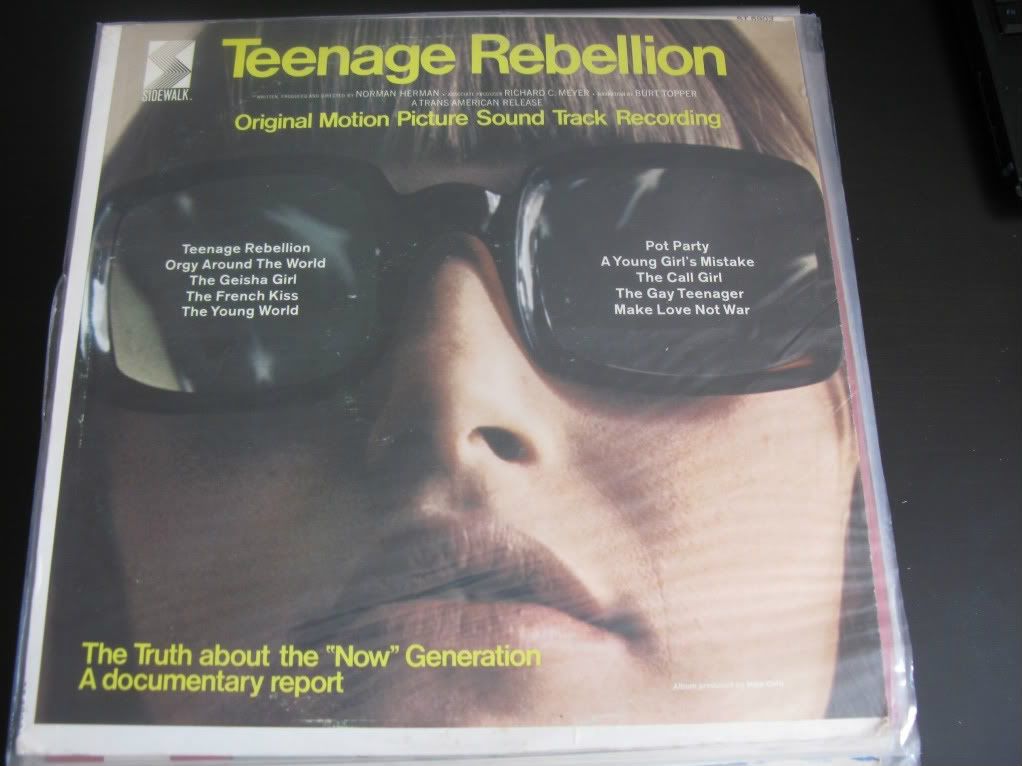 Isn't this one of the best record covers you've ever seen? Very cool. Teenage Rebellion was a mondo movie purporting to show the 'real' life of teenagers. And in case you are in any doubt the track titles tell you what these kids are up to. Orgy Around the World, The French Kiss, Pot Party, The Call Girl and The Gay Teenager (perhaps Teddy and Darrel?). Oh to have been a teenager in the 60s when it was all sex and drugs. When I was a teenager I would have killed for sex or drugs, but that's a different story.
There are no bands credited on the record but there can be no doubt that its Allan behind the opener Teenage Rebellion, The Young World (an early version of Action on the Streets) Make Love Not War and Pot Party. Only Allan could produce that deep down dirty fuzz sound. I'd guess that the slightly surf inflected other tracks feature our man as well. Special mention must be made for Pot Party. Over a Duane Eddy like background a super serious voice over warns/titillates the listener about the drug problem. "If marijuana is the appetiser the advent of the space age technology has provided the main course - LSD, the crazy acid!" Of course.
I also have a soft spot for A Young Girls Mistake which is a crazy moog track that could be straight off a JJ Perrey library record.
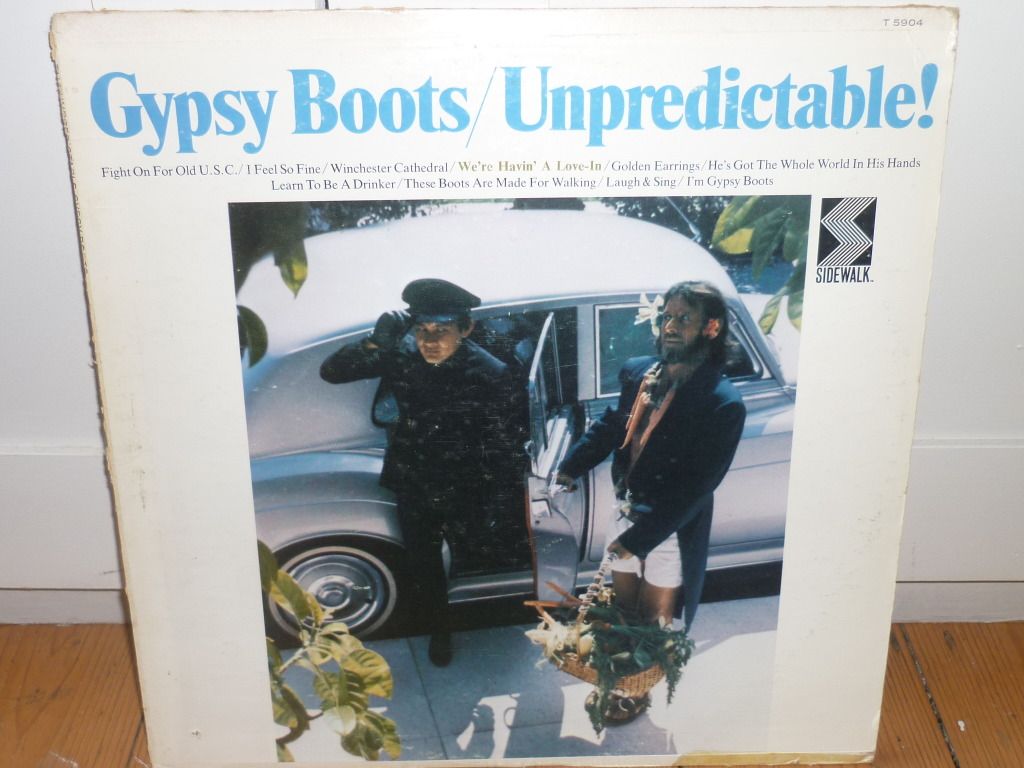 Gypsy Boots was a LA character who was into nature and the ecology before it was hip. A friend of Eden Ahbez who wrote Nature Boy, Gypsy Boots had his own health food store and appeared numerous times on Steve Allen's TV show.
With long hair a beard he look positively bizarre in the late 50 and early 60s. Now he wouldn't make anyone look twice.
I've no idea who was the brains behind this record. Boots can't really sing but shouldn't have been a problem. The real problem is that the songs are terrible and the music is appalling. My advice to you is not to buy this record.
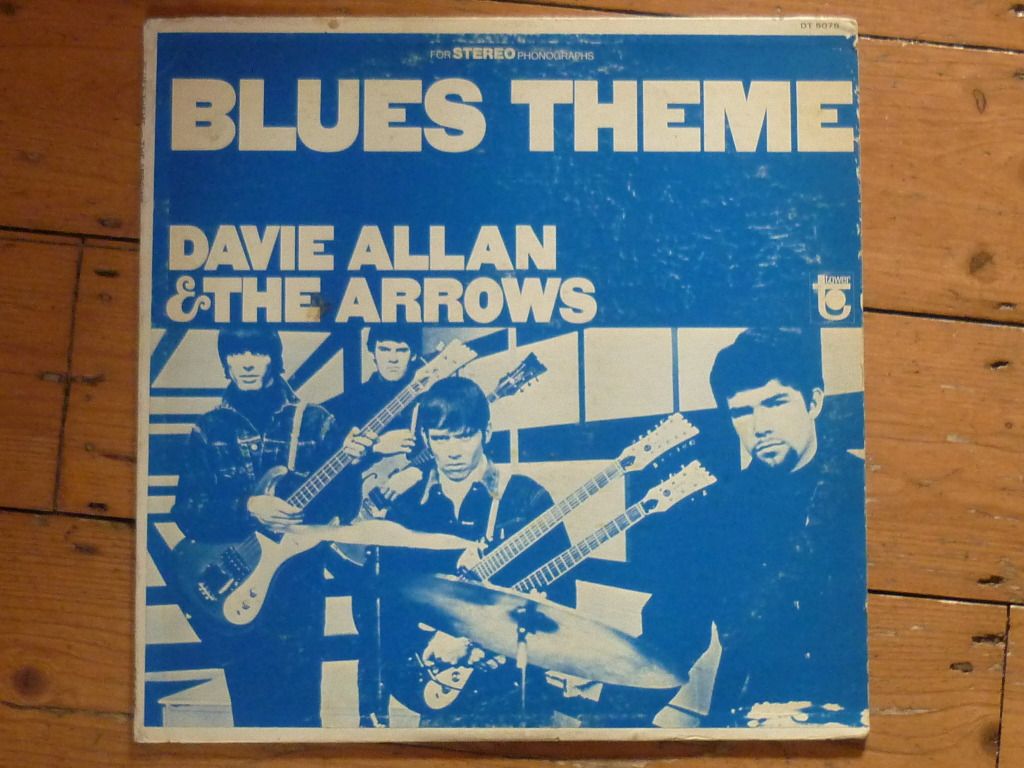
Now we're talking! Packed with mosrite monster fuzz action Blues Theme is all killer and no filler. Every track is a perfectly delivered slice of guitar instrumental mind warp. However, in 1967 no one was interested in this kind of music. The cash-in movies that Allan provided soundtracks for were a better indication of where the kids' minds were and unfortunately for him they were no longer at the beach.
The record starts with the Arrows most famous cut, Blues Theme and also includes Theme from the Wild Angels. Theme from the Unknown and Sorry 'bout That are all recycled from elsewhere. But as they are amazing examples of surf guitar shredded by fuzz its not a problem.
Action on the Streets is a particularly wild and crazed piece of music that could only have more fuzz if the vinyl grew a beard. It has to be heard to be believed. Their take on the Thunderball Theme is also pretty damn fine too.
I can't tell you how great this record is, you'll just have to go out and buy a copy and find out for yourselves!
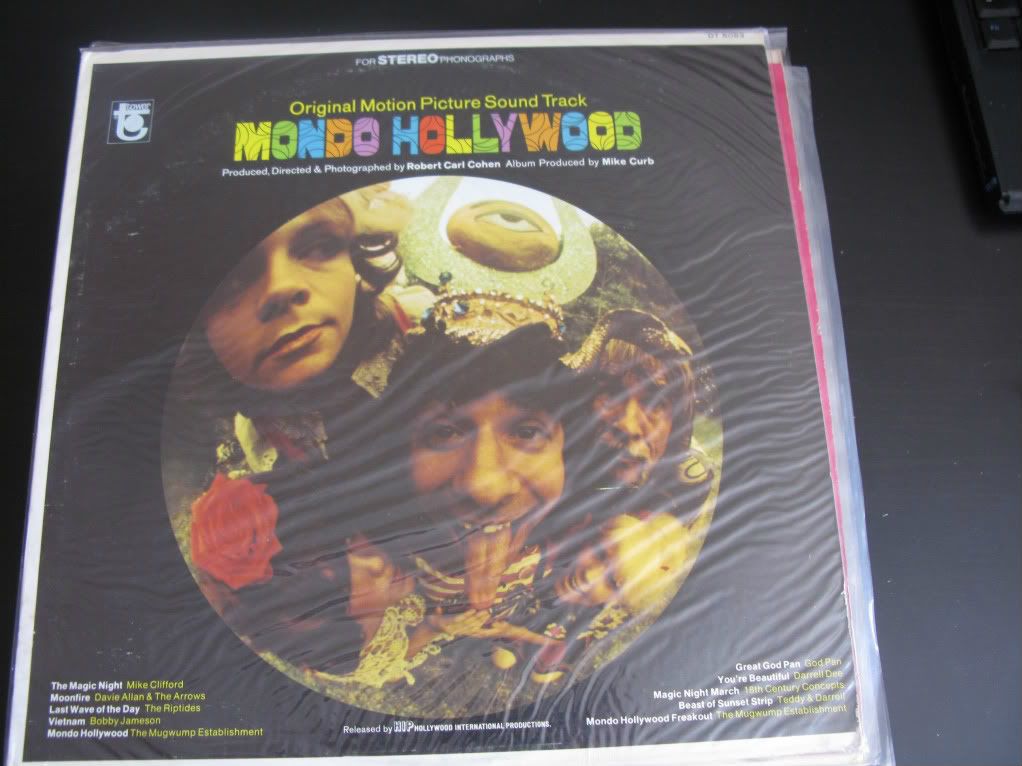 Mondo Hollywood was a similar kind of film to Teenage Rebellion. A 'documentary' the supposedly revealed the strange side of LA it included our friend Gypsy Boots.
Thankfully he didn't contribute to the record but some other familiar names crop up. Remember Teddy and Darrel and The Mugwumps? It also has the first appearance of the 18th Century Concepts, a band for whom Curb would produce a number albums.
Allan only contributed Moonfire, a typically fuzzed out excursion into the freakiest areas of guitar action.
I suspect that he is also on all the other tracks but who knows?
Great cover, don't you think?
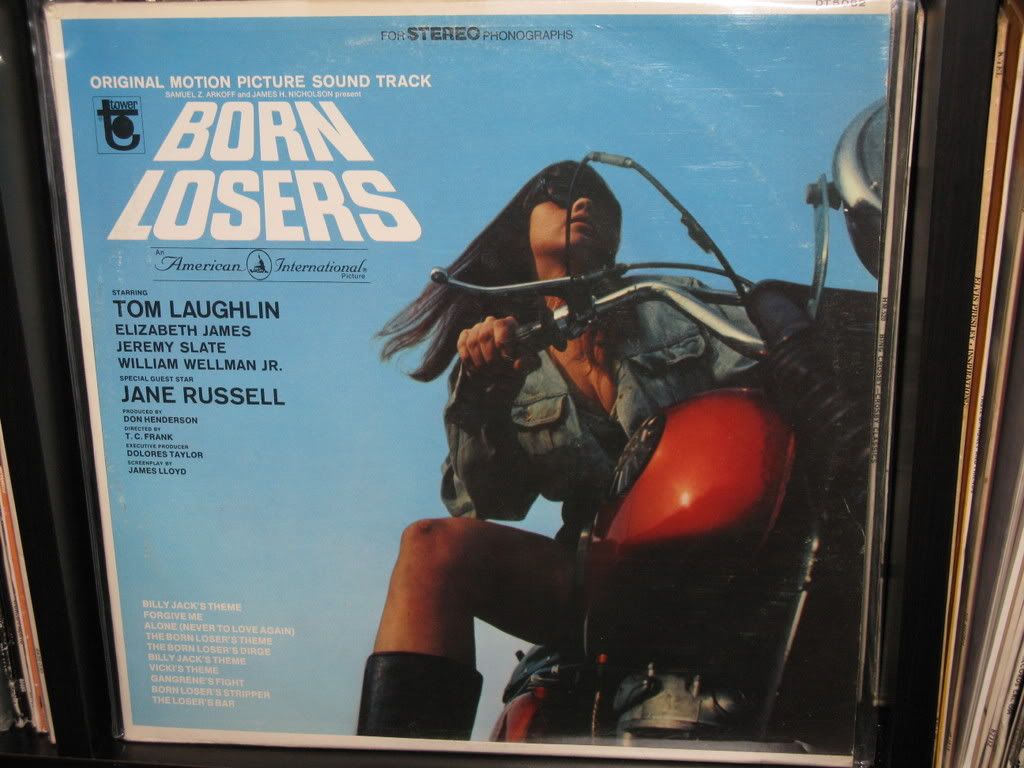 Another great record cover.
Using their Sidewalk Sounds alias, Allan and the Arrows fourth biker soundtrack could have built on the strengths of Devil's Angels.
Instead someone at Tower/Sidewalk though that the way to go was Mariachi Brass. Not so much fuzz as brass!
There are some moments of relied, notably The Loser's Bar and Gangrene's Fight but its too little too late.
By now Allan had been working on so many records, soundtracks, sessions and his own records, that perhaps the quality control had gone a little awry? Or maybe Bob Summers, who produced the record had cloth ears?
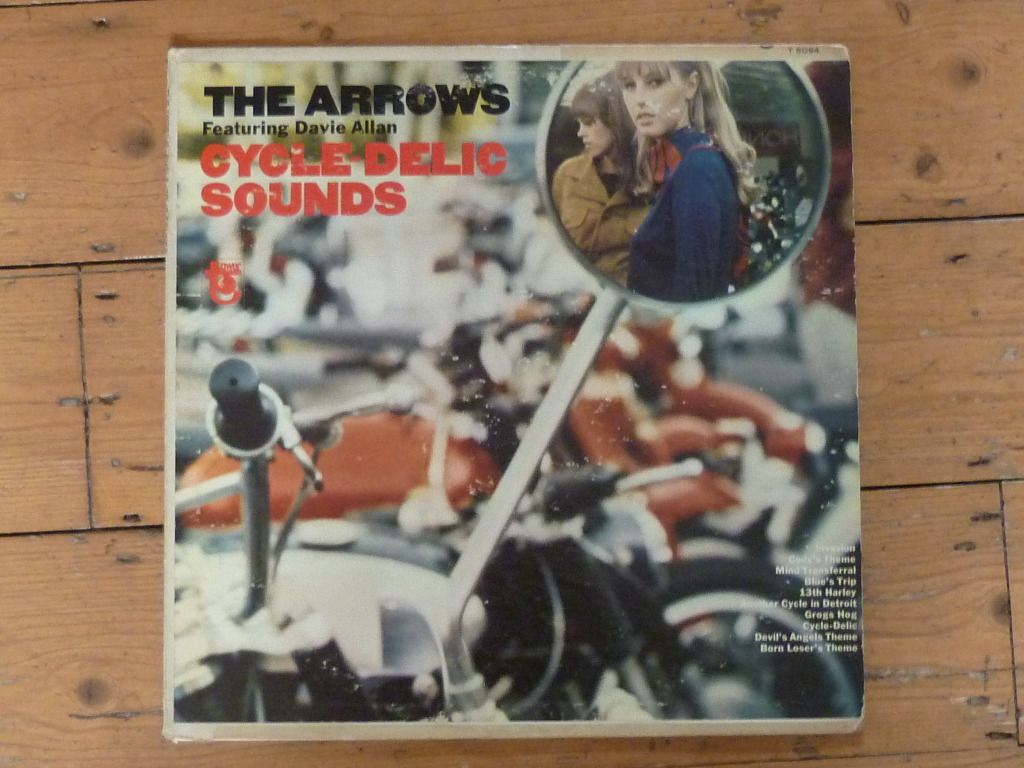 Cycle-delic Sounds - the title says it all. If you are reading this you should stop right now and go and track down a copy of this record. It is without doubt one of the greatest instrumental records ever produced and it takes the surf-based format and injects about as much fuzz as anyone before or since has injected into any music.
There are three tracks from biker movies - Cody's Theme and Devil's Angels from the Devil's Angels soundtrack and Born Loser's Theme from the Born Losers.
The rest are all originals and are incredible. The record opens with what is Davie Allan's greatest moment. A seven minute trip into the unknown and back again. Layers and layers of distorted and crunched guitars attack the music as though life itself depended on it. Screaming from every side, Allan's guitar sounds like it is blazing off to another planet and is taking you along for the ride. It weaves in and out, builds up, comes back down only to build up once again.Its a howling fuzz monster that you need to hear - now!
After that the other tracks seem almost polite in comparison. But they aren't. Invasion, Blue's Trip, 13th Harley, Another Cycle in Detroit and Grogg's Hog tear through your ears like bats out of hell. Rough, raw and fierce they are the sounds of surf put through a blender and reconfigured as a new musical creature. The record closes with Mind Transferal which features backwards vocals and even backwards drums!
If you have any taste at all you will love this remarkable and unique record.
Oh, and isn't the cover cool?
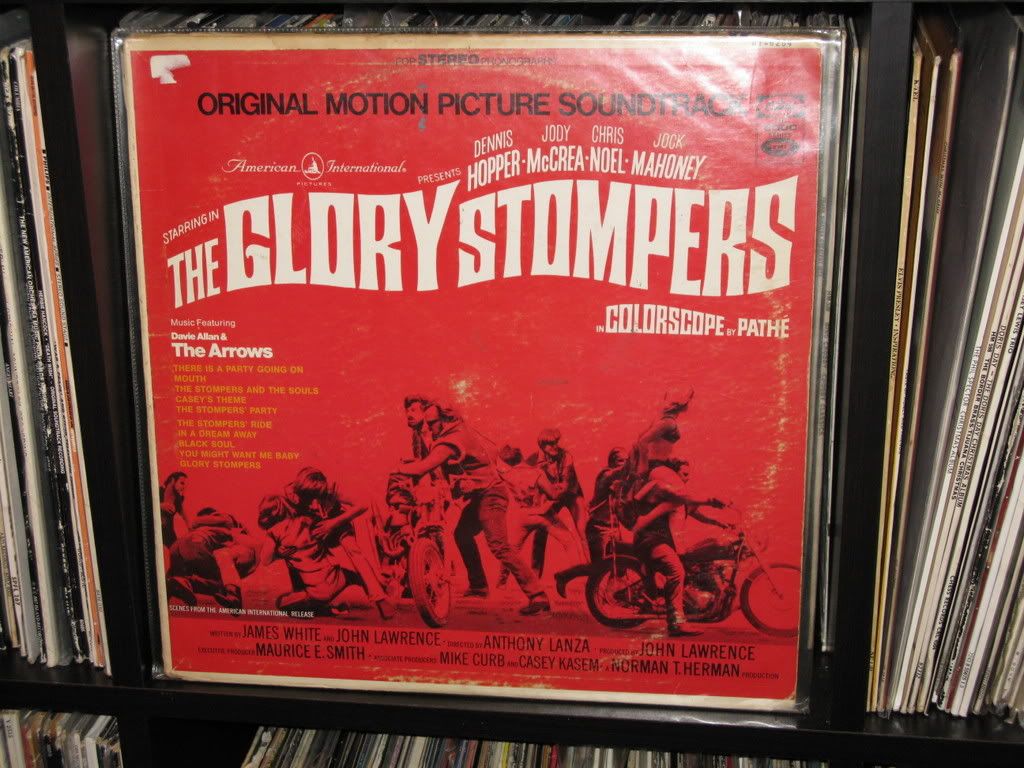
After reaching such a pinnacle of fuzzed out mayhem what else was there to do but record another biker soundtrack? Credited to the Sidewalk Sounds and Eddie and the Stompers the music on this record keeps up the tremolo/fuzz pace of its predecessors.
The main action is at the Stompers and the Souls and the Glory Stompers.
As usual there is a fair share of filler but you've come to expect that by now haven't you?
Apparently some of the music on here was originally intended for another Corman classic The Trip but the Electric Flag got that gig instead!
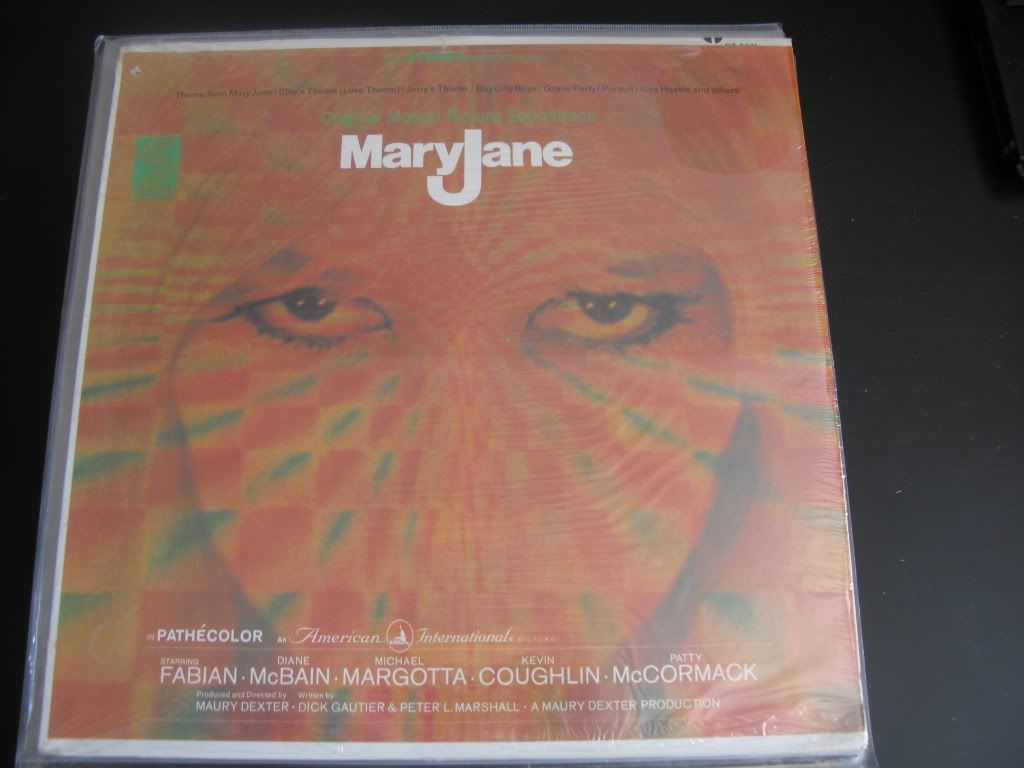 I wonder what a film called Mary Jane could be about???
Staring Fabian and Diane McBain its a rather disappointing dangers of drugs film. Its not as good as Psych Out.
The soundtrack on the other hand is very good. Grogs Hog gets recycled as Bay City Boys but the rest of the music is original. You'll have to skip over the Mary Jane Theme twice. Once by Mike Clifford was bad enough but to have it again sung by Mrs Miller is too much for anyone to take.
There's no mental fuzz action but that's ok because its a largely percussion lead affair.
Standout is Gas Hassle.

Fabian was, again, the star of the next Allan soundtrack record - Wild Racers.
Its largely a snooze-fest despite the Arrow's involvement, again sometimes credited as the Sidewalk Sounds.
The Wild Racer's Theme raises a little interest but overall its not a very interesting record.
Possibly the most interesting thing about my copy is that its from Canada!
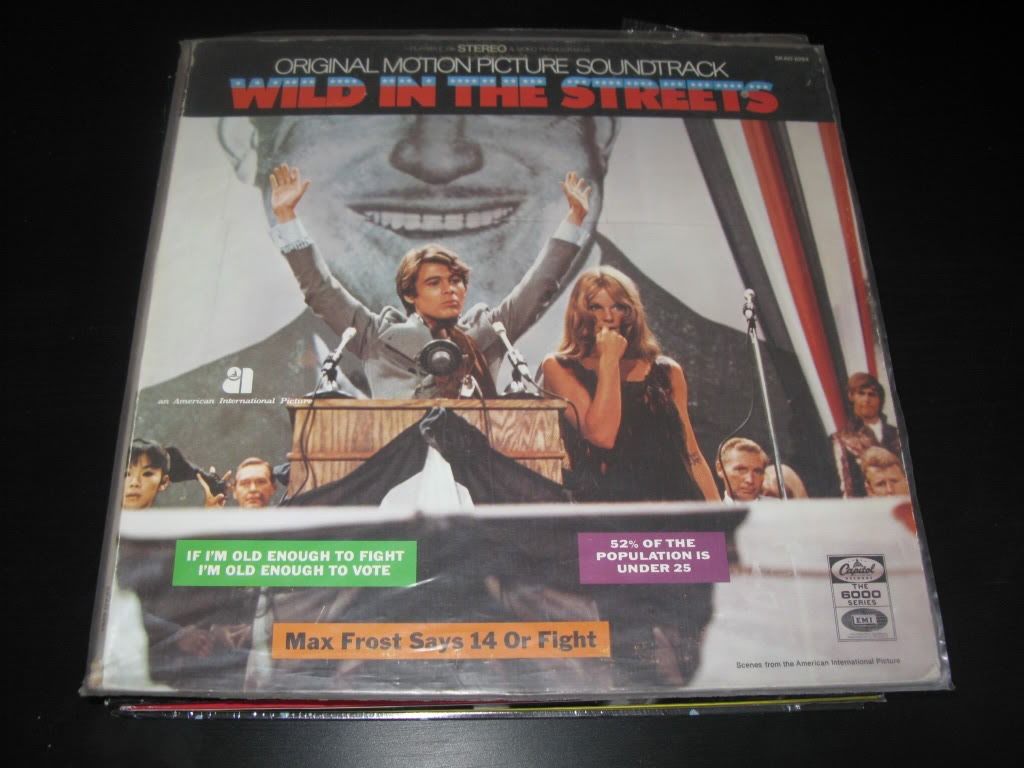 Wild in the Streets is a pretty groovy movie starring Christopher Jones, Shelley Winters and Richard Pryor.
Allan's fuzz doesn't feature much on this record although it does have its moments, most notably Psychedelic Senate which has some groovy sitars. The music was composed by exotica god Les Baxter or Barry Mann and Cynthia Weill.
Mos of the tracks are credited to the 13th Power which I suspect is really another Curb non-band and is actually Allan and his Arrows.
Allan and the Arrows also recorded their own version of the soundtrack which was released at the same time. I haven't tracked a copy down yet but as soon as I have I'll add it in.
 Another spin off from the movie soundtrack was this record which included the tracks Shape of Things to Come and Fifty Two Per Cent from the movie.
Its actually not a bad record and has some fine moments. I particularly like Captain Hassel and Shine It On as well as the two movie tracks.
I don't think its Allan, there is certainly none of his trademark guitar sounds on it.
Does anyone out there know who Max Frost and the Troopers were?
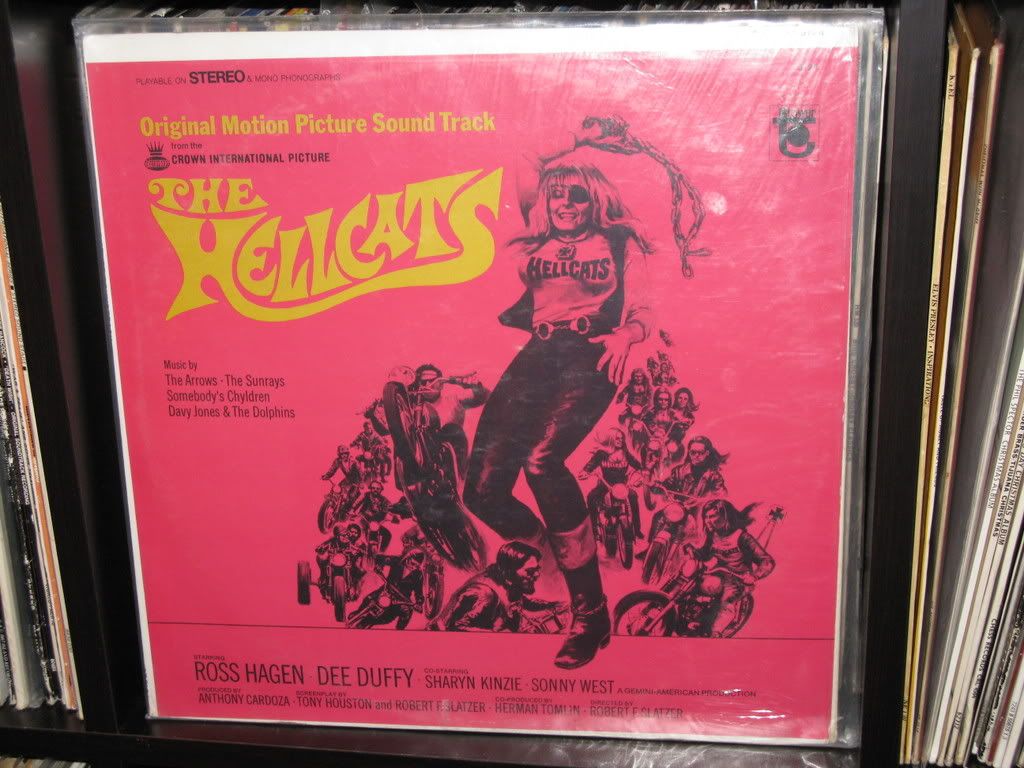 The next biker movie that Allan would work on was the Hellcats.
As you can probably tell from the cover it was about female bikers.
Just as the momentum was going out of biker films so it was going out of Davie Allan and the Arrows. The title track is another fuzzed out stormer but is it just me or by now hasn't Allan done about all there was to do with this sound? Its not a bad track it just isn't very inspired.
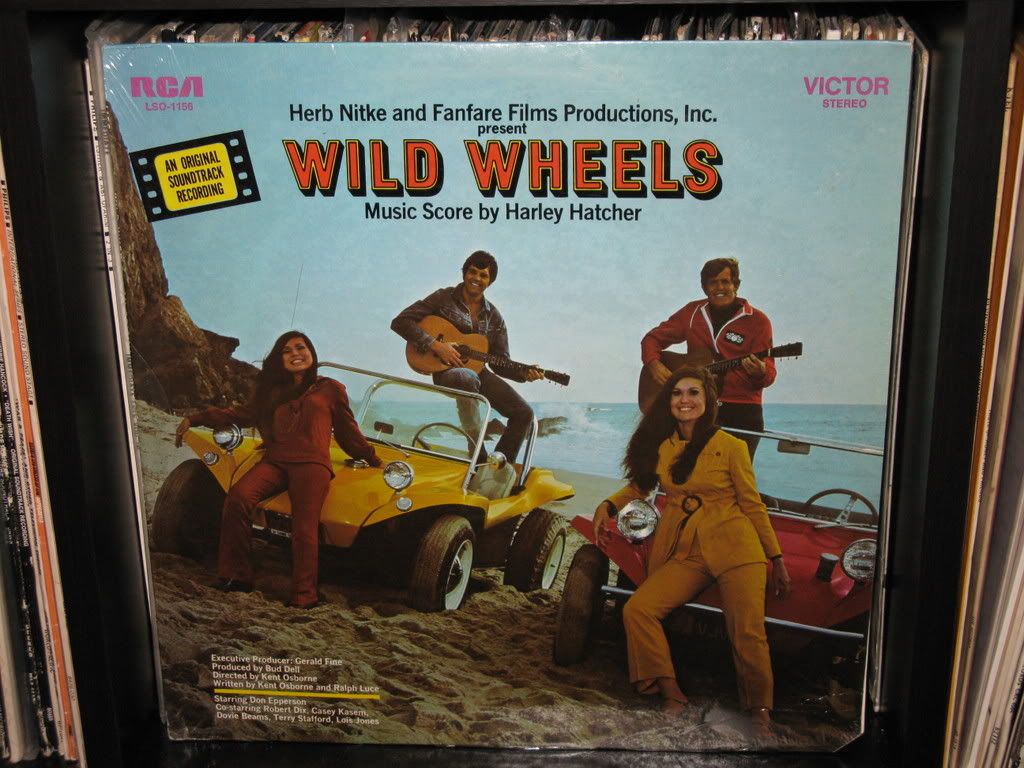 Allan would play on a few further biker soundtracks. Wild Wheels pitted beach buggies (good) against bikers (bad).
The music is a bit of a disappointment although it does have Allan singing on Makin' Love which is a re-recorded version of the Arrows' Makin Love Is Fun.
Its credited to the 13th Committee - possibly related to the 13th Power from Wild in the Streets?
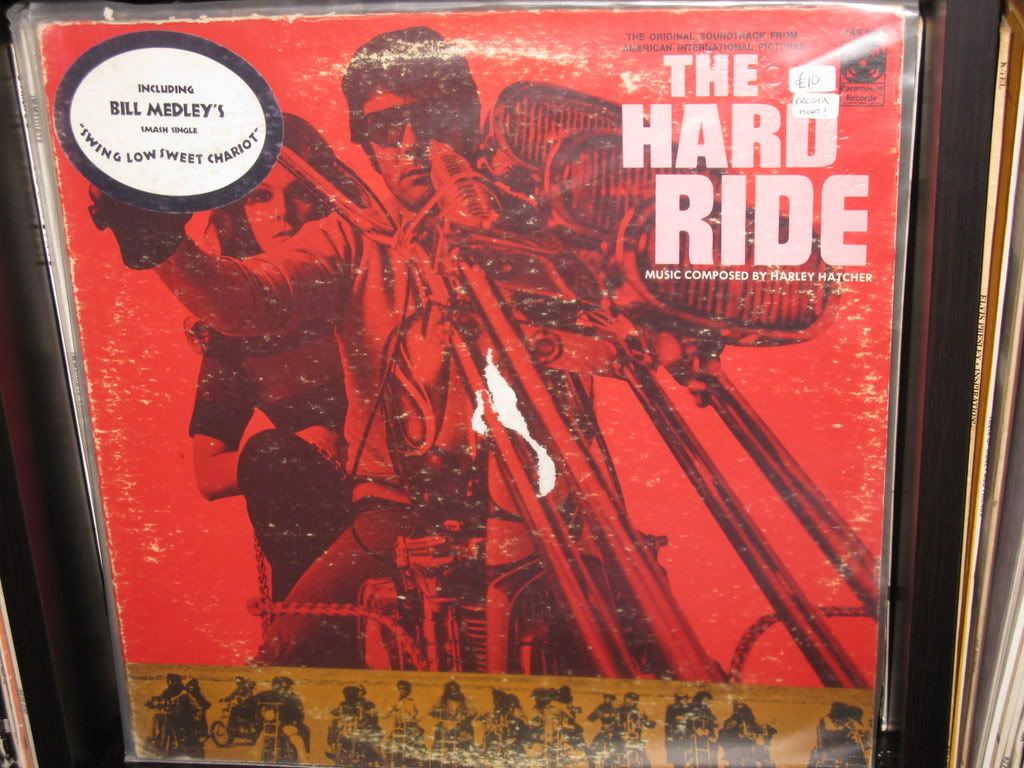 Allan also contributed a very surf sounding track to another biker movie The Hard Ride.
Its a lovely song but has absolutely no fuzz at all.
Allan would also play on a surfing movie called the Golden Breed. I've yet to track down an original copy I can afford but when I do I'll include it here.
In 1969 Curb would sell of Sidewalk Productions for $2 million and go and work at MGM. Allan found that the work simply dried up and disappeared. tI wouldn't be until the 80s that he recorded under his own name but it is for his incredible body of work in the late 60s that he will be best remembered.
Allan is most famous for his work on a number of budget biker flicks. His unique fuzz guitar sound seemed to perfectly emulate the sound of an angry Harley and his wild, almost psych, approach to music seemed to encapsulate the growing counter culture in California. That he was a very straight guy with no personal experience of bikes or drugs doesn't seem to matter. As well as the biker films Allan also provided music to any number of drugs, teen, violent, mondo films
The story of Curb and Allan's work together is usually portrayed as one of typical record company exploitation. It's alleged that Curb took writing credit for many of the tracks that Allan played on, forced Allan to play on many of the releases on his Sidewalk and Tower labels and mismanaged Allan's solo career. It doesn't help that after Allan and Curb stopped working together, Curb went on put out ever poorer quality records usually by the eponymous Mike Curb Congregation, became an executive for a 'proper' record label, MGM, where, having got religion her persuaded them to drop any artists whose drug use he disapproved of and then finally he got into politics as a Republican.
However, although the relationship between Curb and Allan was not equal, I don't see it as being any more unequal than many other producer/artist relationships. Curb genuinely did write a lot of the material that Allan recorded and Allan has even said as much. As for the accusation that Allan was forced to work on too many sessions and record too many terrible song, Los Angeles was full of session musicians looking for work and who were prepared to play any gig as long as it paid. The list above shows how many brilliant musicians there were who also appear in some surprising and not always very good musical places.
Having said all that it is Allan's playing that stands out and long after Curb is forgotten it is Allan's signature fuzz guitar sound that will live on.
Follow me through the Davie Allan story on vinyl. As ever there are some omissions and I will aim to fill these in as soon as I come across the necessary records!
Curb and Allan were in the same choir and when Curb's ambitions led him to Mercury he took Allan with him. Finally he was taken on as a producer and worked alongside surf producer extraordinaire Gary Usher. He used many of Usher's techniques on his motorcycle records, including the recycling of tracks and the tendency to include one or two great songs and lots of filler. West Coast Action Sounds - Go Go With the Buddies is the second Mercury motorcycle record he produced and already it contains a number of tracks lifted of his earlier Buddies and Compacts record! Covering just about every Californian fad from bikes, to cars, to skate boards to skiing this is a nice but not exactly adventurous record. Allan had yet to fully explore the possibilities of fuzz and while there are some hints his playing is very much in the Dick Dale mould. Good, but don't loose any sleep if you haven't got a copy!
Allan and the Arrow's first album is a little cracker. Skip over their version of the Shadow's Apache and head straight to Tee Pee to get a full blast of their sound. Driving, fast paced, relentless surf with pounding drums and a catchy piano lick, its a great tune. A harmonica makes an appearance in Twine Time and to close the first side we get the great Rebel (Without a Cause). Side two is dominated by Scratchy. A great slab of Duane Eddy inspired guitar instrumental with a hint of the fuzz that would make Allan's name. The LP closes with Comanche (after Apache - geddit?) and a great end it is too.
However, in the main it's still basically coming from the world of surf music. Producers had been trying to find other pursuits to replace surfing that would continue the music and take it beyond the West Coast. So there were hot rod records, motorcycle records, power boat records, skiing records, and skateboarding records. However, perhaps unintentionally it lay the foundations for the rest Allan's career.
Without doubt the campest record in my collection, Teddy and Darrel take out most of the double in double entendre and leave you in no doubt that they are singing (if you can call it that) about sex.
Lisping and simpering in a completely stereotypical way the duo fly very close to the bone for a record released in 1966. Someone must have thought that there was a market for these camp covers or else why would they record These Are The Hits You Silly Savage? You should listen to These Are The Hits as, for no other reason, it will make you completely reasse Hold On I'm Comin! As far as Allan in concerned there is nothing in the way of fuzz guitar and so don't get it if you want something tough!!
The Wild Angels created a template that Allan would follow for much of his soundtrack work. There was a theme, The Theme From the Wild Angel, a freakout track, an absolute powerhouse of crazed fuzz, in this case the justly famous Blues Theme and some filler - no one needs to hear the Hands of Time's Lonely in the Chapel. Although some of the tracks are credited to Davie Allan and the Arrows, Allan and his Arrow cohorts played on every track and the bands credited were entirely fictional. Curb obviously liked to make it seem that he was in charge of a larger roster of acts when in fact other than Allan there were few others.
The Wild Angels Vol. II runs to just under twenty minutes and is nothing more than a retread of material on the original record.
However, Dark Alley and The Last Ride come to the rescue and save what might otherwise have been a pretty desperate record.
Allan's fuzz sound is now very much to the fore which is a good thing.
The soundtrack includes Curb stalwarts, Terry Stafford, Guy Hemeric, Harley Hatcher and Davie Allan.
If you listen closely you can hear him playing on the Candles track This I Say.
Overall I like this record more that I should. Its stupid and lightweight and generally pointless. Or perhaps those are reasons that I should like it? I'm particularly partial to the Mad Doctors tracks for some reason!
Riot on Sunset Strip is justly a classic soundtrack if not a classic movie. Using real band, The Standells and the Chocolate Watch Band there is a real garage punk feel to this record. It might really be music that kids listened to rather than music that record and film company executives thought they listened to! However, Curb, as he was the producer, couldn't help but add some of his own bands. So we get the forgettable Debra Travis, Drew, The Mugwumps and The Mom's Boys. There was also the Sidewalk Sounds, really Davie Allan and the Arrows. Allan also played on Mugwumps and Mom's Boys tracks. None of these stand up to the fuzz of the earlier biker soundtracks unfortunately.
Curb pulled out all the stops and teamed Allan with Wrecking Crew stalwarts Carol Kaye, Hal Blaine, Larry Knechtel and Jerry Styner.
My God but its a killer group! Fuzz monsters such as The Devils Rumble, The Ghost Story and Devil's Angels are just too mean and hard to keep within the grooves of a record. They demand to be let loose to go screaming down the road, raising hell, taking bad drugs, and sleeping with your wife. If you have to get one Allan biker soundtrack it must be this one. Sure there is the usual filler, a bongo theme and a strange carnival track but the good tracks are just too good to miss.
Anyone familiar with exploito psych records will immediately see this for what it is - a plastic trip of the first order!
Curb 'bands' the Hands of Time, the Mom's Boys and The Mugwumps reappear for this cash-in. They are joined by other 'groups' The Aftermath, International Theatre Foundation, The Glass Family and Everybody's Children.
I'm pretty sure its Allan on the Hands of Time (I Like the Way You Freakout and Psychotic Reaction), the Mom's Boys (Yellow Pill and Up and Down) and the Mugwumps (Season of the Witch). Most likely its him on the other tracks too!
As it says on the back "..you can rest assured that you'll fall down and pass out screaming with the Psychotic Reaction sounds of today's frenzied Freakouts - USA". Of course! Pick it up for fun. If you look closely at the photo of my copy you'll see that someone has added transfers of old cars to the cover - in my mind that just makes it even more of a freakout!
The soundtrack boldly announced that it was introducing the Band With No Name and includes on the reverse a picture of some likely looking lads in 'mod' attire. In fact not only did the band have no name it wasn't even a real band. It was really just Davie Allan and the Arrows in disguise. And so was the Sidewalk Sounds who we last saw on the Riot on Sunset Strip soundtrack and who we will see later.
As for the music, all the Band With No Name and the Sidewalk Sounds contributions have Allan's twangy fuzz guitar in full effect. My favourite is the Theme From Thunder Alley which closes the record but Calahan's Vision is also very fine. Pete's Orgy wins the prize for best title even through the song itself is only about 30 seconds long!
There are no bands credited on the record but there can be no doubt that its Allan behind the opener Teenage Rebellion, The Young World (an early version of Action on the Streets) Make Love Not War and Pot Party. Only Allan could produce that deep down dirty fuzz sound. I'd guess that the slightly surf inflected other tracks feature our man as well. Special mention must be made for Pot Party. Over a Duane Eddy like background a super serious voice over warns/titillates the listener about the drug problem. "If marijuana is the appetiser the advent of the space age technology has provided the main course - LSD, the crazy acid!" Of course.
I also have a soft spot for A Young Girls Mistake which is a crazy moog track that could be straight off a JJ Perrey library record.
With long hair a beard he look positively bizarre in the late 50 and early 60s. Now he wouldn't make anyone look twice.
I've no idea who was the brains behind this record. Boots can't really sing but shouldn't have been a problem. The real problem is that the songs are terrible and the music is appalling. My advice to you is not to buy this record.
Now we're talking! Packed with mosrite monster fuzz action Blues Theme is all killer and no filler. Every track is a perfectly delivered slice of guitar instrumental mind warp. However, in 1967 no one was interested in this kind of music. The cash-in movies that Allan provided soundtracks for were a better indication of where the kids' minds were and unfortunately for him they were no longer at the beach.
The record starts with the Arrows most famous cut, Blues Theme and also includes Theme from the Wild Angels. Theme from the Unknown and Sorry 'bout That are all recycled from elsewhere. But as they are amazing examples of surf guitar shredded by fuzz its not a problem.
Action on the Streets is a particularly wild and crazed piece of music that could only have more fuzz if the vinyl grew a beard. It has to be heard to be believed. Their take on the Thunderball Theme is also pretty damn fine too.
I can't tell you how great this record is, you'll just have to go out and buy a copy and find out for yourselves!
Thankfully he didn't contribute to the record but some other familiar names crop up. Remember Teddy and Darrel and The Mugwumps? It also has the first appearance of the 18th Century Concepts, a band for whom Curb would produce a number albums.
Allan only contributed Moonfire, a typically fuzzed out excursion into the freakiest areas of guitar action.
I suspect that he is also on all the other tracks but who knows?
Great cover, don't you think?
Using their Sidewalk Sounds alias, Allan and the Arrows fourth biker soundtrack could have built on the strengths of Devil's Angels.
Instead someone at Tower/Sidewalk though that the way to go was Mariachi Brass. Not so much fuzz as brass!
There are some moments of relied, notably The Loser's Bar and Gangrene's Fight but its too little too late.
By now Allan had been working on so many records, soundtracks, sessions and his own records, that perhaps the quality control had gone a little awry? Or maybe Bob Summers, who produced the record had cloth ears?
There are three tracks from biker movies - Cody's Theme and Devil's Angels from the Devil's Angels soundtrack and Born Loser's Theme from the Born Losers.
The rest are all originals and are incredible. The record opens with what is Davie Allan's greatest moment. A seven minute trip into the unknown and back again. Layers and layers of distorted and crunched guitars attack the music as though life itself depended on it. Screaming from every side, Allan's guitar sounds like it is blazing off to another planet and is taking you along for the ride. It weaves in and out, builds up, comes back down only to build up once again.Its a howling fuzz monster that you need to hear - now!
After that the other tracks seem almost polite in comparison. But they aren't. Invasion, Blue's Trip, 13th Harley, Another Cycle in Detroit and Grogg's Hog tear through your ears like bats out of hell. Rough, raw and fierce they are the sounds of surf put through a blender and reconfigured as a new musical creature. The record closes with Mind Transferal which features backwards vocals and even backwards drums!
If you have any taste at all you will love this remarkable and unique record.
Oh, and isn't the cover cool?
After reaching such a pinnacle of fuzzed out mayhem what else was there to do but record another biker soundtrack? Credited to the Sidewalk Sounds and Eddie and the Stompers the music on this record keeps up the tremolo/fuzz pace of its predecessors.
The main action is at the Stompers and the Souls and the Glory Stompers.
As usual there is a fair share of filler but you've come to expect that by now haven't you?
Apparently some of the music on here was originally intended for another Corman classic The Trip but the Electric Flag got that gig instead!
Staring Fabian and Diane McBain its a rather disappointing dangers of drugs film. Its not as good as Psych Out.
The soundtrack on the other hand is very good. Grogs Hog gets recycled as Bay City Boys but the rest of the music is original. You'll have to skip over the Mary Jane Theme twice. Once by Mike Clifford was bad enough but to have it again sung by Mrs Miller is too much for anyone to take.
There's no mental fuzz action but that's ok because its a largely percussion lead affair.
Standout is Gas Hassle.
Fabian was, again, the star of the next Allan soundtrack record - Wild Racers.
Its largely a snooze-fest despite the Arrow's involvement, again sometimes credited as the Sidewalk Sounds.
The Wild Racer's Theme raises a little interest but overall its not a very interesting record.
Possibly the most interesting thing about my copy is that its from Canada!
Allan's fuzz doesn't feature much on this record although it does have its moments, most notably Psychedelic Senate which has some groovy sitars. The music was composed by exotica god Les Baxter or Barry Mann and Cynthia Weill.
Mos of the tracks are credited to the 13th Power which I suspect is really another Curb non-band and is actually Allan and his Arrows.
Allan and the Arrows also recorded their own version of the soundtrack which was released at the same time. I haven't tracked a copy down yet but as soon as I have I'll add it in.
Its actually not a bad record and has some fine moments. I particularly like Captain Hassel and Shine It On as well as the two movie tracks.
I don't think its Allan, there is certainly none of his trademark guitar sounds on it.
Does anyone out there know who Max Frost and the Troopers were?
As you can probably tell from the cover it was about female bikers.
Just as the momentum was going out of biker films so it was going out of Davie Allan and the Arrows. The title track is another fuzzed out stormer but is it just me or by now hasn't Allan done about all there was to do with this sound? Its not a bad track it just isn't very inspired.
The music is a bit of a disappointment although it does have Allan singing on Makin' Love which is a re-recorded version of the Arrows' Makin Love Is Fun.
Its credited to the 13th Committee - possibly related to the 13th Power from Wild in the Streets?
Its a lovely song but has absolutely no fuzz at all.
Allan would also play on a surfing movie called the Golden Breed. I've yet to track down an original copy I can afford but when I do I'll include it here.
In 1969 Curb would sell of Sidewalk Productions for $2 million and go and work at MGM. Allan found that the work simply dried up and disappeared. tI wouldn't be until the 80s that he recorded under his own name but it is for his incredible body of work in the late 60s that he will be best remembered.