Writing about music is like dancing about architecture

Wednesday, 15 February 2012

BLAXPLOITATION EXPLOITATION

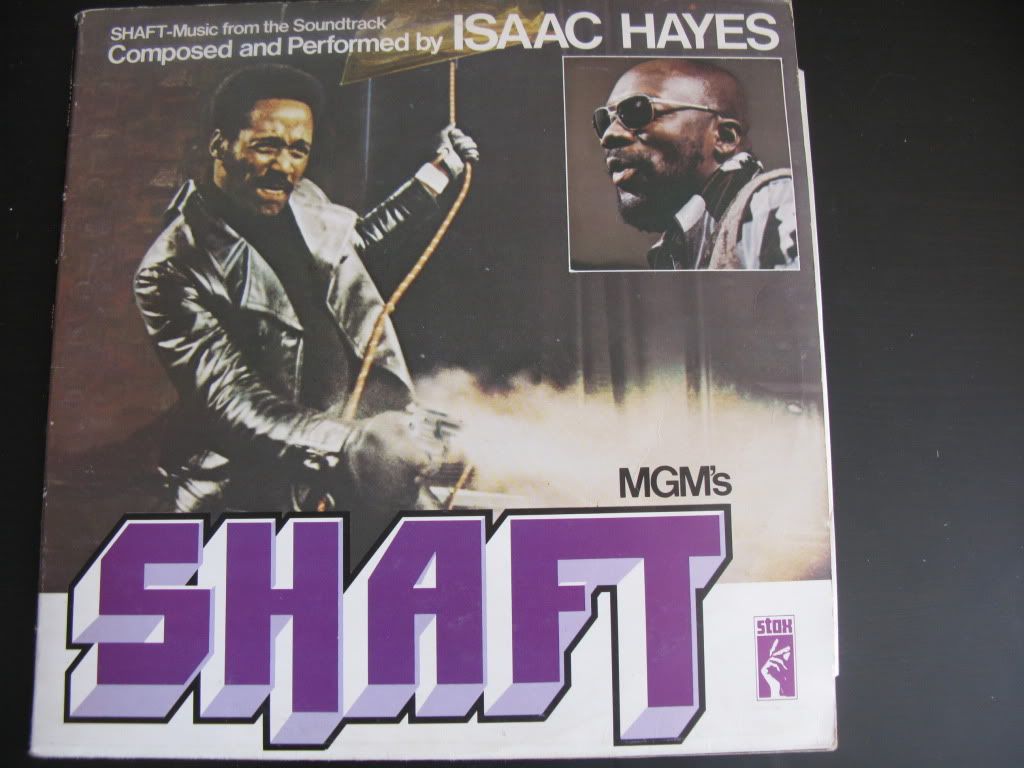
I have a confession to make. I don't really like Shaft very much. I know he's a tough black dude who doesn't take any shit from anyone - not even the white police. I know he's a love god who is about as much of an alpha male as its possible to be. In the world of Shaft there are only three kinds of people - friends (not many of those), enemies (who deserve to be thrown out of a window with out any remorse) and women (who all want to sleep with him). He's as unlikeable as James Bond, but crucially, he has much funkier music.
Issac Hayes' soundtrack to Shaft is a phenomenon and if nothing comes up to the brilliance of the Theme from Shaft then, to be fair, not much else does. Its a ground breaking song which seems to distill the essence of Shaft but also to embody the swagger and confidence of a new black American sensibility. Shaft may have been a caricature but he was one that struck a chord with a lot of black men in the US.
Although Shaft was not the first US movie that had a powerful black lead, was set in the contemporary world and was set in the criminal underworld (the honour goes to the amazing Sweet Sweetbacks Baadasssss Song) it was the  most popular.
Hayes' Theme to Shaft would go on to be covered by just about everyone in just about every style. From Horst Jankowiski, to the Ventures to Decimo's disco version and even Sammy Davis Jr's crack at it, everyone with a wah wah peddle had a crack at it.
The record was such a success that all the following Blaxploitation movies tried their hand at hit soundtracks - often without success.
However, in the US, soundtrack records to b-movies had been released since the 1950s. Nothing was going to change for this new genre.
What was slightly different was that, the popularity of the Bond movies, and Morricone's music to the Leone westerns, had shifted the focus from b-movies with b-grade soundtracks (albeit with some unintentional moments of genius) to the creation of a demand from the record buying public to own the themes to popular movies, but without the hassle of owning the whole soundtrack.
The UK in the late seventies saw a glut of movie and TV soundtrack records as big bands tried to stay relevant and hence stay alive. In the US there seems to have been more of a market for slightly different covers of movie music. Anyone for mariachi, or rockabilly, or jazz takes on famous themes?
So we come to Blaxploitation covers records -  Blaxploitation exploitation.
By far and away the best is Cecil Holmes Soulful Sounds - The Black Motion Picture Experience.
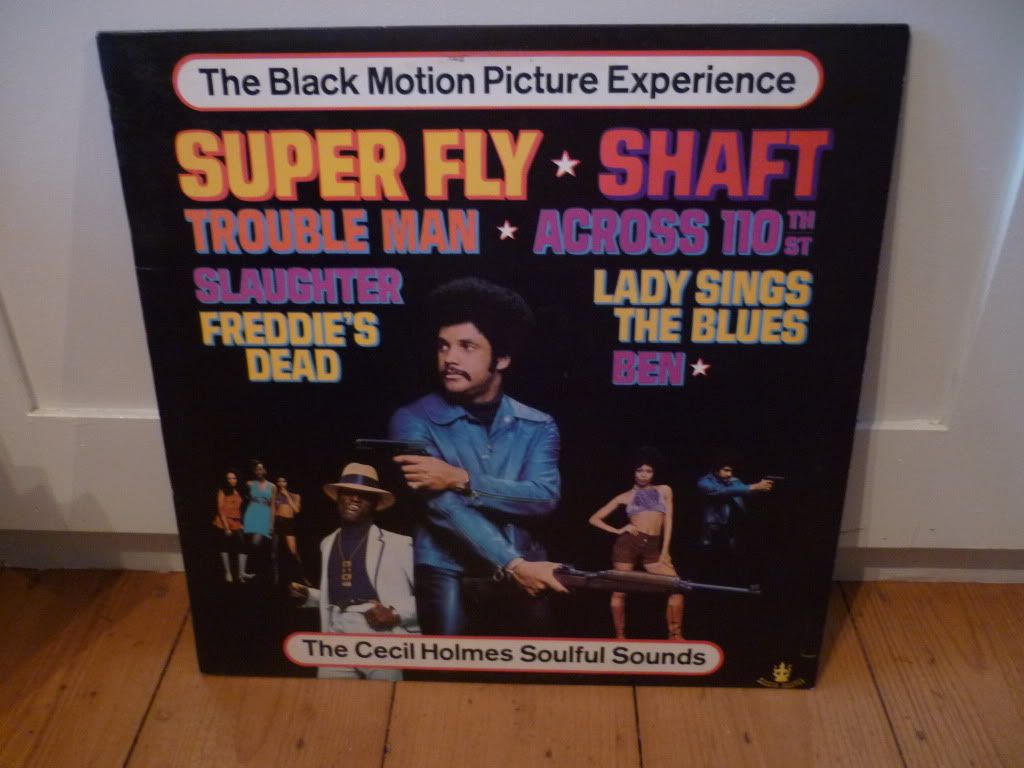

Cecil Holmes was a veteran of any number of movie themed, big band cover records.
Here he stays close to the originals, albeit in a big funky band format.
It has one of the few themes from the movie Slaughter committed to vinyl, which for that alone, makes it work picking up.
The Soulful Sounds don't linger long but they manage to get through Across 110th Street, Slaughter, Ben (bit of a stretch that one I can't help feeling), Freddie's Dead, Superfly, Trouble Man, Shaft and Love Theme from Lady Sings the Blues - which although not the funkiest track seems the most imaginative.
As good as this it, however, it exemplifies two of the problems with covering themes from Blaxploitation movies. Not only are the originals much better and funkier, but, most crucially, most people won't have heard the originals. So you all own a copy of the Shaft soundtrack. But what about Slaughter and Across 110th Street and Trouble Man, and Superfly?
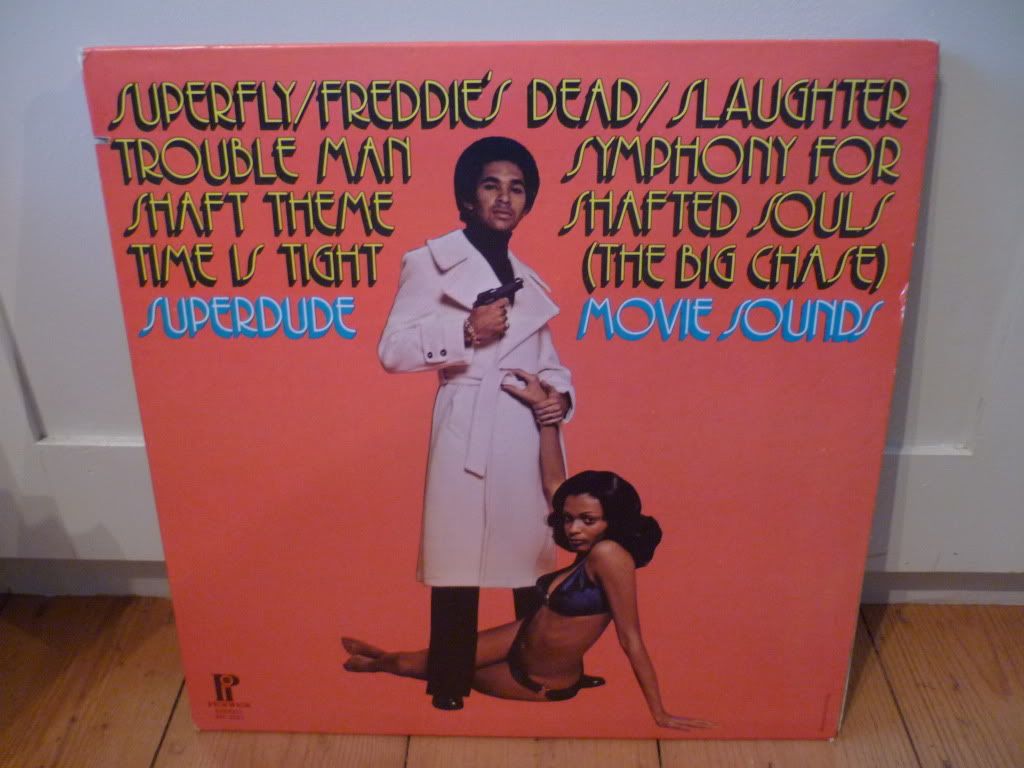
The unknown Superdudes have a crack at the same thing on their unimaginatively titled effort on Pickwick.
The music stays reasonably close to the originals, this time with vocals. Unfortunately the singer appears to have been recorded down a well and lets the band down somewhat. None more so that on their version of Slaughter (another 'rare' version). It sounds as though the singer is straining everything he has to be 'rough' and 'funky' and just about manages gruff.
They also go for some less obvious tracks, covering Booker T and the MGs' Time is Tight (competent), Symphony for Shafted Souls from Shaft's Big Score and Bumpy's Blues and Bumpy's Lament from Shaft. They just can't stay away from Superfly, Freddie's Dead and, of course, the Theme from Shaft!
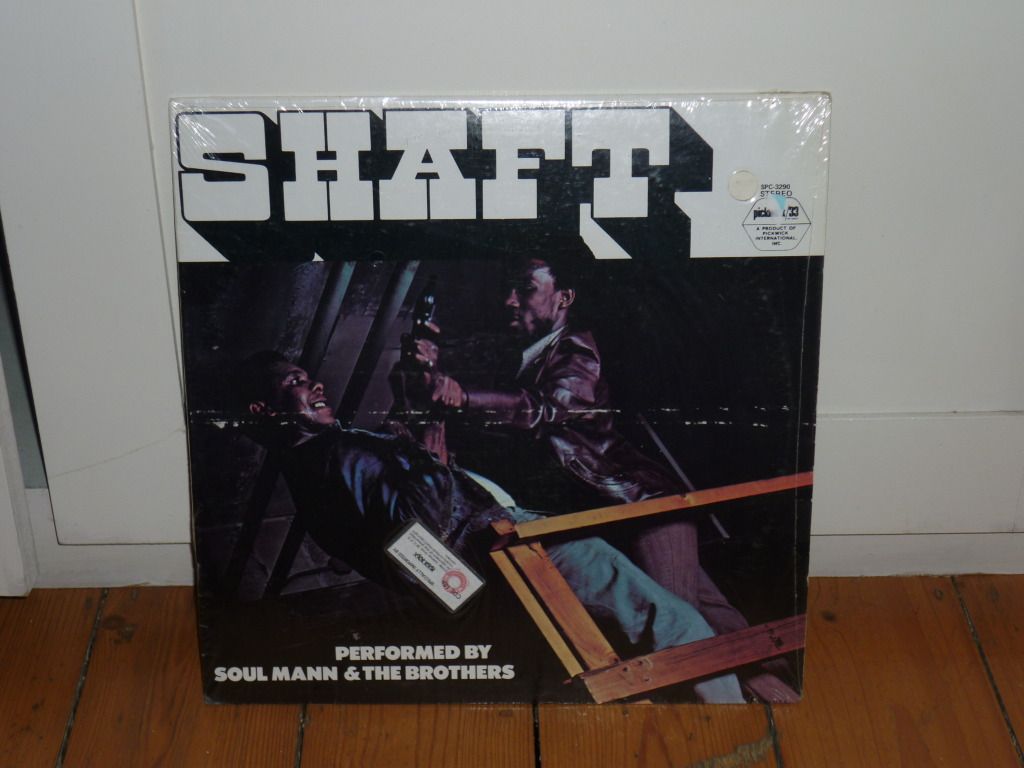
Pickwick also released Soul Mann and the Brothers' Shaft record. Leaving aside the truely awful name (is it just me that thinks it sounds like the brainchild of some white record executive?) and the bizarre cover photo which has nothing to do with the movie, the really odd thing about this record is that it is just as good as the original. The cover versions are so like the original versions that sometimes, if you were doing something else, and weren't really thinking about what was on the turntable you might think that it WAS the Hayes' record.
Its not a bad record. Its just a rather uncessary one. But if you thought that one record that sounded like a carbon copy of the Shaft soundtrack was one too many - you were wrong!
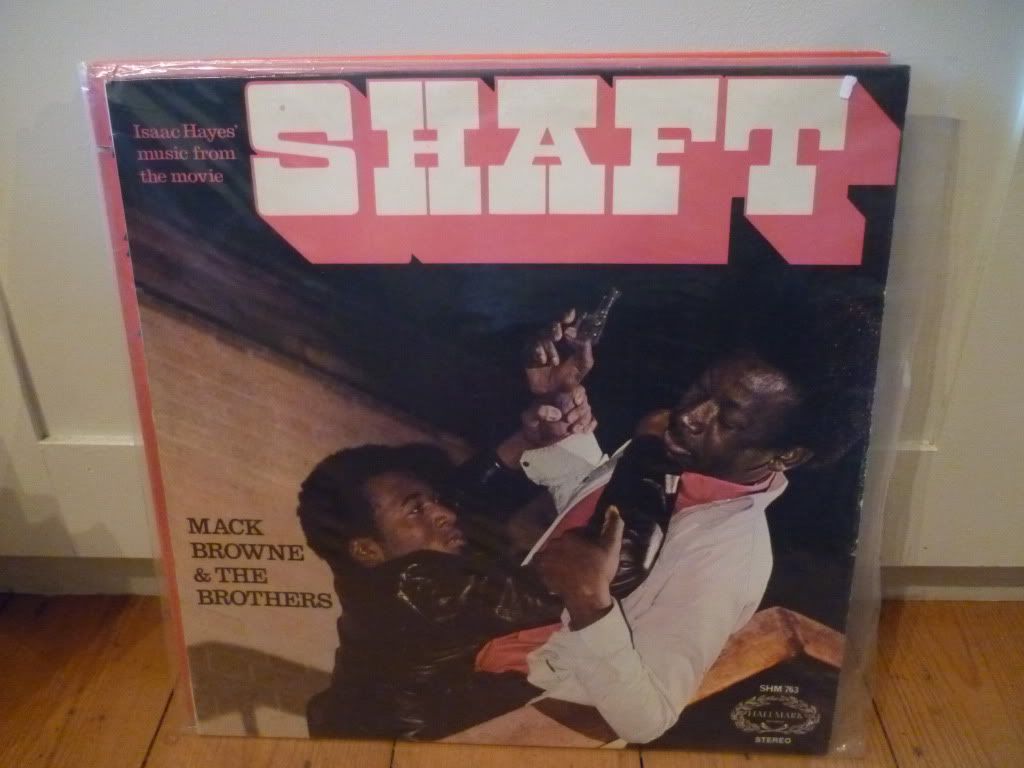
In case you weren't able to get your hands on the original Issac Hayes double album or any of the subsequent slimmed down versions, and the US Pickwick version was difficult to track down in the UK you could get this record on Hallmark - a subsidiary of Pickwick.
Don't be fooled by the cover. The fighting men on the front may look just like the guys on the cover of the Pickwick record - and that's because they are the same.
Someone must have thought that Soul Mann was a really stupid name, and that Mack Browne was somehow more sensible. Still accompanied by the Brothers though!
In the modern music world its hard to imagine a situation where anyone would think that a good way to make money was to make a record that sounded just like a record that was already one of the best selling soundtracks of all time. If you can get the orginal, why would you go for Soul Mann, or Mack Browne??
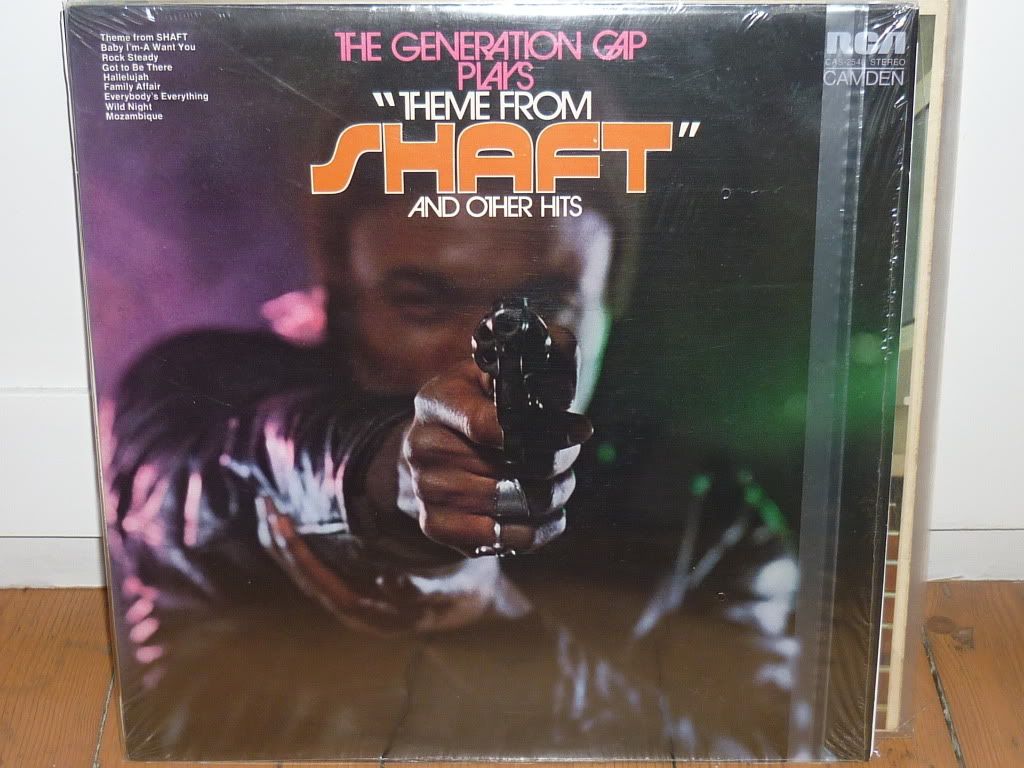
The Generation Gap plays Theme from Shaft and Other Hits isn't really a Blaxploitation Exploitation record. They only cover the Theme From Shaft - the rest of the record are covers of other funky tracks.
More big band stuff with tough drums you should pick this up if you find it cheap - just don't pay any real money for it!
Clearly there weren't enough people buying these records to tempt people to produce many more of them.
If there had been this post would have been much longer (aren't you pleased?).

Wednesday, 8 February 2012

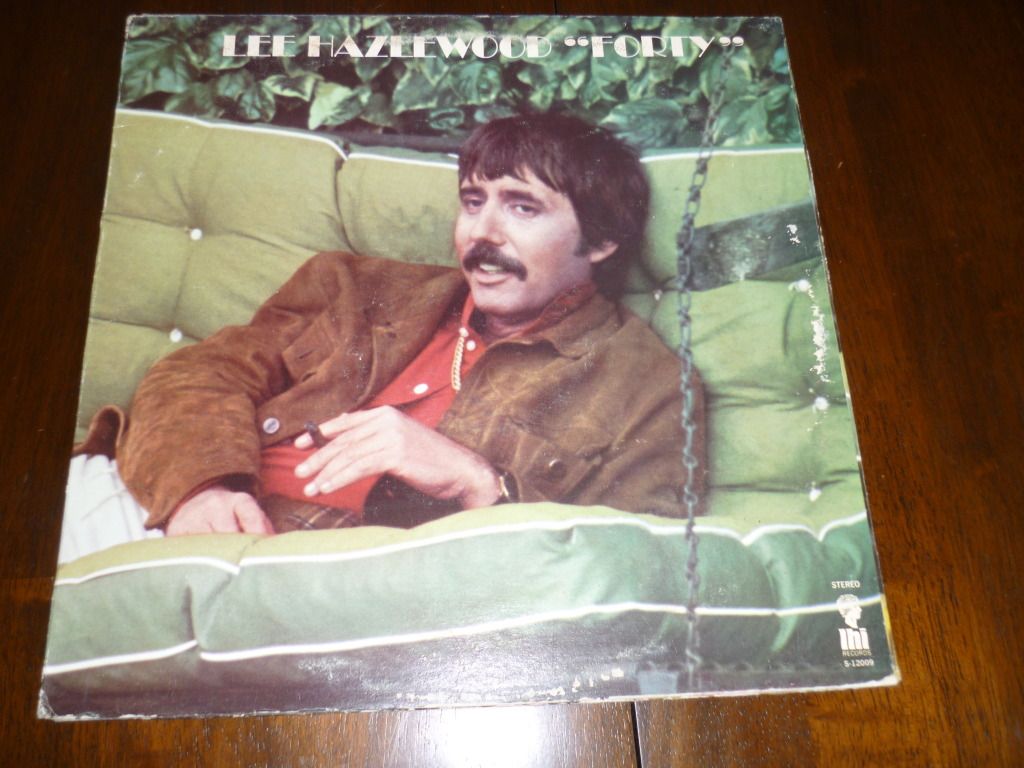
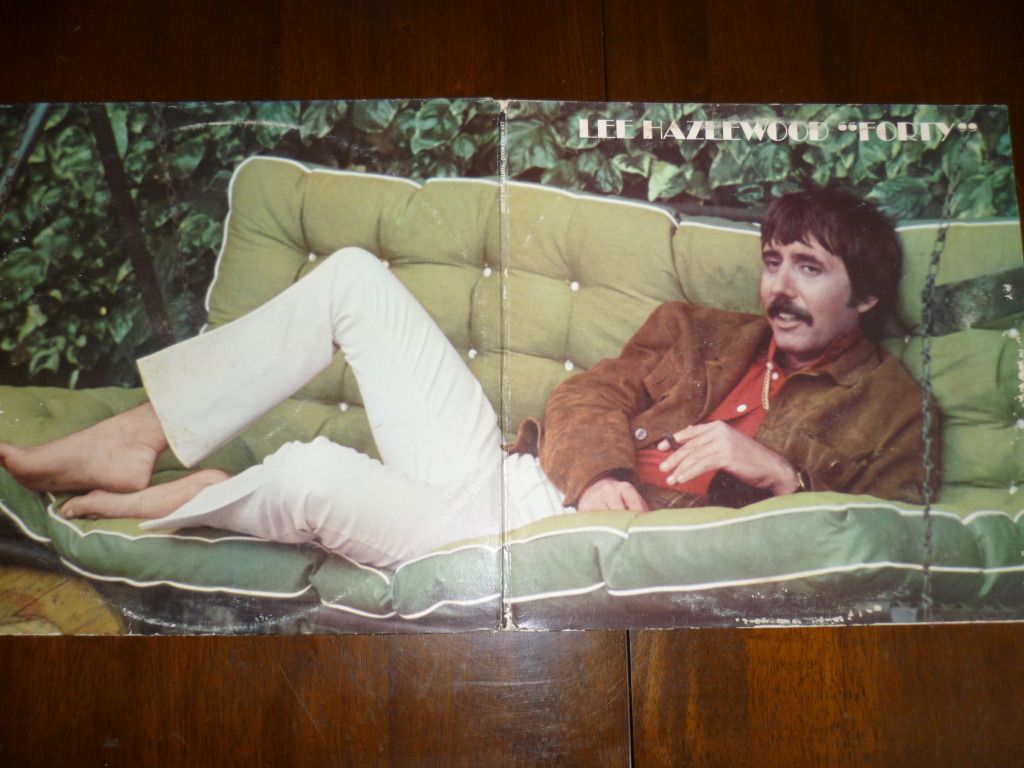
LEE HAZLEWOOD - FORTY


 One of the joys of Lee Hazlewood is his inconsistency. You can never be quite sure on any record how many gems there are going to be. It may be a stone cold classic of hard-lived, wry, country magic like Requiem for An Almost Lady (read about it here). Or it might only have one or two treasures such Poet Fool or Bum. Or sometimes, even within the same song, he might veer from the heart-wrenchingly beautiful to the easy listening schlock. He is never predictable, and never boring. Every one of his records is worthy of you attention and, if you give it enough time, even the songs you initially dismissed will become much loved favourites.
So it is with this record. Recorded when he was, you've guessed it, forty, this LP uses Hazlewood's full repertoire of tricks. Country, slide guitar; soft, wordless female vocals; muted mariachi brass; his deadpan, gruff, singing style; swooping strings; and an impeccable choice of songs - you can expect them all.
I would guess that in some way this is a personal, autobiographical record. What does it say about the great man? I'm not sure. It says that he has loved, lost, recovered from his broken heart and loved again. It says that he has overcome all the problems that life has thrown at him and come out the other side, if not triumphant, then at least stronger and unbowed.
There is always something dark about Lee. He looks into the heart of darkness, and finding only darkness, laughs and proceeds to enjoy himself before it is too late.
This is a record by an adult, for adults, that talks about some of the complex turmoil of grown up love, rather than the juvenile broken heart stories of most pop songs aimed at teenagers. But it also looks back at lost opportunities. Songs like It Was A Very Good Year (surely a nod to the father of his most famous partner!), Wait Till Next Year and even September Song, one of the least successful on the record, speak of past failures and past triumphs.
Lee, ever quotable, wrote some fine sleeve notes which deserve to be repeated here:
"Somewhere between the day I was born and yesterday when I turned FORTY, I made some plans ... but like most plans of Moose and Men, they were subject to change. In fact, they were subject to so much change, I've thought many times I was living someone else's life. Needless to say, I had to learn to compromise and make a few little compromises.
I wanted to be 6' tall ... I had to settle for 5'7".
I wanted to be handsome... I've had to learn to live with a commercial kind of ugliness.
I wanted to write a new national anthem (one with a lot less notes so my peanuts would digest easier at football games) ... I've had to be content with little children pointing accusing fingers at me and shouting ... 'the funny looking one with the moustache; he wrote Boots, Mama.'
I wanted to play such fantastic guitar as to make Chet Atkins and Jerry Reid feel insecure ... but I've just been awarded a gold statue from the California Piano Makers Association with this inscription ... 'This award is given to Mr Lee Hazlewood (for the 9th consecutive year) for we believe his guitar playing has been a most deciding factor toward increasing piano sales. 'Keep pickin', Lee!'
Yes I've learned to compromise; after FORTY years it's a way of life ... an art form ..
I've always wanted my tombstone to read:
Lee Hazlewood
ONE OF AMERICA'S "---------------"
but I suppose by the time I'm EIGHTY. I'll have to settle for:
Lee Hazlewood
WHO??????"

As usual with Lee, some of the tracks reappear elsewhere. In this case on Movin' On which also has some tracks from Requiem for an Almost Lady.

Finally, this record was recorded in London and is a Shel Talmy production. Did Shel produce as well? I haven't been able to find out. Big Jim Sullivan was also involved - always a good sign.
Here are some of the tracks, enjoy.


It Was A Very Good Year: One of Sinatra's classics. Poignant and sad, Lee doesn't seem quite so happy about the passage of time! Some interesting orchestration and piano work. I think the clip clop effect and the 'trad jazz' banjo, muted horn and clarinet also work well for the cowboy in exile.


What's More I Don't Need Her: I love the strings and flutes on this track - so haunting and aching. "We discovered what love means, and then watched it fall apart" - amazing!


The Night Before: A high point of the record. How can anyone not be moved by this? Sterling drum work underpins a song of love and loss and regret (and too much whiskey!) Its a night that he clearly doesn't want to remember!

The Bed: More love and loss. Arranged by Big Jim Sullivan. "What good is there in living, when the dreams of love are dead" - what a suicide note!

Paris Bells: One of the least successful tracks on the record. The arrangement is just too 'easy' for me.


Wait Till Next Year: One of two tracks by Randy Newman. There's something about it that reminds me of Toy Story. Nevertheless a fun rollicking song that Lee delvers with his Suzi Jane is Back in Town voice.

No clip for September Song - but that's ok as its not all that good.

Let's Burn Down the Cornfield: Is that Big Jim on guitar? The second Randy Newman track and a real corker. Sultry and funky and sexy. Yum! Some great organ playing too. Randy's version is on his second album but stick with this one.

Bye Baby: Written by Shel Talmy and J. Marks this has dark brooding lyrics set to some beautiful acoustic guitar and organ work.

No clip for the last track Mary.


Sunday, 5 February 2012

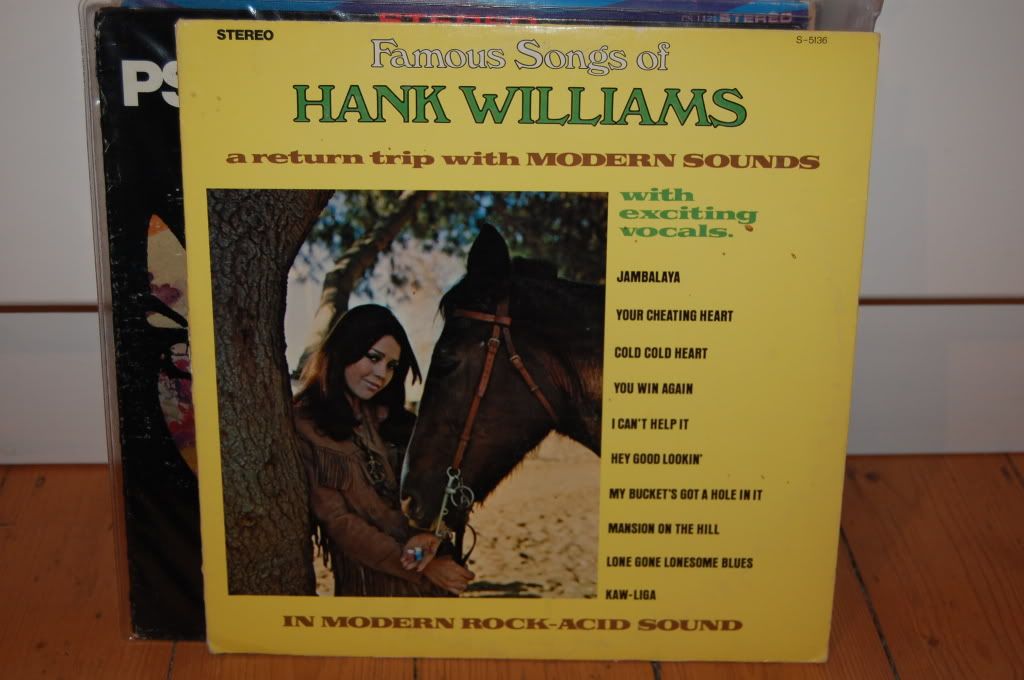
Exploito - Songs of Hank Williams - A Return Trip with Modern Sounds

Hank Williams, one of the most influential country musicians of all time. alcoholic and drug addict, was the creator of many of the myths and attitudes that would become common place in rock and roll. Self taught, unable to read or write music, unable to conform to the 'straight' world of post-war America, he died as a result of his drink and drug intake. He left behind a legacy of some of the most popular country song ever to have been written.

However, in many ways, the rebel Hank Williams became submerged by the country legend Hank Williams. Strangely, although he epitomised many of the outsider traits that became the norm in country, Williams, like Elvis, became so ubiquitous that his image lost its edge.

Which makes this record all the stranger. Imagine a record that purported to be hip hop covers of Bob Dylan or grime covers of Tom Jones! In the late 60's when Alshire put this record out folk-rock had taken off and cosmic country was just round the corner. Gram Parsons liked Hank Williams.

The country/acid link is explicitly laid out on the reverse of the sleeve: "Presented here is a program of ten of the most famous songs made famous by the immortal Hank Williams. A group of exceptionally talented musicians were assembled along with two top vocalists. These great songs were arranged in modern Rock-Acid style, without losing the melodic line of the lyrics, and are presented here for the modern music lover. The whole idea of this album is to bring Hank's great music to the modern young generation, for truly they are great 'heart and soul' songs as evidenced by the millions upon millions of records they have sold. ENJOY THIS PROGRAM OF MODERN ACID-ROCK HANK WILLIAMS SONGS PERFORMED AND SUNG BY A FINE YOUNG GENERATION GROUP."

I love the cover as well. A pretty girl in buckskins and wearing a CND pendant, is feeding a horse coloured sugar lumps. Is it legal to give LSD to horses!!!

Anyway here's the music. The fuzzy Your Bucket's Got a Hole in It is my favourite. What do you make of it?

Click here for Songs of Hank Williams - A Return Trip with Modern Sounds

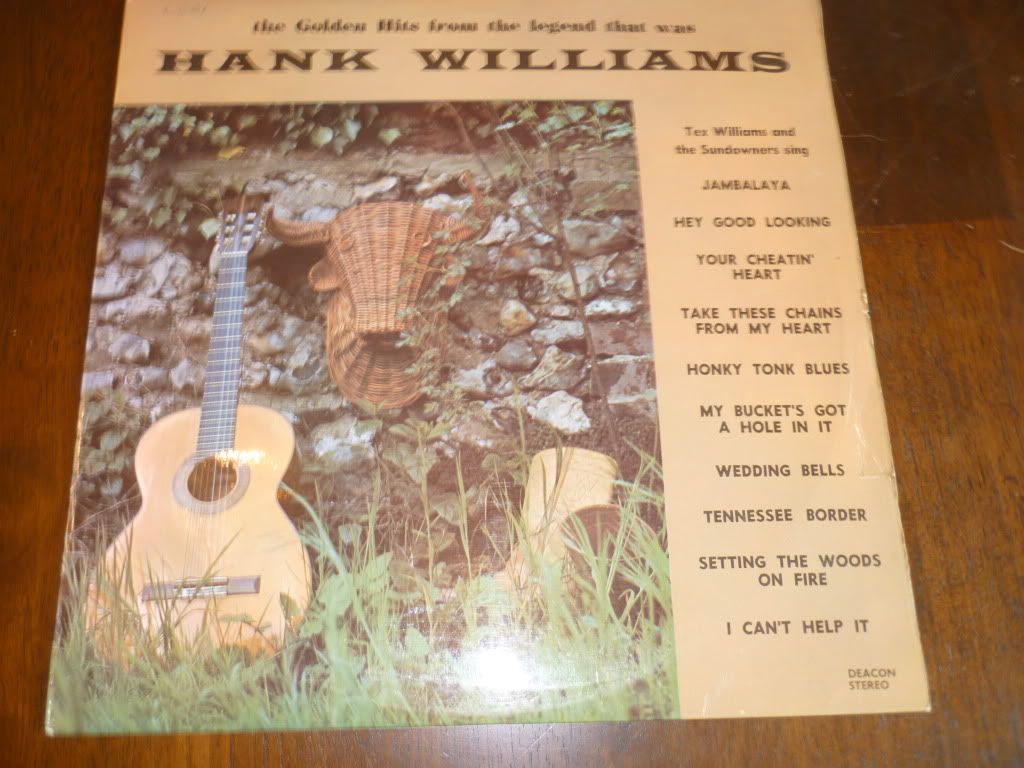
As a 'bonus' here's a more conventional Hank Williams covers record by Tex Williams and the Sundowners - I know which one I prefer!


Friday, 3 February 2012

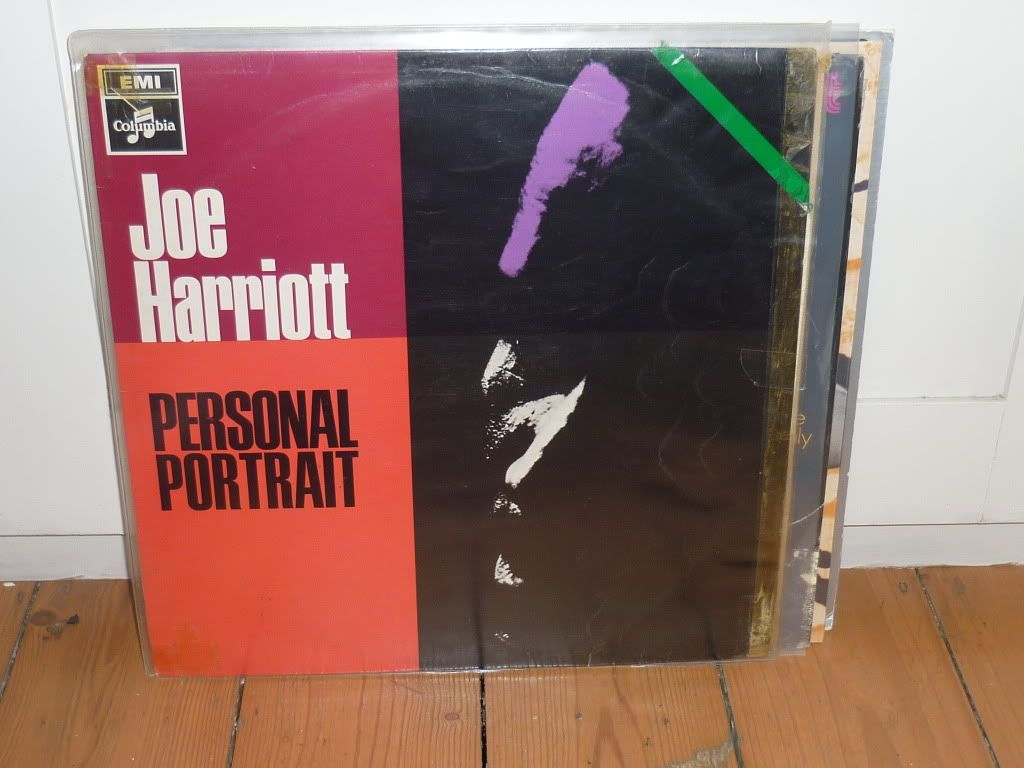
JOE HARRIOTT - PERSONAL PORTRAIT


That Charlie Parker has a lot to answer for. Not only did he popularise heroin in jazz he also legitimised the mix of jazz and 'strings'. His 1950 record, Charlie Parker With Strings, under the auspices of Norman Granz, was an attempt to give jazz some mainstream acceptance. The session paired Parker, a wild improviser, with a chamber orchestra of three violins, viola, cello, harp, oboe and English horn. They were joined by a jazz rhythm section. The results have been debated ever since. The decision to only record standards, understandable given the nature of the studio 'band', has been criticised. Moreover, it has been claimed that the very nature of Parker's playing and the nature of the classically trained orchestra meant that neither was comfortable nor able to play to their strengths. Finally, the charts by Jimmy Carroll have also been dismissed as being glib and facile. It should, however, be noted that Parker seems to have been very pleased with the results. Not only that, many saw this, and the subsequent 'with strings' sessions, as part of a process of legitimising jazz, of showing a wide public that jazz was not just the music of bordellos and bars (which is precisely why many people liked it!).
Harriott for his part was initially a devotee of Parker and at the start of his career acknowledged it. Indeed the inclusion of Parker's Now's The Time on this record shows that even at this stage of Harriott's career, Bird cast a long shadow.
By the time Harriot recorded this record in 1967, which would be his last under his own name, he had not only previously recorded a 'with strings' record, in 1955, but he had also recorded three records with John Mayer. While not pairing him with a string section, the nature of Indian classical music meant that unlike his earlier records with his own Quintet or with Michael Garrick, there was far less space for improvisation and stretching out.  Harriott was a veteran of many styles of jazz, many types of band, and many pairing of his music with unusual bedfellows - even poetry!
Denis Preston's effusive linear notes make reference to all of this. He even goes so far as to say that the content of the record is autobiographical and hence presumably the reason for the title. It is, of course, impossible to know if Harriott really did feel that this record reflected his true character. Given the portrait of him painted in Alan Robertson's Fire In His Soul, I doubt that he would ever have done anything as obvious as bare his soul completely.
Nevertheless, it is hard to imagine that the music on this record is a portrait of Harriott. Or if it is, its a portrait of two very different characters. One is the consummate professional, able to play beautifully in any context. The other is the fiery stylist, always probing and stretching what jazz could be - in fact the man behind Free Form.
The string tracks were orchestrated by David Mack. I'm afraid I can't find any information about David Mack, except for the tantalising snippet that he made a record called New Directions in 1964 with, amongst others, Shake Keane and Coleridge Goode. In his autobiography Goode describes it as a very adventurous record let down by the poor quality of the playing. He goes on to describe how constricted he felt by Mack's approach to music and he had no room to improvise - although Keane was expected to improvise over the top. I have never heard or seen this record - if anyone reading this has a copy do please let me know!!!
Goode's description of Mack's approach can, I think, be applied to Personal Portrait. There seems to be a disconnect between the work of the soloist and the rest of the musicians. The orchestra "from across the tracks in the classical world" as Preston says in the sleeve notes are perfectly decent but they are not playing 'with' Harriot. There is an unfortunate harpsichord that, while current in the sixties, adds nothing to the feel of the music. Indeed, at times the orchestration has an almost 'library' or 'filmic' feel to it in that Mack seems to be reaching for some kind of feeling but only reaching cliches and trite phrases.
All is not lost however. As with his college, Shake Keane's solo records, Harriott seems to be have been given a chance to record at least two tracks in which he breaks free. The opening track, Saga opens with some great bongo playing from Monty Babson and restrained drums from Bobby Orr before Harriott plays a jaunty mento. Unfortunately he is soon replaced by a larger horn section. Just as it looks as though the whole track is going to be lost, Stan Tracey leaps in with some characteristically wonderful playing. This seems to enliven Harriott who comes back in, completely in charge of the song and gives a wonderful solo. There's a return of the slightly stiff horn section, some more great bongos and Harriott returns one last time to be joined by bongos and piano and end the track in wonderful style. Perhaps not one of his absolute best but great none the less.
You can listen to it by clicking here
On Abstract Doodle, Harriott is accompanied solely by Scottish pianist and comrade in arms from his Free Form days, Pat Smythe. Where Tracey's playing is strident and forceful, Smythe is lyrical and subtle. He and Harriott create a beautiful duet that shows the depth of understanding the two players had developed through many years of playing. After the other orchestrated tracks, Abstract Doodle burst out of the speakers like a breath of fresh air. What a shame the other tracks aren't comparable. The following track, Mr Blueshead starts like a piece of library music and goes downhill from there. After the inventiveness of Abstract Doodle it is like a splash of cold water.
Enjoy this great piece of music by clicking here
I can't help feel that there is a simliarity in intent and resutl with Shake Keane's solo stuff, particularly That's the Noise, on which Bob Efford, Bobby Orr, Pat Smythe and Stan Tracey also played. You can read about it here
Harriott recorded again after Personal Portrait, most notably with Amancio D'Silva on Hum Domo. As as last solo effort though this record, intended to be Harriott's chance to shine, was not a success. Like his inspiration, Charlie Parker, Harriott would die too young, and having failed to fulfil the great potential that he still had in him.

Monday, 16 January 2012

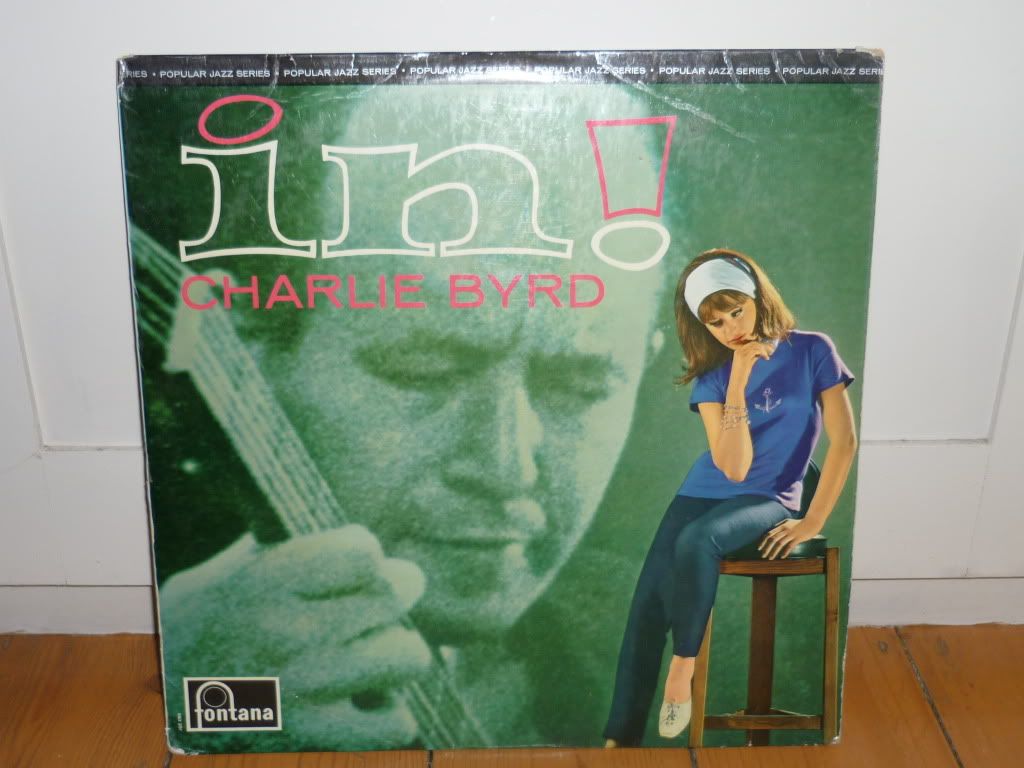
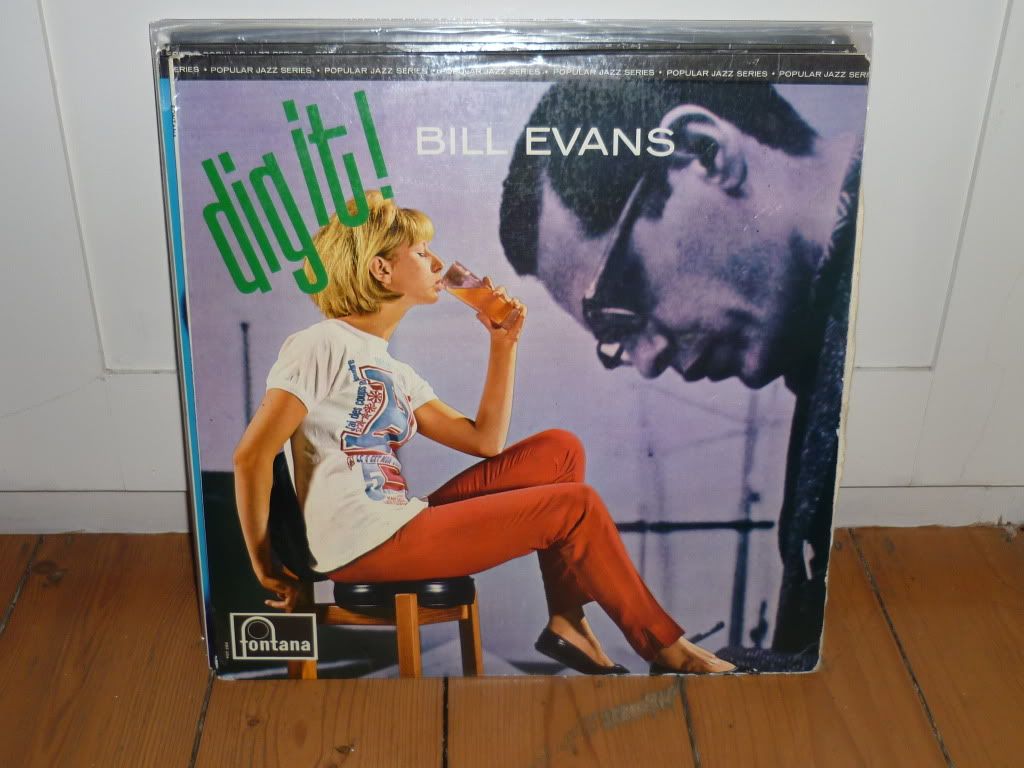
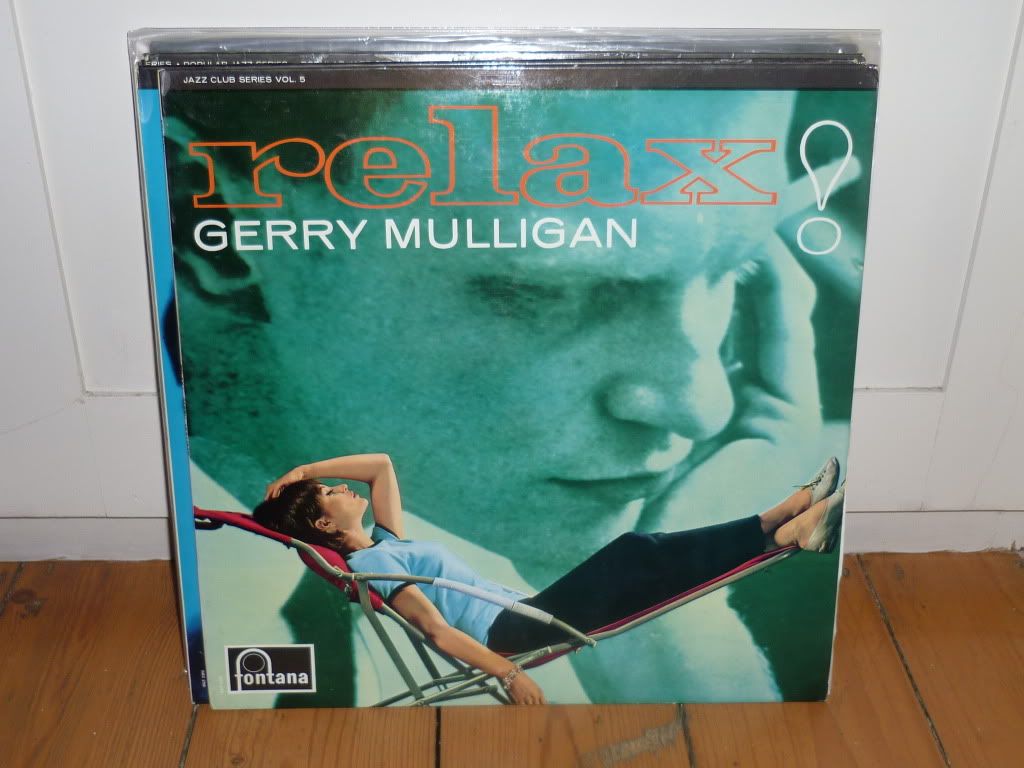
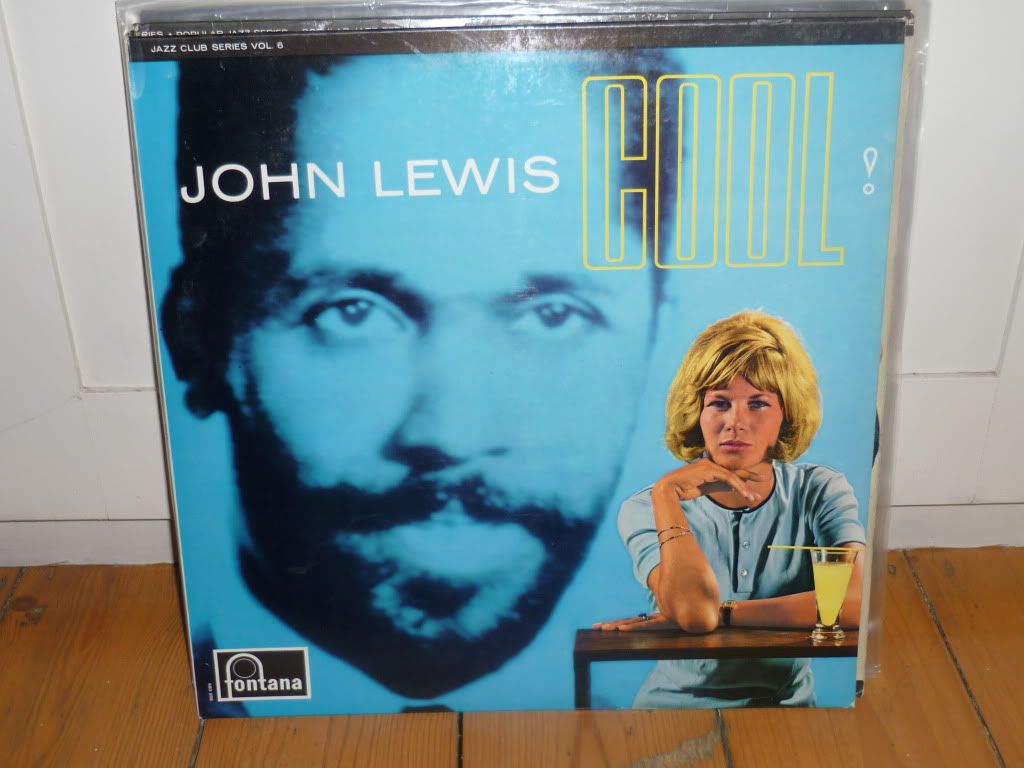
THE POPULAR JAZZ SERIES


Charlie Byrd - In!


Erroll Garner - Move!


Bill Evans - Dit It!


Gerry Mulligan - Relax!


John Lewis - Cool!

Cannonball Addeley - Wow!


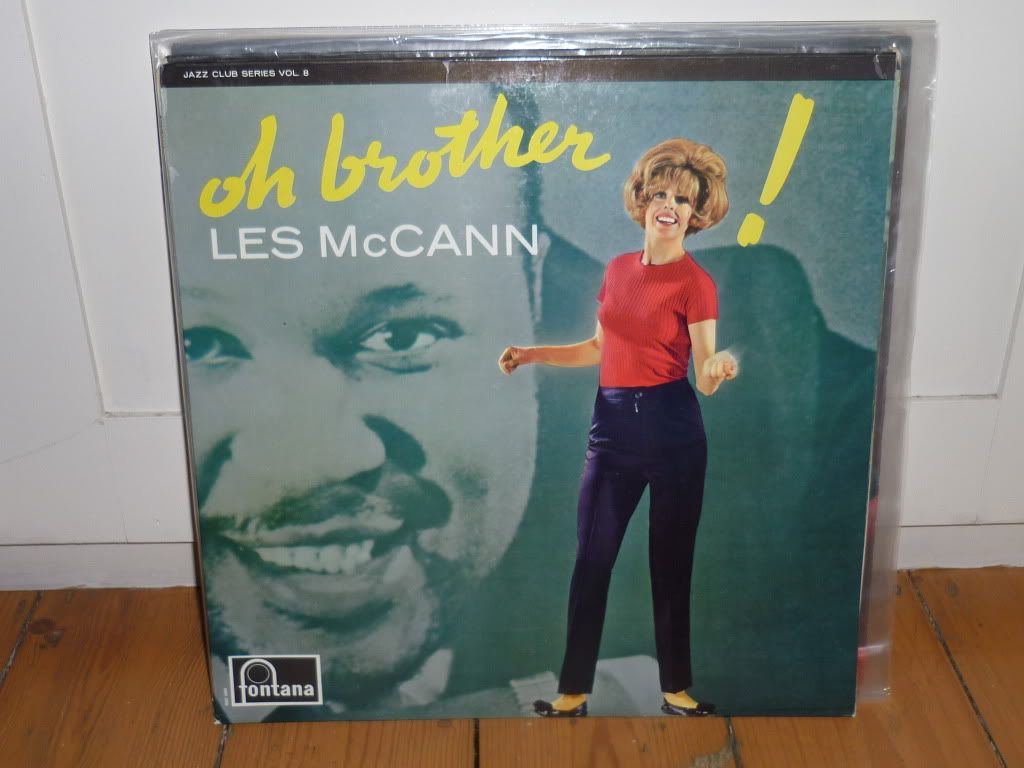
Les McCann - Oh Brother!


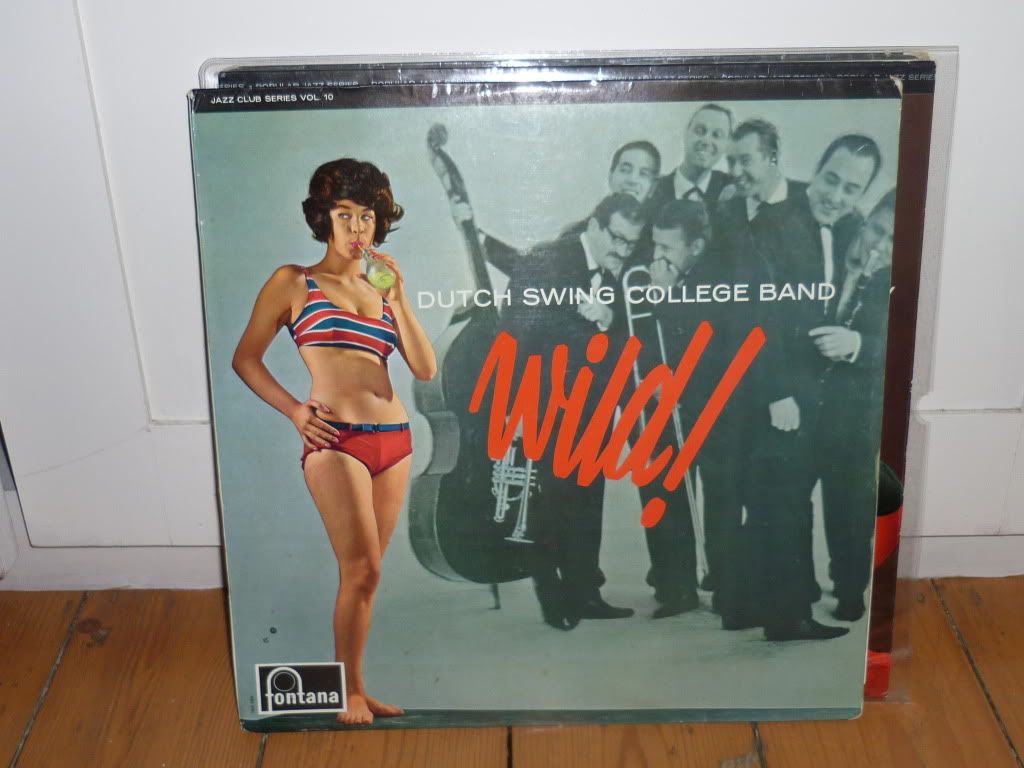
Dutch Swing College Band - Wild!


Art Blakey - Soul!


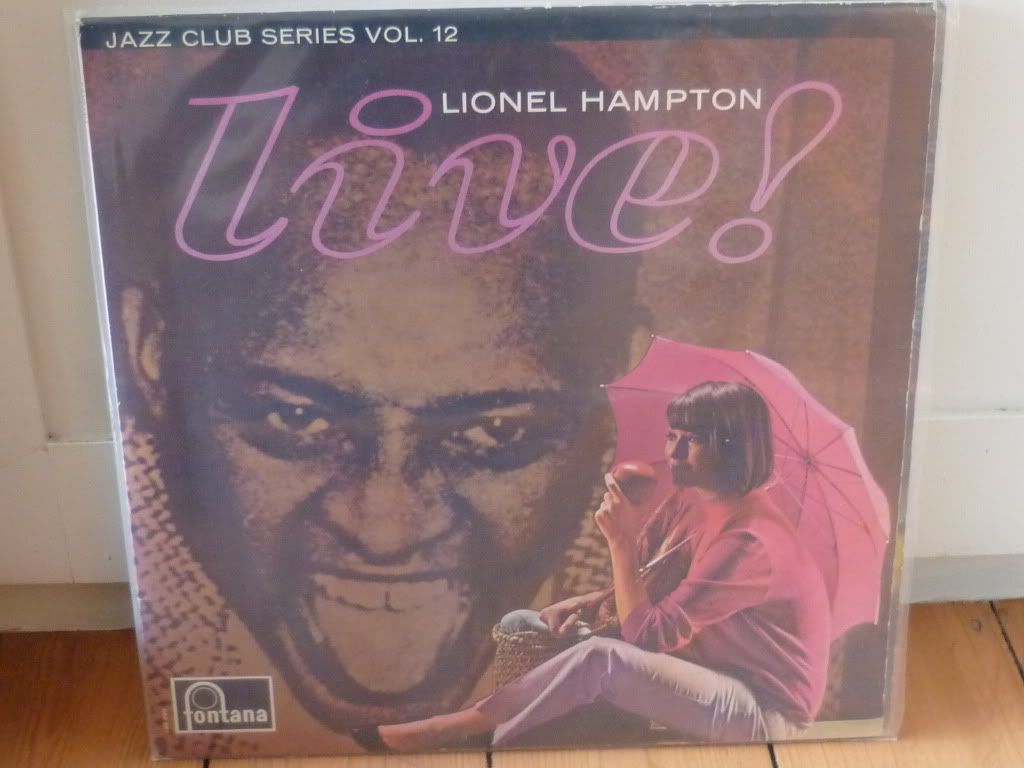
Lionel Hampton - Live!

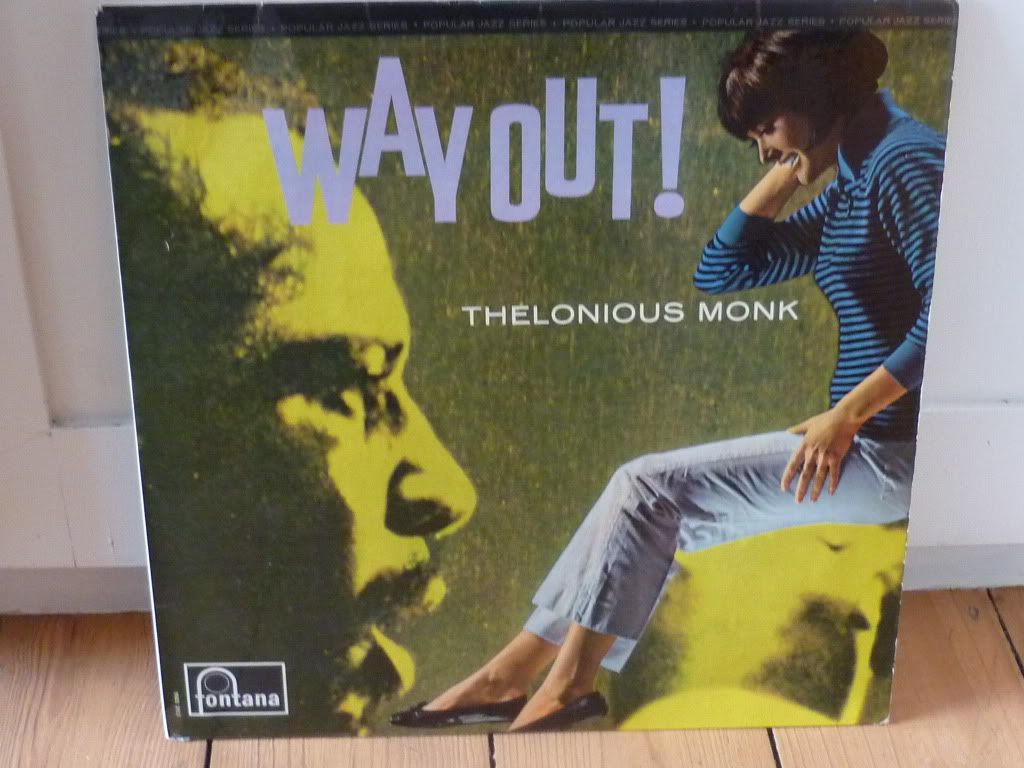
Thelonious Monk - Way Out!


Roland Kirk - Hip!


Nat Adderley - Naturally!


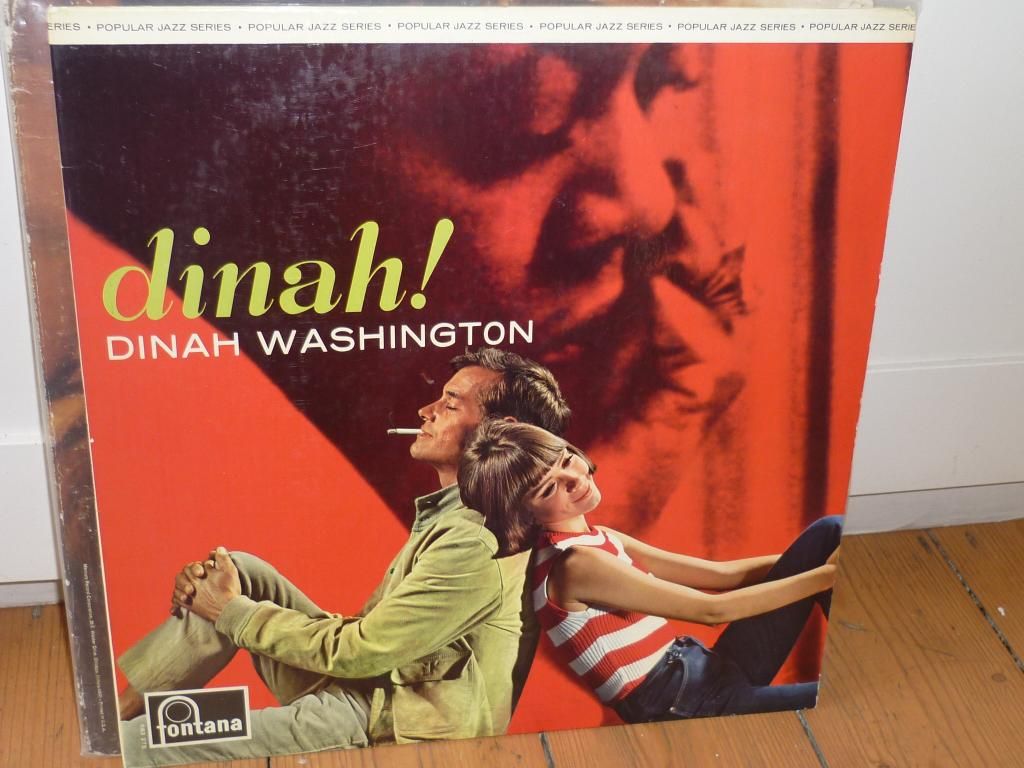
Dinah Washington - Dinah!


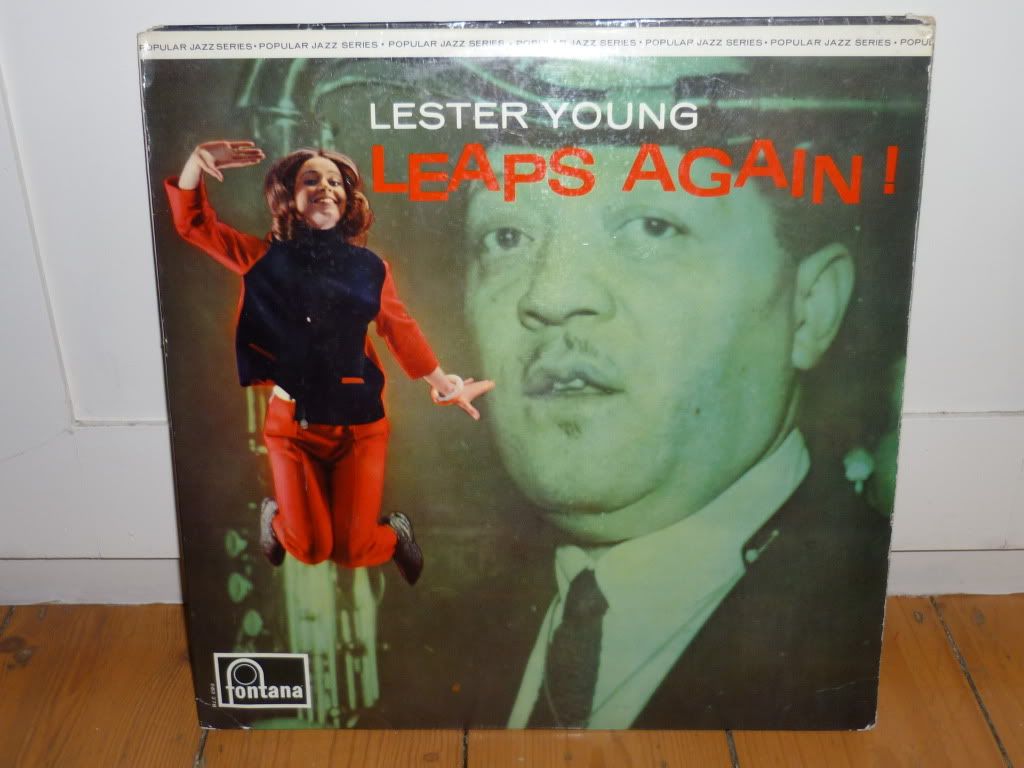
Lester Young - Leaps Again!


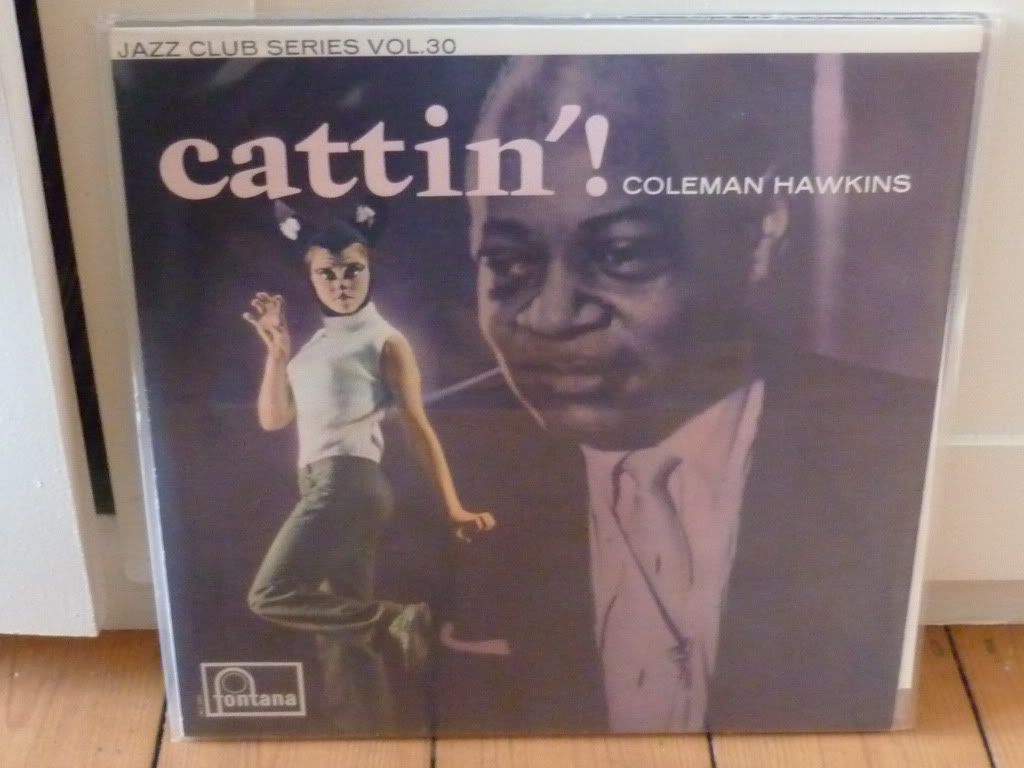
Coleman Hawkins - Cattin'!


Miles Davis - Art Blakey - Back to Back

Thursday, 12 January 2012

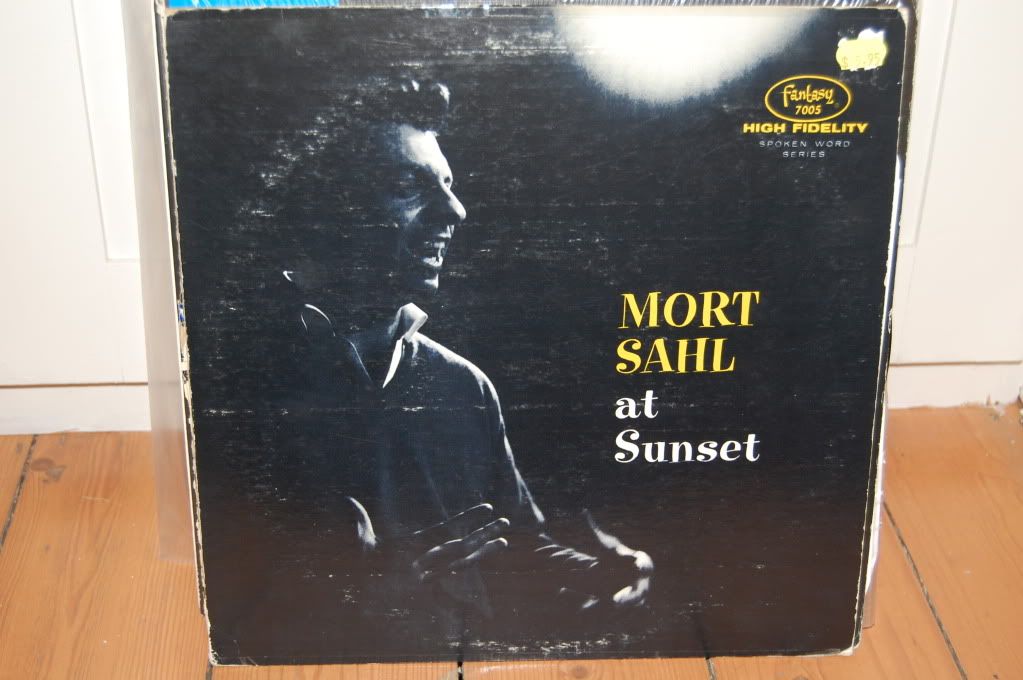
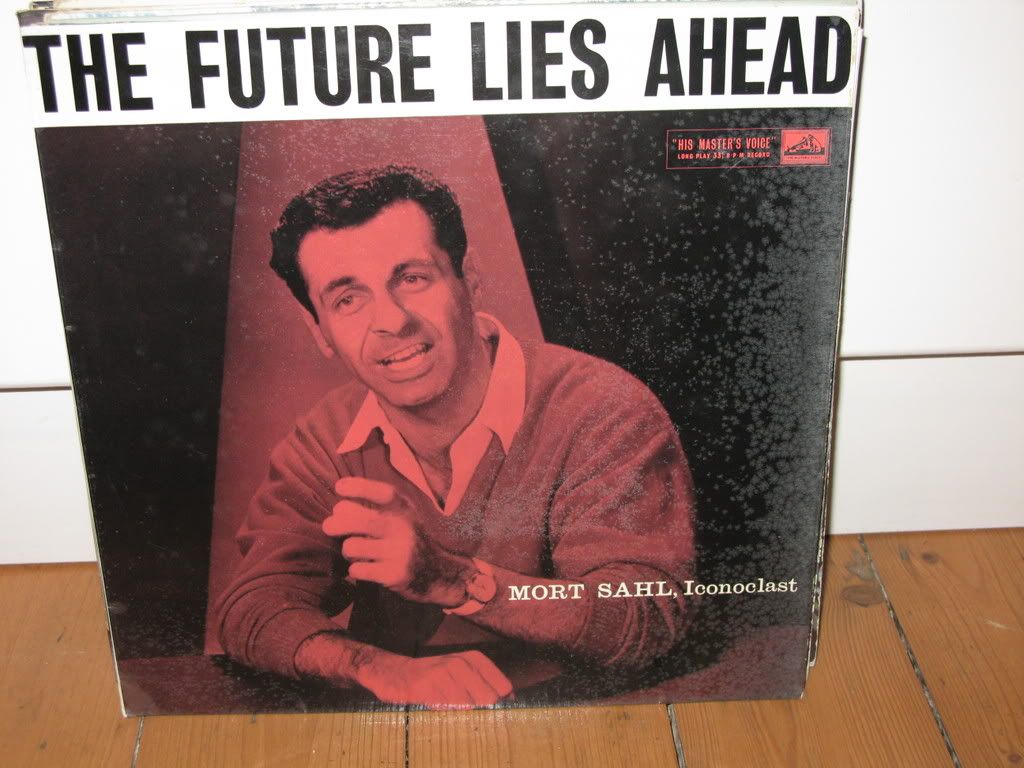
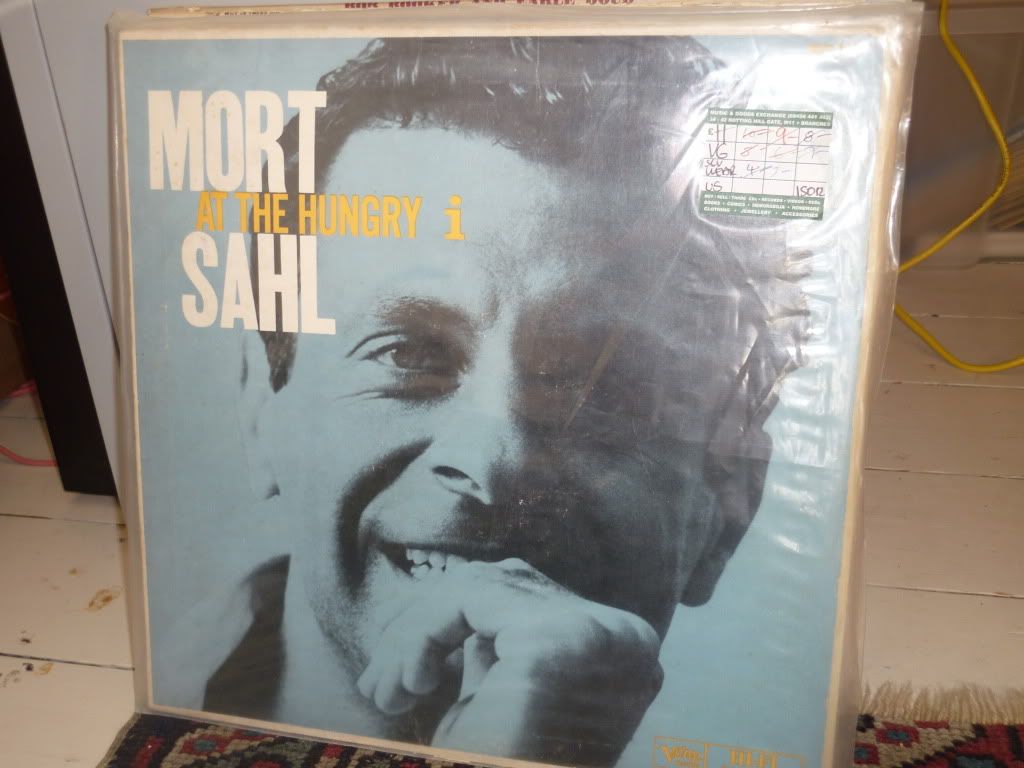
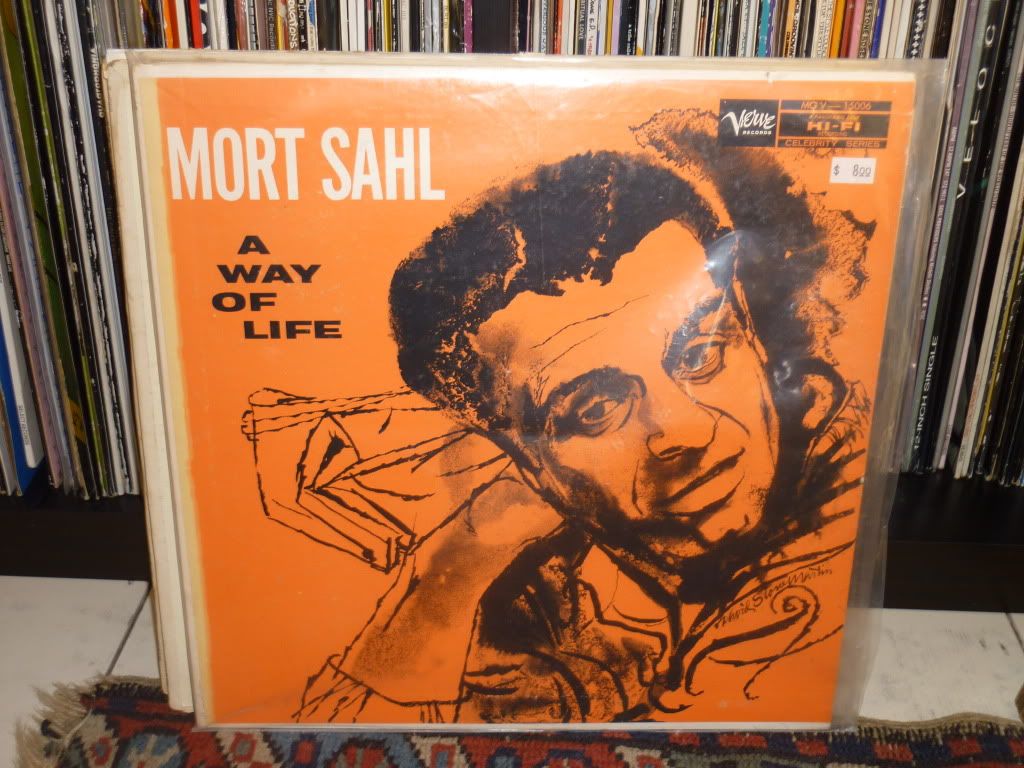
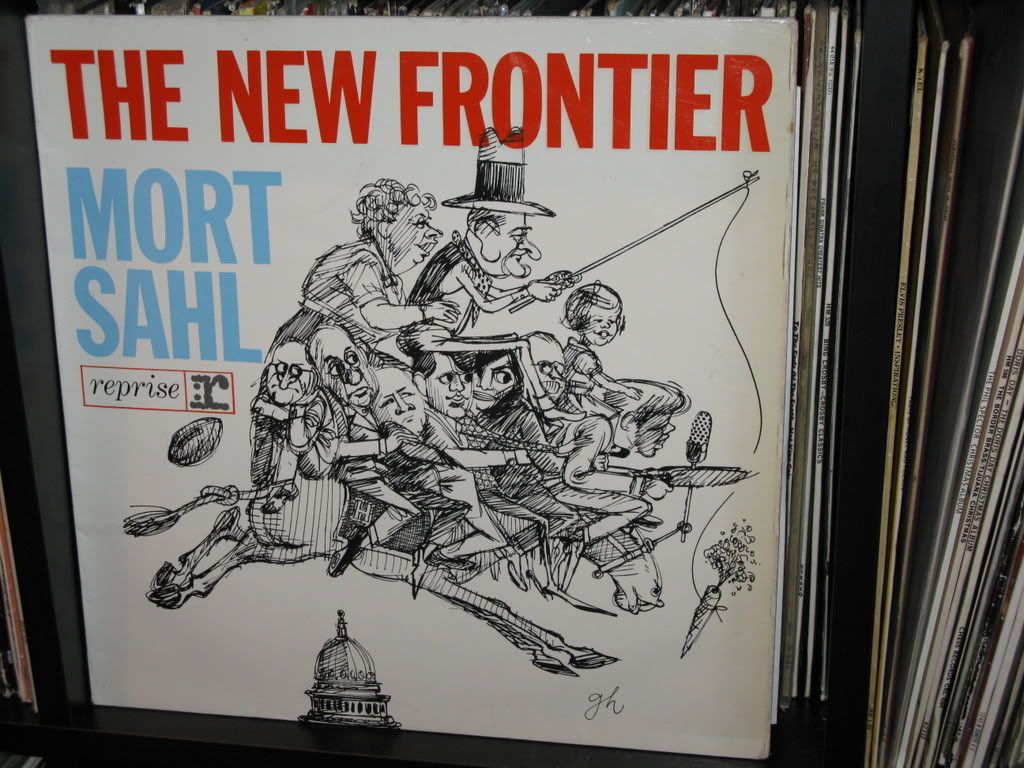
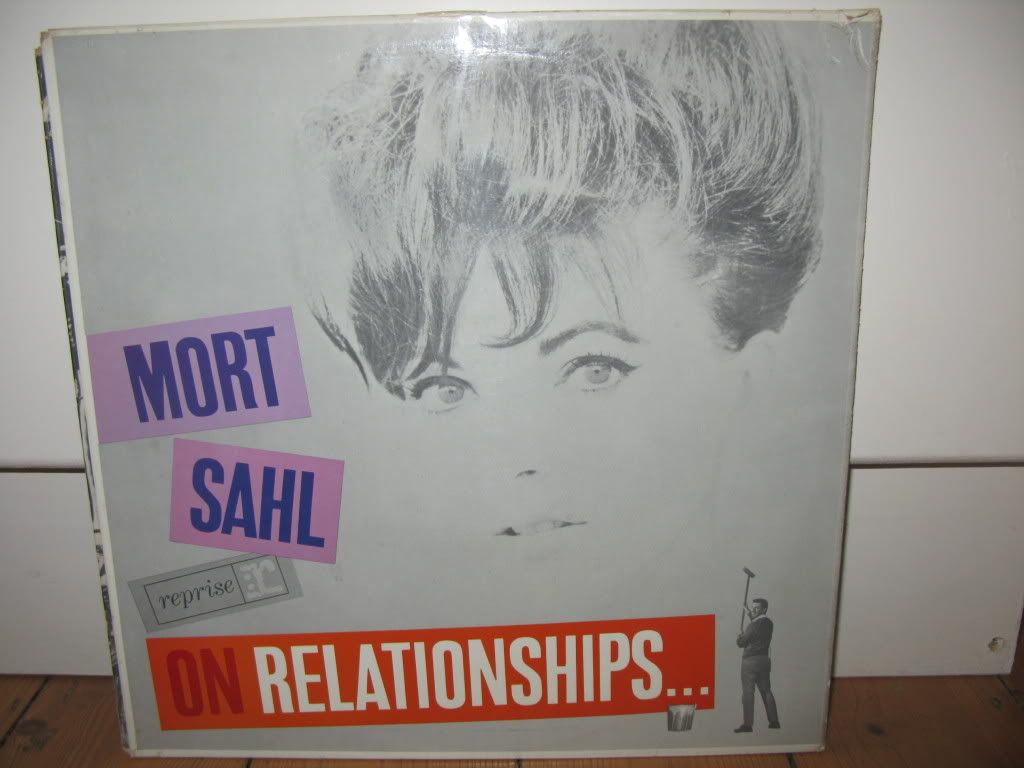
MORT SAHL - ONWARDS


A man takes to a small stage and starts a long comic monologue encompassing current affairs, politics, issues of gender and race as well as some wry views on the world. He is casually dressed and holds a newspaper in his hand as a prop. This scenario is familiar most of us as we have seen a multitude of comedians. In fact, comedians have now become so familiar that they have entered almost every part of our entertainment world, hosting chat shows and game shows, commenting on politics and sport, writing for newspapers and publishing autobiographies before they are thirty. However, the ubiquity of comedians, and hence comedy, has meant that few jokes have teeth and those that do are rarely political. In contrast, when the young man on the stage refers to a new jacket called the McCarthy jacket which had a flap which buttons over the mouth, he draws gasps and muffled nervous laughter. Although a barely incendiary joke by modern standards, for its time it was audacious. The public naming and ridiculing of politicians, and powerful ones such as Eugene McCarthy who had ruined the lives and careers of many in the show-business world was daring and brave in a way that comedians today can never attain.


The man is called Mort Sahl and in the late 1950s in America he is single-handedly changing stand-up comedy. His style of comedy is now so ubiquitous that we take it for granted, however, when he started the only gig he could get was at a dive coffee bar in his home town of San Francisco and then only because the owner couldn’t find enough folk musicians to fill the bill. Before Sahl started most comedians were formally dressed, often in tuxedos. Their acts usually comprised of a stream of gags fired off in a machine gun-like style. If one joke didn’t get any laughs it was on to the next one so fast that the audience wouldn’t have time to notice. In the main, the jokes were not contentious, unless of course, you were female, black or from any other minority group. The role of the comedian was not to be challenging but rather to distract people from the daily grind of everyday life.


Dressed in an open-necked shirt, jumper and slacks, Sahl looked like what he was, a graduate student. More importantly he looked like his audience and his act further endeared him to them. His critics attacked him as a comedian whose audience needed a dictionary to understand what he was saying. One of his earliest jokes was about “a magazine of obscure poetry – called Whither”. It was this very cleverness that people liked. If you could go to a Mort Sahl gig and get all the jokes you were obviously clever, hip and with it. Sahl reinforced this by referring to his concerts as clandestine meetings held in secret to avoid Herbert Hoover’s FBI or as being held in a mineshaft.


He laced his act with psychological references at a time when psychiatry was becoming popular with middle class Americans and terms such as “group hostility”, “latent anger” and “mother complex” would all have resonated with his audience. Taken together with his intense attacks on the then current Republican government, Sahl soon became a darling of well-educated, liberal Americans. Sahl seemed to reserve his most stinging attacks for the then Vice President Richard Nixon. On Nixon’s visit to the Soviet Union Sahl commented, “He can’t call anyone a Communist and hurt their career over there.”


It wasn’t just what Sahl said that was different, it was the way he said it. He rarely told ‘jokes’ rather telling stories with funny moments. One of his early bits has a bank robber passing a note to a bank teller who is a philosophy student working part time. The note reads “Act Normal”, the bank teller writes back, “Define Normal”. It was this type of comedy that was to influence American comedians such as Lenny Bruce, Woody Allen (who would ‘borrow’ the bank teller gag), George Carlin (who started his career with a note-perfect Sahl impression), Shelley Berman, Johnny Carson and a host of others. He had a freewheeling style that was often likened to jazz improvisation, in much the same way that Lenny Bruce would be in later years. He didn’t rehearse so each evening would have different versions of the same bit, or entirely different bits altogether. One journalist recalls sitting with Sahl one afternoon watching him read the day’s newspapers only to see him use the news in his act that evening.


Anything was grist to the mill, cars, stereos, sunglasses, Disneyland, General Motors, typewriters and of course politics. In one bit he recalls going to Miami and looking out over the sea to get a glimpse of Cuba. “It’s over there,” he is told, “behind the aircraft carriers”. He would digress, start trains of thought and abandon them, say things such as “we’ll get back to that” and then not get back to it, “I want to say a few words” and then not talk about it, laugh at his own jokes, and pepper his monologue with words such as “Really?” and his favourite “Onwards”.  He seemed less a man on stage telling jokes to distract people from the world than a sharp, witted friend talking to you about the real world and making you laugh at things that you had never thought were very funny. 
Although he found an audience, not everyone liked his sense of humour. Enraged Republican voters would wait outside his gigs to attack him, or perhaps even worse, leave mid-set. However, what his liberal Democrat-voting fans didn’t realise was that he was an equal opportunities comedian. As he would say “Is there anyone here I haven’t offended yet?” After Jack Kennedy won the Presidency in 1961 his audience were not prepared for his anti-Kennedy jokes. “We thought this was what you wanted,” Sahl reveals Democrats as saying to him once they won the election, “You didn’t have to do it for ME!” he replies. Sahl once joked that Kennedy’s father had sent him a telegram stating “You’re not allowed one more cent than you need to buy a landslide”. 

It was not, however, the election of Kennedy that torpedoed Sahl’s career but the President’s assassination. Sahl, in his autobiography, claims that his anti-Kennedy jokes cost him gigs as the Kennedy clan, in particular JFK’s younger brother Bobby (Sahl had made a joke about the young Attorney General, claiming that now ‘Little Brother’ was watching), put pressure on club owners and other entertainment executives to freeze Sahl out. However, once Sahl started to use the Warren Report as the basis of his act, in some instance reading long tracts verbatim, the work practically stopped overnight. In this regard, as in so many other ways, Sahl was ahead of the pack. As happened to Lenny Bruce and Dick Gregory, the temptation to use the stage as a platform for lectures rather than comedy proved too great. Of course, who wants to go and see a comedian that isn’t funny, however, insightful their comments? 


Mort Sahl is still alive and performs irregularly in the US, mainly in California. However, his legacy, other than his influence on comedians who went on to wider fame, rests on the recordings of his act released as comedy LPs. His autobiography, while barbed and witty, is not funny in the way his stage act was. His LPs are strange artefacts. His style of comedy means that one cannot easily pull out ‘jokes’ or edit them down. It is very much like listening to jazz in that regard. His routines are forever stuck in their time. If you are not up on the current affairs of late 1950s and early 1960s America, some of the jokes will fall flat. Who, particularly in the UK, knows or remembers Westbrook Pilger or Syngham Rhee? However, if you have a love of words and language, of sharp, fearless attacks on the establishment, of revelations of the hypocrisy and stupidity of elites, of the fun to be had at loving and laughing at the eccentricities of life then I cannot recommend Mort Sahl enough. As befits a slightly forgotten pioneer most of his best stuff is not available for download so search it out wherever you can.