Writing about music is like dancing about architecture

Wednesday, 16 February 2011

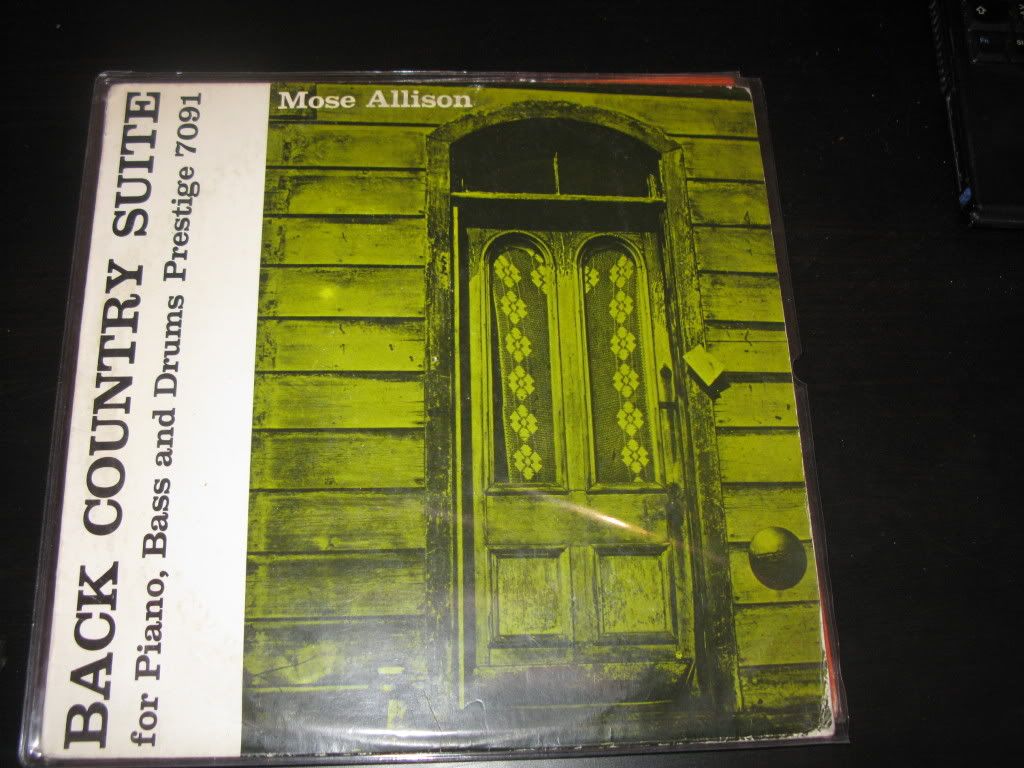
MOSE ALLISON - BACK COUNTRY SUITE

I love this record. Its not such a strange thing to say that I love a record that I own. But I've loved it since the moment I first heard it in a record shop in west London, I loved it when I got it home and now, some five years later, I still put it on the turntable and I love it all over again.
So that's enough of me gushing. And really there is no need to read anything else I'm going to write. Stop reading right now and go on to ebay or gemm and get a copy of this.Its not expensive and has been reissued numerous times. What are you waiting for? Go on, do it now!
Still here? Well if you are you might as well read what I've got to say about it as I try and explain why I love it.
Mose Allison (you say his first name to rime with bows) was born and raised in Tippo, Mississippi - the back country of the title.
His music has always had a blues flavour to it. However, he played with many of the West Coast jazz men such as Stan Getz, Zoot Sims, Al Cohn and Bob Brookmeyer. I have a couple of Zoot Sims records with Mose Allison and he comes across as a good pianist in the 'cool' style. Its difficult to hear him as the fluid stylist he is on this record.
The first side of this 1957 record is taken up with the Back Country Suite which was written between 1945 and 1956. The ten pieces are "musical sketches based on these recollections of childhood experiences," as Ira Gitler tells us in the linears. Gitler makes explicit references to the blues influences on Allison and names a number of blues musicians. Strangely they are mainly guitarists, some electric. While the blues is definitely present in his playing I don't really hear B.B. King. But I do hear Fats Waller and Nat King Cole.
The music of the suite is happy and uptempo. It evokes pleasant times, easy times. I would guess that he looked back on his childhood with happiness. Allison's playing is smooth; sometimes, as on Warm Night he is almost into easy listening territory.  But is has a real warmth and soul that I love. You don't need to be into jazz to 'get' Mose Allison (which is probably why so many rock musicians have 'got' him!).
As he is playing in a hornless trio the music is never sharp or discordant. You can imagine people enjoying it in a night club but also in a crowded bar or even on a porch with an iced tea.
Later in his career Allison would become known for his vocal numbers. Here he only sings on two songs and when he does, his voice leaps out of the speakers. On Blues he sings 'The young man, ain't got nothing in this world'. I have to say that, although its called Blues and the words are about unhappiness, there is something in his voice that does not make me think of the blues.He re-recoded this song as Young Man Blues and it was covered by the Who.
Side two continues the jazz-blues theme as he improvises around some fairly standard blues riffs. It is part of his great ability as a musician that you do not feel he is trying too hard to impress while playing magically. I suspect that this record was, as were so many Prestige records, recorded very quickly. However, you can hear that these are songs he has played many times and truely knows.
All but one of the songs on side two are standards. I have a soft spot for his take on Blueberry Hill but he does get very close to being too smooth on I Thought About You. His version of One Room Country Shack suffers in the same way as Blues from being simply too warm and smooth to be convincing as blues and you just don't get the feeling that Mose was singing about something he had experienced.
He is ably assisted on the record by Taylor La Fargue on bass who played on a number of Allison records and Frank Isola who played with Stan Getz and Gerry Mulligan. However, it is completely Allison's record and his band mates have little space to come to the fore.
Despite the blues influences this is happy and cheerful music that always puts a smile on my face. Go and get it and I hope that you will find the same thing too.


Sunday, 6 February 2011

AHMED ABDUL-MALIK - EAST MEETS WEST

How much difference can we accept in our society?Are there some basic tenants of Western society that are inviolable and we should uphold these, even at the risk of losing sight of some of the other elements that make up our society? How far should people integrate into a society at the risk of losing their own cultures?
I think that these are questions that were as important in the America of 1959 when this record came out as they are now.
There was, of course, the Civil Rights Movement, which after the Montgomery Bus Boycott had somewhat lost momentum by 1959. Its greatest successes were ahead of it. There was the long shadow of the McCarthy-ite hearings, the witch-hunt that trampled on the rights of Americans in the quest to root out suspected Communists. America was still the home of the company man and non-conformity was uncommon, and slightly feared. Perhaps Abdul-Malik, given his interest in music and instruments from the Middle East followed the increasing American influence in the area. After the Suez Crisis in 1956, American oil companies increased their presence in the region and the American government increasingly provided help to undemocratic leaders in order to provide 'stability' and indeed by 1959 there had been a US military presence in Saudi for nine years.
However, unlike popular conception, the 50s in America were not in cultural-stasis waiting for the explosion of the 60s. Rather it was a period of intense experimentation and searching for new forms and approaches and few areas were are exciting as jazz. Musicians were bringing many different influences to jazz. Influences from Africa, from the Far East even from European classical traditions. Why not from the Middle East?
Abdul-Malik was born in Brooklyn to Sudanese parents. Unlike many other US jazzmen he did not come to Islam later in life but was born into it. Introduced to jazz at an early age he soon became an in demand bass player (we've already come across him on Art Blakey's African Drums and you can hear more of him with Coltrane at the Village Vanguard or on Monk's Misterioso). Perhaps inevitably he began to mix the music of America with the music of his roots.
This record shows how that mix might work. Using some of the top hard bop musicians in New York,  flautist Jerome Richardson, Benny Golson and Johnny Griffin on saxes, Curtis Fuller on trombone, Al Harewood on drums and Lee Morgan on trumpet, they are joined by Naim Karacand on violin, Mike Hamway and Bilal Abdurrahman on darabeka and Abdul-Malik himself on oud.
Like all marriages this one has some areas of harmony and others of tension. The two tracks that are at the East and West extremes are Takseem (Solo) and Searchin'. Takseem has no traditional jazz elements too it. The hard-boppers must have all popped out for a coffee or something while this track was recorded. A rhythm is laid down with the darabeka while oud and violin extemporize around the beats. Over the top is some very beautiful singing by Jarkarawan Nasseur. I am afraid that I do not know what she is singing about but it sounds to me as though it is the song of a sad woman who's man has left her.
This is immediately followed by Searchin which is straight ahead funky bop. It seems almost a shock after being taken on a journey to the Middle East to be returned to New York via a track that could be by the Jazz Messengers.
But it is Isma'a (Listen), the first track on side two that really shows what a true meeting of the two musics could produce. Starting with the opening  of the oud and the darabeka the track begins from the 'East' with a repeated motif which is then joined first by drums and then by the sax. Using the initial motif rather in the same way as they might use a complicated bass line, the drums and sax weave around the oud and darabeka and the song gathers pace. Then, Lee Morgan's trumpet cuts through, at first repeating the line of the oud but then in a wonderful and imaginative solo, soaring above the East and West elements into pure delight. That Lee Morgan sure could play! As the song comes to an end one by one the Western elements drop out until it is just the oud playing the refrain. Really exciting stuff that ends too quickly. I could have had a whole side of just this song. Apparently that arch-bandwagon-jumper Herbie Mann covered Isma'a on one of his albums but I have yet to hear it.
So, can a jazz record point that way through the thorny questions of multi-culturalism and integration? Of course you cannot learn how to live from a record. However, maybe there is something to be learnt from a Muslim in a Christian country who learnt to play a style of music that was indigenous to his adopted country but at the same time tried to bring something of his parent's country to that music.

Hunt it down and enjoy it.

Saturday, 5 February 2011

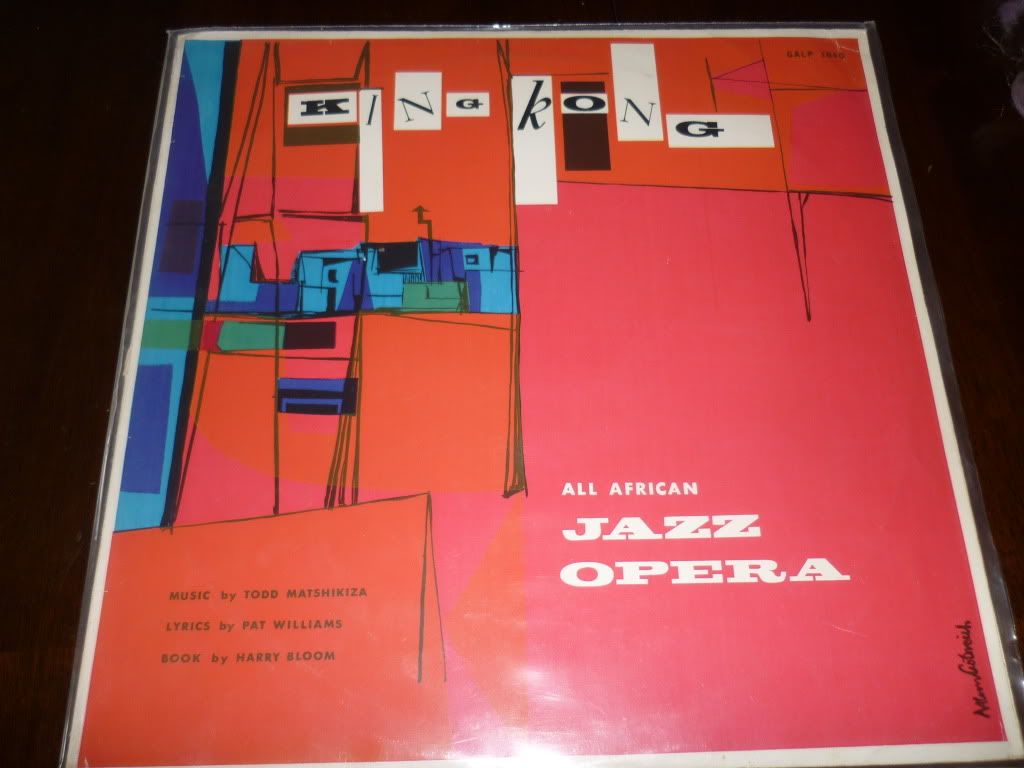
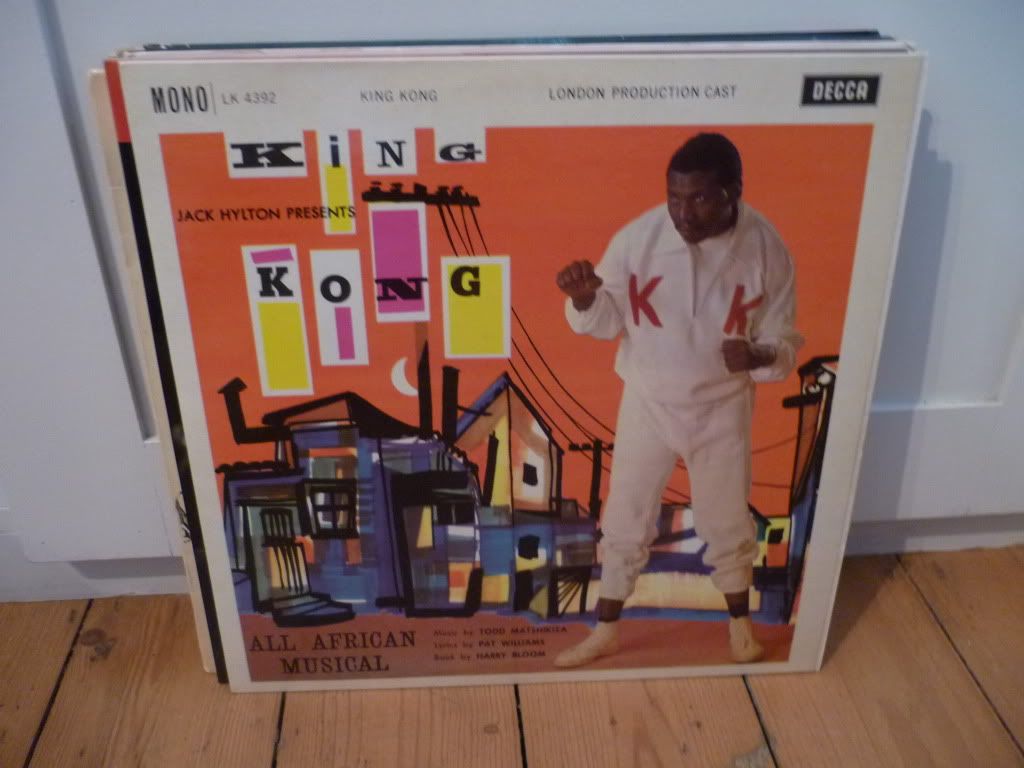
KING KONG - ALL AFRICAN JAZZ OPERA

The 1950s in South Africa saw a renaissance in music, writing, theatre and even in a small way in film. Ironically given the rise of the apartheid system at the same time, black artists of every sort found ways to express themselves, often in opposition to the white-run system.
A generation of well-educated and talented men and women were trying to improve not just their lives but the lives of their communities. It took a very brutal regime to snuff out these people and their desire for a better life.
But before that happened there was King Kong - All African Jazz Opera.
A conscious attempt to create a work that was developed by both black and white artists, King Kong became one of the most popular stage productions in South African history.
The music was written by Todd Matshikiza who, as well as being a talented musician, was also a talented writer and worked on the famous Drum magazine. He particularly liked Peter Rezant's Merry Blackbirds, a swing band in the American style, and wrote about them a number of times in Drum. He is described as using his typewriter in the same way as he played his piano.
Matshikiza had previously written choral works, apparently largely because his access to full orchestras was limited.
He was a regular at Dorkay House, a well known arts centre in central Johannesburg where musicians, writers and actors met and collaborated.
It was there that he was approached by Harry Bloom, a lawyer and writer and Percy Tucker, a booking agent, with the idea of producing a stage production using African jazz and jive.In the end the show was produced and directed by Leon Gluckman, with a script by Pat Williams, choreography by Arnold Dover and costumes by Arthur Goldreich (who also painted the picture that is on the record cover).
But it is the musicians who first attracted me to this record. The leads were taken by Nathan Mdledle (lead singer of the Manhattan Brothers) and Miriam Makeba (Mamma Africa herself).The orchestra included Gwigwi Mrwebi (who, together with some of the Blue Notes produced the Gwigwi's Kwela album in London), Mackay Davashe, Jonas Gwangwa, Kippie Moeketsi, Hugh Masakela, General Duze, Caiphus Semenya and Letta Mbulu and finally Little Lemmy on pennywhistle.  Without doubt some of the finest jazz musicians of the era.
Not only were all of the cast and musicians black South Africans but the production was resolutely about and for the new generation of urban, recently migrated black people.
The musical is set in an unnamed Township that is probably meant to represent Sophiatown. Sophiatown was to the flowering of black South African arts what Harlem was to the Harlem Renaissance. A cramped, insanitary, dangerous place with illegal drinking establishments (shebeens), armed gangs of tsotis (gangsters), unpaved roads, little street lighting or electricity or piped water. However, it was a place where music flourished, the journalists of Drum found inspiration and as one of the few places where black South Africans could own property, home to a burgeoning middle class.
It is an environment that would have resonated with all those who had migrated to Johannesburg, Cape Town or Durban and made their homes in the Townships there.
The main character is based on a real person - King Kong, the boxer Ezekiel Dhlamini. The story follows his rise and fall in the milieu of township life and ends with his arrest for the murder of his erstwhile girlfriend, the shebeen queen Joyce and his eventual suicide in prison.
It is not overtly political and therefore could be enjoyed by whites and blacks alike. However, its white liberal creators, perhaps naively thought that by showing a slice of black urban life they could persuade other whites of the humanity of their black countrymen. However, as Jonas Gwangwa points out in Gwen Ansell's Soweto Blues, it was 'well-known' that King Kong did not commit suicide in prison but was in fact killed by his jailers. Therefore, by showing that he committed suicide the musical underlined the lies of the apharteid system.
So much for the background and the relevance of the musical. What is the record like? It can surely be no coincidence that the first song on the record, Sad Times, Bad Times recalls George Gershwin's Rhapsody in Blue and the story has echoes of West Side Story. The music is a deliberate attempt to create a 'classical' jazz music in much the same way that Gershwin attempted while at the same time as taking themes from the white classics and weld them to indigenous approaches.
On those terms the music is a success. However, to my ears, it is a pale reflection of the jazz and jive that was being played in Sophiatown. Listen to the music on this compilation:
http://www.amazon.co.uk/South-Africa-Authentic-Selection-Township/dp/B000NTPDWI/ref=sr_1_1?ie=UTF8&qid=1296924498&sr=8-1
Now compare the joie de vivre and sheer pleasure of these tracks with King Kong. I have to say that Kong is found wanting. The exceptions are Back of the Moon where Makeba's vocals are wonderful and Kwela Kong which has some fine penny whistling.

The production proved to be so popular that an opportunity to take it to London presented itself.
In 1960 most, but by no means all of the cast, went to London. Some of the musicians and actors had been denied passports on political grounds.
Many took the opportunity of being in London to flee the country, including Matshikiza.
Esme Matshikiza his wife recalled "We did it for the sake of the children, but at that point we still felt we would go home after three years or whatever. But then South Africa broke away from the Commonwealth and we had to make a choice between going back and losing job opportunities in England. There was really no choice; we decided it was best to take out British citizenship, but it was still an extremely difficult decision to make. Once we'd exchanged our citizenship we realised there was no going back, and in fact Todd never went back. By the end of his life he was a very sad man. He really wanted to go home again." Perhaps it is this fact that prompted another exile, Louis Moholo to produce such a sad cover of Wedding Song on his Spirits Rejoice album.
Strangely there are some tracks on the UK album that do not appear on the South African LP and vice versa.
The London production was slightly altered, apparently to make it more palatable to British audiences. Perhaps this made sound commercial sense. It ran for a year.
The musicians befriended some Brit jazzers, notably John Dankworth and Cleo Laine and some jammed in London's few jazz clubs, usually Ronnie Scotts. Interestingly, however, of those who did not go home, many went on the America rather than stay in Britain.
If the South African album fails to capture the elan of the jazz music of the time, the UK record is even thinner. The loss of Makeba on vocals is felt and although the 'new' tracks are very enjoyable, they are just too 'showbiz' to have any real bite.
If you are at all interested I would suggest you hunt down the South African version. Both records are important documents of their times and are interesting for containing early examples of the playing of some well known South African jazz musicians.

Wednesday, 2 February 2011

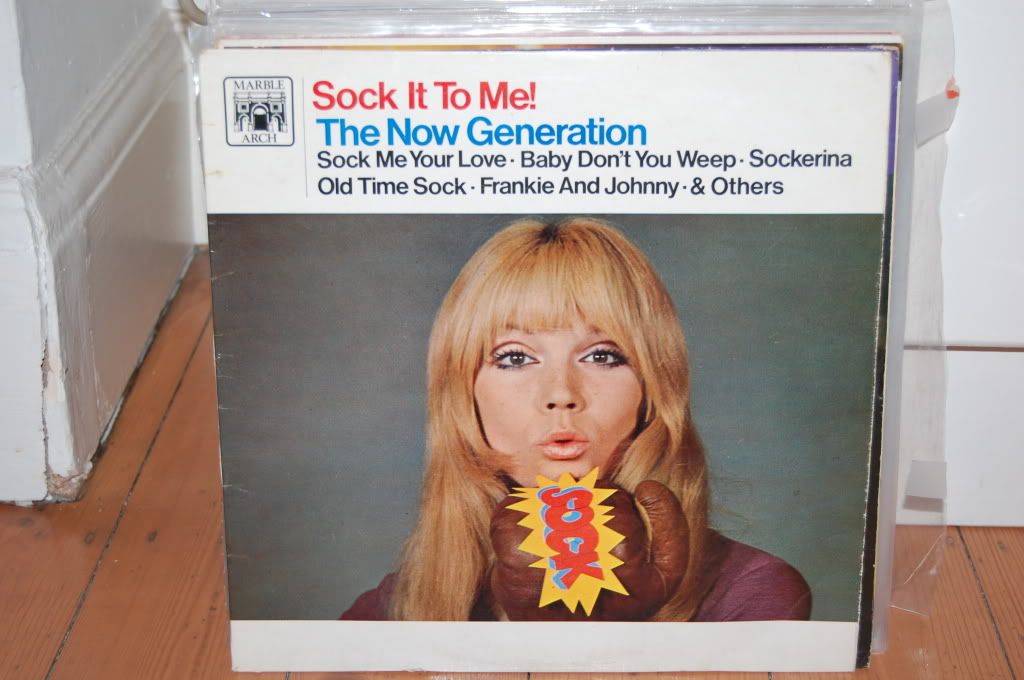
Exploito # 5 - The Now Generation:- Donnie Burks, Paul Griffin and Little Joe Curtis

As 1967 rolled on and hippies and flower power became 'in', Sherman and Miller continued to pump out their cash-in exploitation records. Just as they had leapt on surf and hot rod, rock and roll, and soul records so they latched onto the latest burgeoning youth movement.

Don't those kids on the cover look like they are having a groovy time? More 1964 than 1967 but there you go.

There was a genuine band called the Now Generation which included Jimmy Buffett and did corny country covers of the hits of the day. This is not them. Nor has this record anything to do with the Generation Gap.

Surprisingly there are some artists credited on the back cover. Little Joe Curtis, Paul Griffin and Donnie Burks all get a mention.

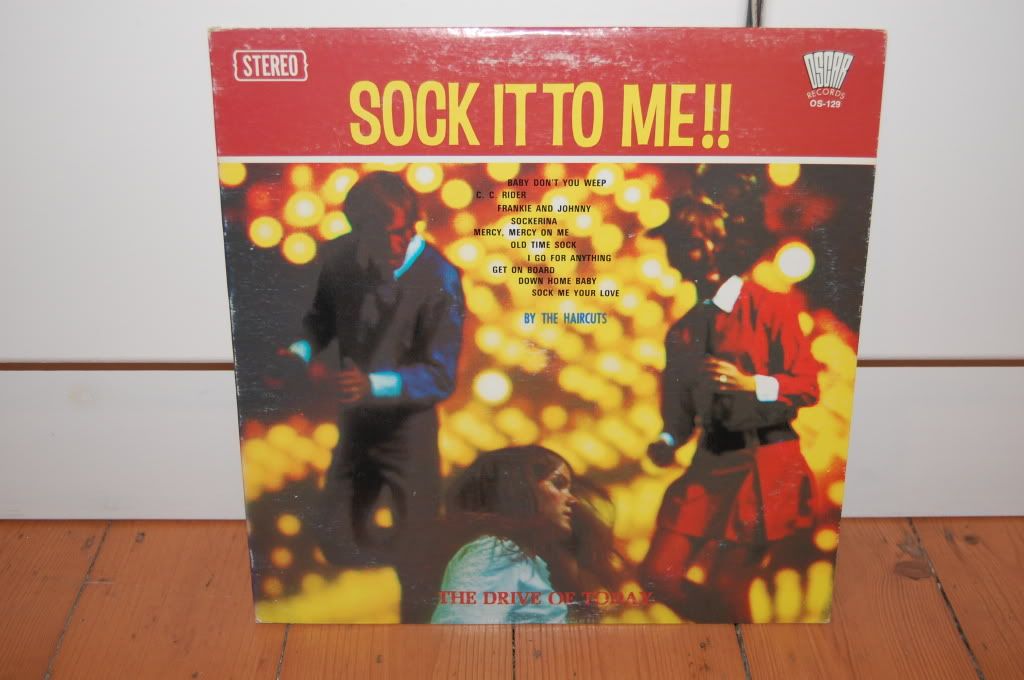
Many of the song titles have a strange 'sock' theme. Sock Me Your Love, Sockerina, Old Time Sock. Maybe I'm missing something here???

This record may be more familiar to UK readers in its Marble Arch incarnation.

 On the Marble Arch version there are no individual artists credits so the listener has the impression that it could all be by the same artist. I like the pop art sound effect on the boxing glove.

Who are this soul triumvirate, the Now Generation, who find themselves united by cheap exploitation cash ins?

Well Donnie Burks was multi-talented - a musician, athlete, actor and theatre producer. He was in the original cast of Hair as well many other Broadway plays and musicals and in a number of movies, perhaps most notably Shaft. No one seems to know how he came to record these tracks. The exploitation machine even put out a whole album of his stuff on Europa in Germany! I doubt very much if he ever saw any reward for the honour of being on a string of cash-in records.

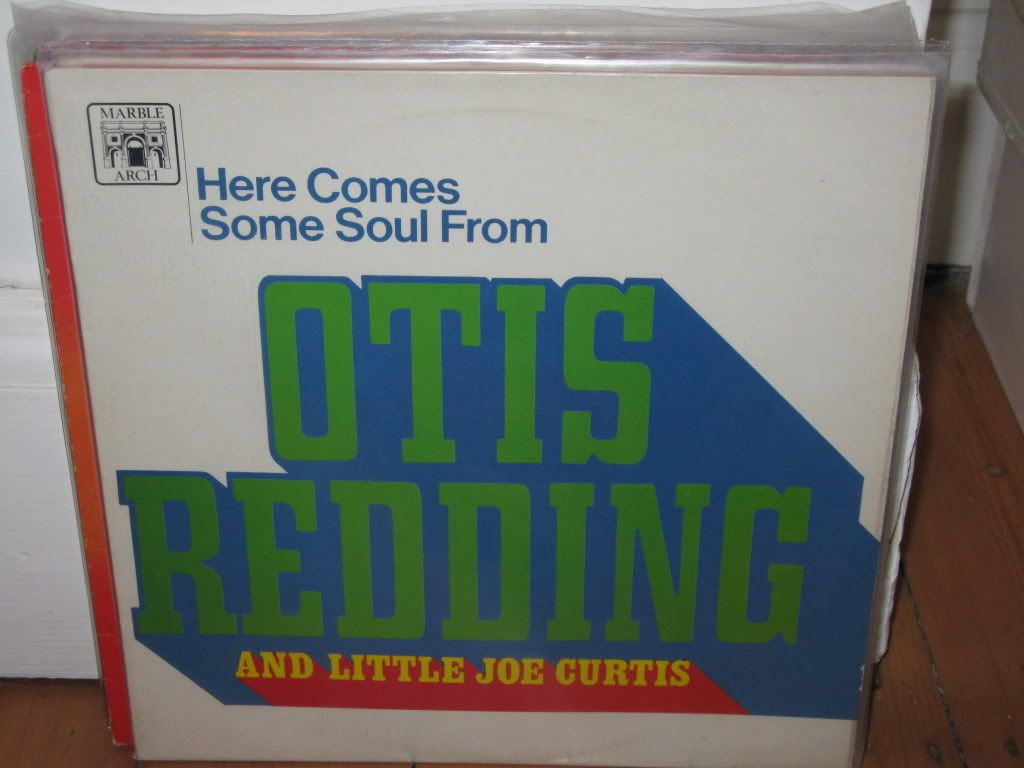
I have not been able to find out any details about Little Joe Curtis. Except that he also appears on another record with Otis Redding. Of course Otis died in 1967 so this record many have been intended as some kind of tribute to him. More likely it is the result of someone finding some of his pre-Stax recordings.

My copy is on Marble Arch but you can also find copies on Alshire, Somerset and a label called Astor in Australia. They all have to same typography on the label with Otis's name writ large and poor Little Joe, living up to his name - despite providing the bulk of the tracks.
Otis's contributions are fine driving early sixties soul sides.
Little Joe isn't bad either and while he is no Otis Redding I like his tracks. You will be able to find Have Mercy on Me retitled as Mercy Mercy on Me on the Now Generation record and Sock Me Your Love is Bring Back My Love.

His track Mini Skirt is a stomper and Sock Me Your Love/ Bring Back My Love is also very good.

It is also worth noting that all of Little Joe's tracks are credited to Miller and Sherman. This was a common ploy by the exploito kings to further increased their profits - naughty naughty!

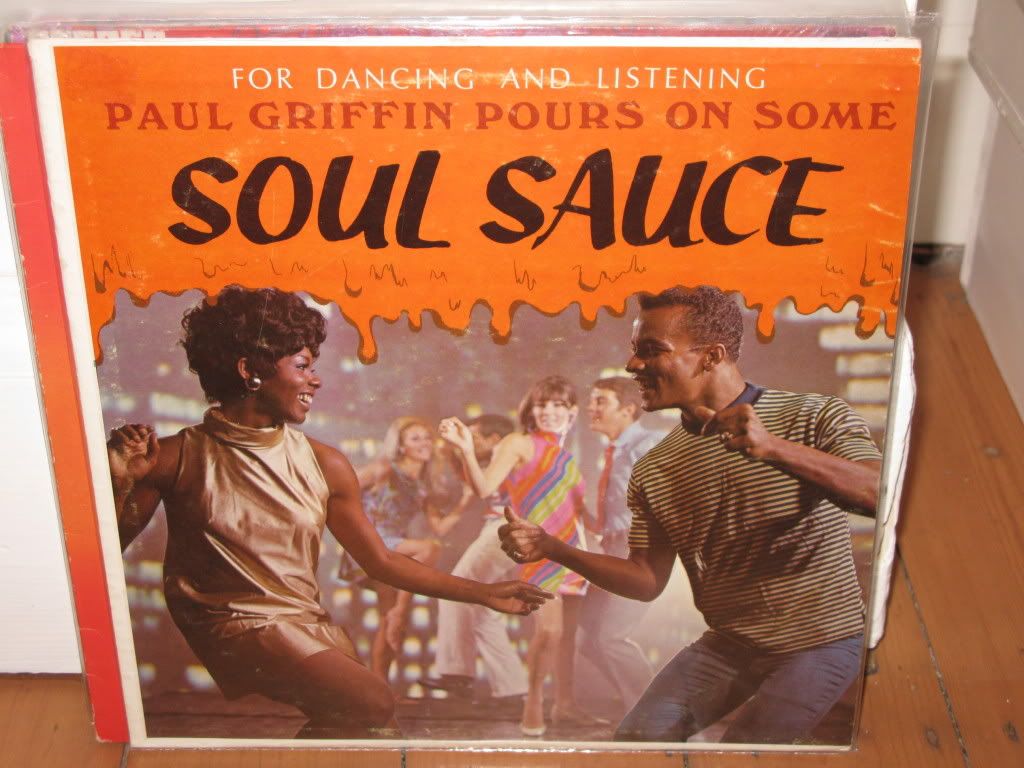
The last of the Now Generation is Paul Griffin. In some ways Griffin was the exploitation organ equivalent of Jerry Cole's guitar exploitation work. His songs can be found on a number of different records. Like Cole he was also a session musician who played on numerous recordings, including some by Dylan.

Here is one of his records on Somerset. Not sure I really agree with this segregated dance floor but there you go. Everyone certainly seems to be having a great time however.

Griffin's tunes are all instrumental so, like Cole and the Animated Egg, they could easily be repackaged again and again and you would never know until you had got the record home.

I have also read that Cole and the Id/Animated Egg were his backing band. Its not impossible but don't go expecting any kind of fuzzed out psych music. Its very much safe, pop-y, polite soul.


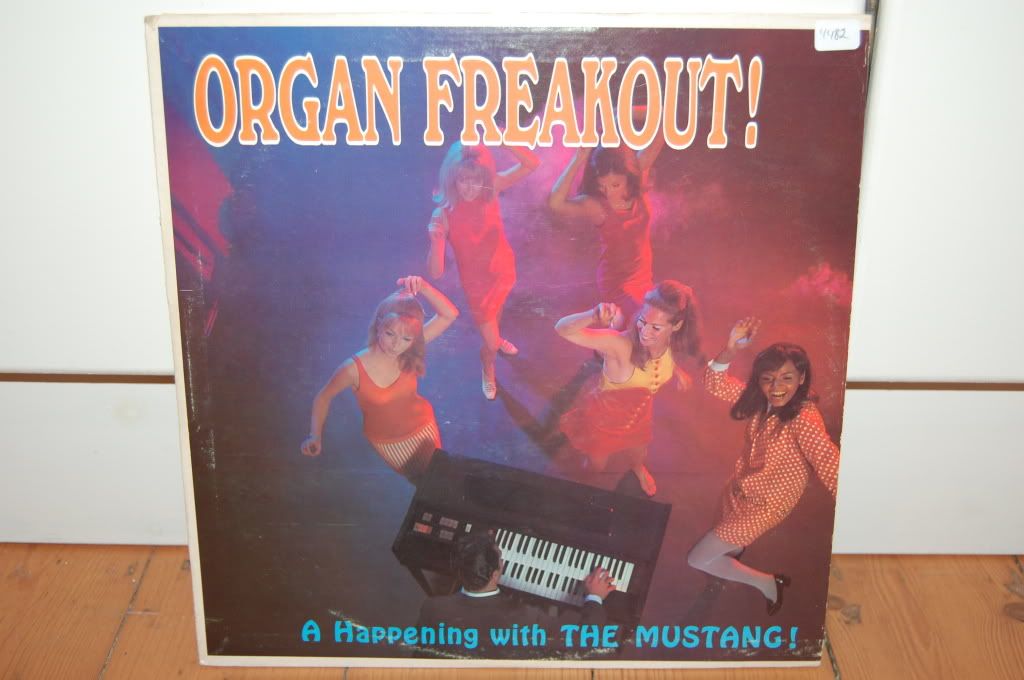
And, if you were tempted by the cover of The Mustang - Organ Freakout to think that the mod chicks were dancing to, as the back breathlessly describes it 'the swingingest hammond organ album since the birth of psychedelia' you would be very disappointed.
Despite some great song titles such as Golden Gate Freakout, Joshua Got Bust, Haight Ashbury Time and The Acid Test the music is the same as Paul Griffin's Soul Sauce.
The blurb on the back goes on to say, 'When the Mustang mounts his Hammond - and the 'amps', start cookin' - look out baby - its an organ freakout. All the same artistry and the down home abandon of 'Frisco '67 comes screaming out of the speakers. Call it Soul - call it electronic Soul - HERE'S WHERE IT'S HAPPENING.' You gotta love it.


Recognise these guys? Its another shot from the photo session that gave us the cover to the Now Generation record.

And the music? Although credited to the Haircuts its actually the same Now Generation record as before.

In many ways it is the perfect example of an exploitation record. Absolutely nothing about it is original - not the music, not the cover art, not the song titles not ever the name of the band. And that is why I love 'em!

(Just added - Check out Part 2 of this entry with even more exploito LPs from the 'Now Generation') 

Saturday, 29 January 2011

WRITZ - WRITZ

Can pop music be too clever?
Well in 1979, when this record was released, there were a lot of clever people making clever records. People like Elvis Costello and Joe Jackson, people like Talking Heads and Television, Brian Eno and John Lydon - all of them in their own ways being clever on record.
What about humour in pop?
Again, in 1979 there seemed to be a lot of that around too. The Cramps and the Rezillos with their pop trash aesthetic, XTC and Squeeze with their wry English-ness, Devo from outer space and the Damned from the Beano.
So you might think that a clever and funny record would fit in perfectly. Punk and New Wave were opening doors for all sorts of clever, clever and funny funny people. Unfortunately for Writz it seems that no one in 1979 was listening to them.
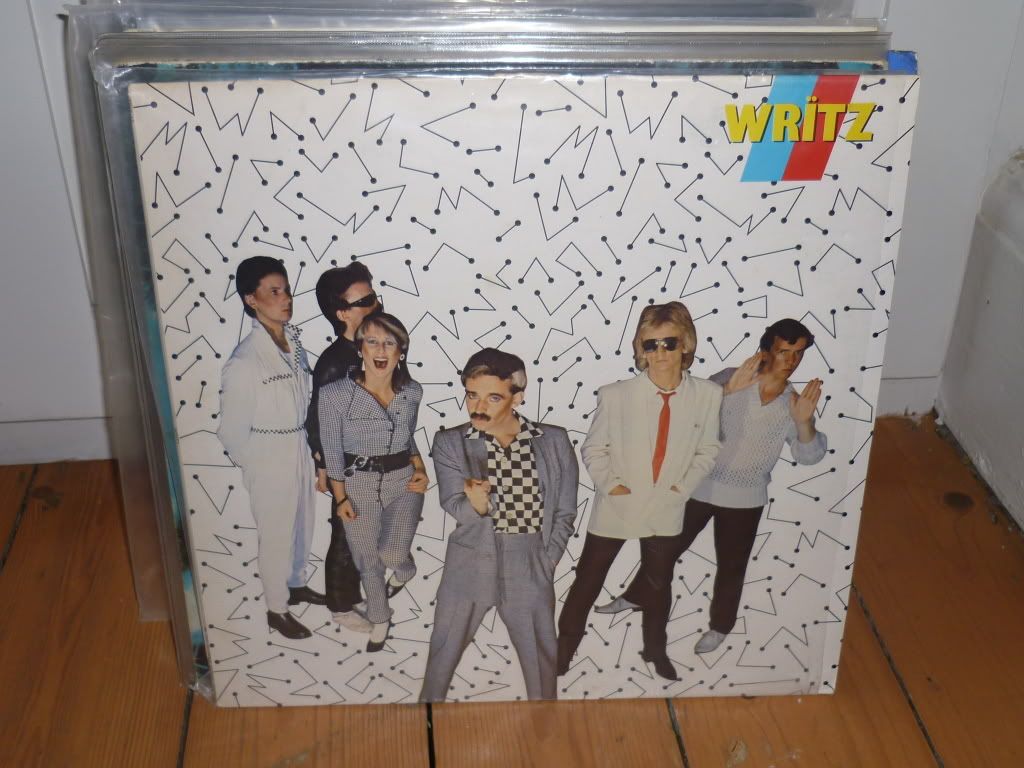
Writz was the brainchild of Steve Farnie, the dapper man with the Chaplin moustache and the terrible suit and shirt in the centre of the record sleeve, Steve Rowles, the guy in the red tie and mullet and Bev Sage, the lady in the rather dated one-piece Prince-of-Wales check button-down jump suit. People just don't dress like that anymore. Click on the photo and revel in the styles. I particularly like the guy behind Bev. If you can see he is wearing white sandals and socks under his leather trousers. Pretty way out!
But it's not fair to laugh at out-of-date fashion - I'm certainly not showing you photos of what I was wearing then!
But the visuals were important to Writz. They were as keen to have a striking and different visual presentation as they were to keep the music fresh. All three of the main protagonists had been to art or music college (a not uncommon story for bands). Farnie, particularly was certain that a merging of image and sounds would produce superior rock and roll.
So on to the music then.
Writz were greatly helped by having no only some very good musicians but some very experienced ones. Jules Hardwick on lead guitar was a session musician, Nick Battle the bassist had played with After the Fire while drummer Arry Axel seems to have been something of an enigma.
As I said earlier Writz are both clever and funny. Nowhere more so than on album opener and single Night Nurse.
From the opening klaxon call the song grabs your attention as Bev intones 'Night Nurse' in a chilling but sexy way. Then Rowles comes in singing about.... What? Its not really a song about a budding Florence Nightingale but perhaps more accurately about someone who might have worked for Cynthia Payne. For a band that liked to dress up, it's great that they should be singing about a woman who is also dressing up. Fading out with a rather sad trumpet line you are left wondering whether the Night Nurse is enjoying her nocturnal activities or whether they are really something she would prefer to avoid.
See it here
The record is very much of its time. This is not a criticism. After all you wouldn't expect a Hendrix record to sound as though it were recorded in the 50s or the 80s for that matter. It is, however, an attempt to fix the feel and texture of the music.
Other highlights are Luxury with a fantastic disco funk bass line, Private Lives and Muscle Culture.


Muscle Culture is a song about dictatorships and the use of the media and charismatic people to induce conformity. The live version on Youtube is better than the album version.

I was thinking about Muscle Culture the last time I went to the gym - body fascism? You can see from the clip how into image and fashion the band were. You can also hardly fail to notice the chemistry between Farnie and Sage. It would have been great if they had been given an opportunity to make some music videos but they were just slightly too early for the boom in videos.
The band's career can't have been helped when they were forced to change their name or face being sued by an American band who had the same name. Can anyone remember them?
As Famous Names they released Holiday Romance which is Blur's Girls and Boys avant la lettre. Another song brimming with ideas and wit it too failed to make a dent on the charts.

Effectively that was the end for Writz. Farnie and Sage reinvented themselves as the Techno Twins and released the charming Falling in Love Again which was a chart success. However, for some reason it was never followed up with greater success.


For all that they sound of their time I'd recommend you go out and track down the Writz album. No one can have too many clever and funny records in their collections.
For everything you ever wanted to know about the band go here

Wednesday, 26 January 2011

ANGEL PARRA - CANCIONES FUNCTIONALES/ ISABEL PARRA - DE ISABEL PARRA

Who is this psychedelic looking guy?
Well, he is obviously called Angel Parra and despite the image he is a folk singer. He is part of a family of folk musicians from Chile.
His mother was Violetta Parra and his sister Isabel Parra.
They were leaders in a Chilean musical movement called Nueva Cancion. It was a movement that sought to find an intrinsically Chilean form of music by using the folk music that was a strong part of the lives of the poorer people of the country. Like many folk movements around the world it was a very political movement and it became inextricably linked with the left wing Popular Unity Government of Salvador Allende.
In 1973 the Popular Unity Government was overthrown by a fascist coup led by General Augusto Pinochet and backed by the US. Allende was murdered as were many hundreds of others including teachers, students, doctors, social workers and musicians.
The most famous musician to be murdered was Victor Jara, the musical leader of the Nueva Cancion movement. Like many others he was detained and sent to the football stadium in Santiago. There he was tortured, his fingers broken, and finally killed.
There followed 17 years of fascist dictatorship during which indigenous forms of music, and the playing of indigenous instruments were banned.

At this point I think its best I come clean. I do not speak any Spanish and I really don't know very much about Chilean folk music.
There is a great deal of depth to Chilean music including not just folk and all its derivatives but psychedelic music, pop music and jazz.
My knowledge of this rich music is limited to just two records, both of which were found in charity shops.
Angel Parra's Canciones Funcionales and Isabel Parra's de Isabel Parra, both released in 1969 when the movement was strong and popular.
There is something about both of these albums that intrigues me. It is partly that they provide me with a window into the music of a country far away and therefore exotic. But is also partly that I am amazed that music could be such a political force.
In modern Britain the idea that any musician would willingly align themselves with a political movement is laughable - unless that movement had a nebulous aim such as to help the starving or 'raise awareness'.
I guess the last time we had musicians with a political conscience was during the era of Red Wedge in the 80s.
So political music interests me. But, as I mentioned before, I don't speak Spanish so I can't follow the messages of these songs. Perhaps reason enough to learn Spanish! Joking apart, I am really missing a great part of this music. It is like listening to Bob Dylan and not following the words - you miss a lot.
I am also intrigued by the similar trajectory of the folk movements of the UK, the US and Chile. Initially these all started as an exercise in preservation as people felt that this was music that we dying. From preservation the movement went to emulation - playing in the style of the musicians they were trying to save. The next step was to create new songs. And at this stage, politics came to the fore in the music itself. Perhaps it is not surprising that music from the poor members of a society should lead the middle class collectors of that music to realise what the effects were of a capitalist society on these people.
Angel Parra plays his own songs on the first side of Canciones Funcionales (Useful Songs). With titles such as La Democracis (Para Bien o para mal), El Drugs-Store (Tonada-slow) and La Television (Polca) even non-Spanish speakers such as myself can get an idea of the political content. The second side comprises covers of songs by Atahualpa Yupanqui an Argentinian singer and songwriter whose ethnographic work in collecting Argentinian folk songs was much admired by the Nueva Cancion. I suspect his opposition to the fascist Peron government might also have been admired. For these tracks he uses guitarist Julio Villalobos who went on to play in the strangely named Blops, a Chilean psych band.
I much prefer De Isabel Parra. I think that its that her voice is so much easier to listen to - although it seems to have been given a strange echo effect, perhaps to make it sound as though she is playing a concert.
Most of the songs on the record are written by her mother Violetta (who committed suicide in 1967) and have a rugged forceful quality that I find instantly likable. She also covers her brother's Ave Maria which is simply beautiful.
I have a feeling that is might be a 'best of' or a compilation of earlier records. If anyone can tell me I would be delighted.
I am also confused by the record labels - Isabel Parra is on  Pena De Los Parra - was this a family record label? While Angel is on Lince Producciones - about which I can find nothing.
By the way, if anyone want to know more about this shameful period in US and Chilean history I would recommend you read Joan Jara's biography about her husband Victor. It wonderfully captures a period of excitement and hope and then describes the horror of the coup and the dictatorship. Chilling stuff.

Monday, 24 January 2011

Exploito-psych # 4- The Generation Gap - Up Up and Away

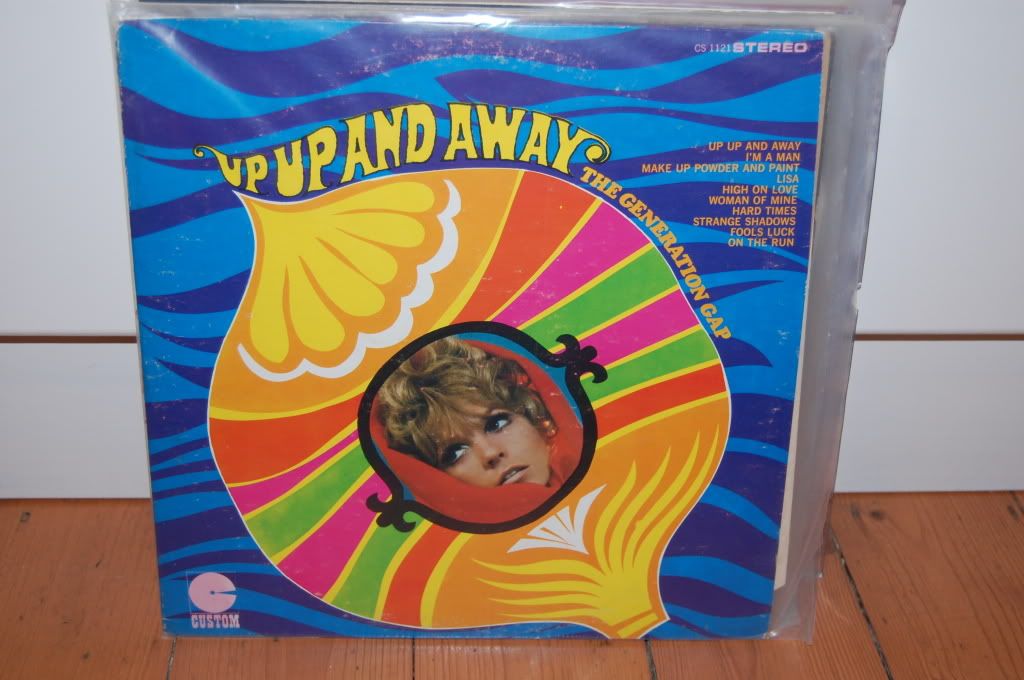
I like this cover. There's something very strange about a girl's face in a psychedelic apple!
If you've ever wondered what Up Up and Away would have sounded like if it was sung by one person instead of The Free Design and then that person's voice was multi-tracked in a poor attempt to make him sound like a vocal group - then this is the record for you!
I'd hazard a guess that the voice belongs to Cole - it sounds very like his.
For the most part the vocal numbers are pretty disposable.
Once you've got over the horrors of the title track we are subjected to I'm A Man (sadly not the Howlin Wolf classic) and a rather strange, slightly country song called Make Up Powder and Paint.
So far so not very psych!
But then we get Lisa. Amazingly, for an exploitation record, this sounds like an original vocal song. And even more unusual its quite good with some very fine guitar work and a plaintive, hazy vocal. It's not impossible that this an out-take of the Id sessions.
I also like the next track, High On Love. Of course, this is in the context of this kind of record. We're not talking about an undiscovered popsike gem. Just a slightly catchy song.
Over on side 2 is where the Animated Egg/Id action is. Don't hang around on Woman of Mine but head straight to Hard Times (I Said She Said A Cid from the Animated Egg), Strange Shadows (Sure Listic from Animated Egg) and Fool's Luck (Our Man Hendrix from the Id out-takes).
The ex-Animated Egg tracks have lost the phasing and other effects that have been layered all over that record - they sound rawer and slightly more aggressive.
Then in true exploitation style the record concludes with an absolutely dire vocal number. But you got three great fuzz instrumentals - what more do you want?